e-CMR, e-invoicing, PDP: the clear guide for carriers in 2026
The reform is underway, and the SME deadline is approaching
Since September 1, 2026, electronic invoicing has officially come into force in France for large companies and mid-sized businesses, which must now issue their invoices via a Partner Dematerialization Platform (PDP). For SMEs and micro-businesses in transport, the issuance obligation kicks in on September 1, 2027 — but the reception obligation has already applied to everyone since September 2026.
In other words: even if you are a small carrier or a cargo-bike logistics operator with two employees, you must be able to receive electronic invoices right now. And you have twelve months to prepare to issue them. In transport, where invoicing volumes are high, subcontracting is king, and fuel surcharges fuel disputes, this reform is not an administrative detail: it’s a complete overhaul of your document-to-invoice chain.
Who is affected, and exactly when?
The reform is based on three distinct obligations that must be clearly distinguished:
- Receiving electronic invoices: mandatory for all VAT-registered businesses since September 1, 2026, with no size exemption.
- Issuing electronic invoices: mandatory since September 1, 2026 for large companies and mid-sized businesses, and from September 1, 2027 for SMEs and micro-enterprises.
- E-reporting: transmission to the tax authorities of B2C and international B2B transaction data, following the same timeline as issuance.
For the majority of French carriers — often SMEs or micro-businesses — this means one simple thing: you have until September 2027 to choose your PDP and automate your outgoing invoicing, but your inbox must already be operational.
Why transport is particularly affected
The road freight transport sector combines several particularities that make the reform more sensitive than elsewhere:
- High volumes: a regional carrier can issue several hundred invoices per month, with multiple line items (main transport, extra kilometers, waiting time, surcharges).
- Omnipresent subcontracting: subcontracting agreements involve massive inbound and outbound flows between principals and subcontracted carriers.
- Variable surcharges: diesel indexing, tolls, hazardous materials… all lines that must appear clearly on the structured invoice.
- Frequent disputes: without proof of delivery (POD) aligned with the invoice, payment delays pile up.
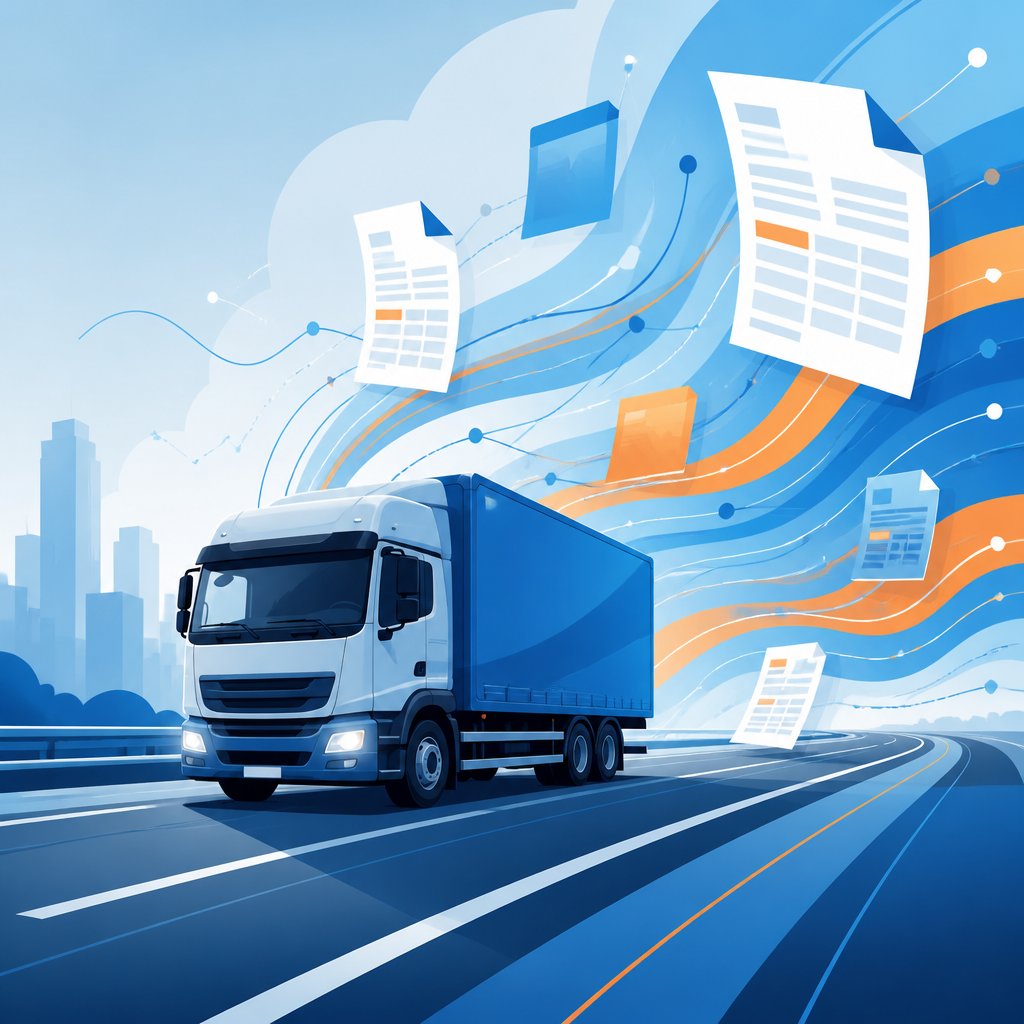
The good news: the structured electronic invoice (Factur-X, UBL) forces you to secure the data upstream. Data entry errors, missing lines, and incorrect VAT rates become visible before sending, not three weeks later during a customer dispute.
Pre-invoicing, POD, invoice: the key is upstream data
Too many carriers approach the reform as a simple change of format: moving from a PDF sent by email to a structured file transmitted via PDP. That’s reductive. The real challenge is the data chain that feeds the invoice.
The ideal cycle
- Transport order received (email, EDI, customer portal) with all pricing data.
- Execution and POD: signed proof of delivery, ideally dematerialized via e-CMR.
- Automatic pre-invoicing: aggregation of completed missions, application of pricing grids, calculation of surcharges.
- Quick human validation on discrepancies.
- Issuance of the electronic invoice via PDP in structured format.
Without this chain, the electronic invoice merely speeds up the delivery of incorrect information. With it, you win on both fronts: compliance and cash flow.
E-invoicing and e-CMR: don’t confuse the two
This is a very common confusion in the field. Let’s clarify:
The electronic invoice is an accounting and tax document, transmitted via PDP to your customer, governed by the General Tax Code.
The e-CMR is the digital version of the international consignment note, governed by the CMR convention and its additional protocol. It’s a transport document, not a tax document.
The two are complementary: the e-CMR secures proof of delivery and feeds pre-invoicing; the electronic invoice materializes the receivable and transmits it to your customer in a standardized format. A well-equipped carrier uses both, but via different software (or via an integrated tool capable of managing the entire cycle).
And where does the PDP fit in?
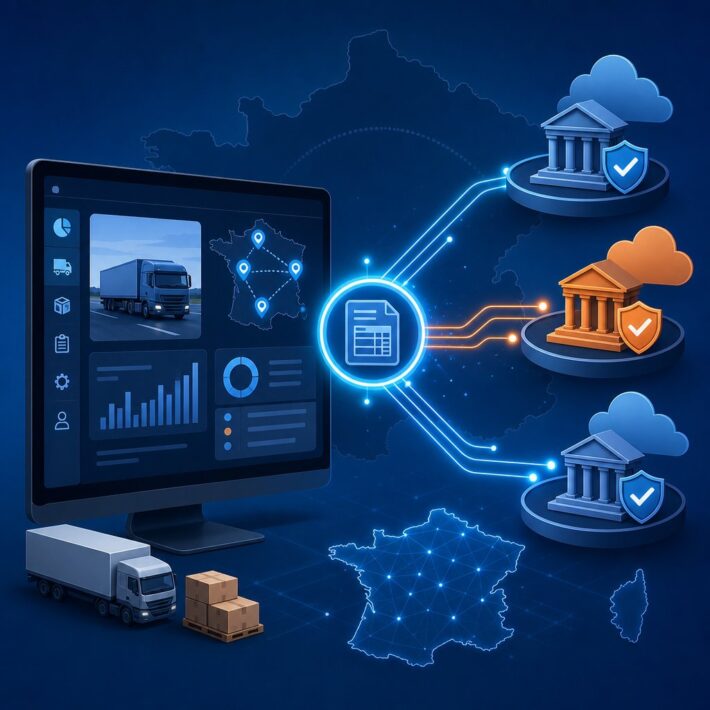
The PDP (Partner Dematerialization Platform) is the pipeline approved by the tax authorities that transmits your invoices to your customers and the data to the State. You need to choose one — but your invoicing software should be able to connect to any PDP, including one imposed by a major principal.
Checklist for carriers and cargo-bike logistics operators
Here are the concrete steps to tick off by September 2027:
- ✅ Verify that your SIREN is correctly registered in the official business directory.
- ✅ Choose a PDP (or verify that your software connects to several).
- ✅ Audit your current invoicing flows: how many invoices per month, how many lines, how many customers with specific pricing grids.
- ✅ Structure your pricing grids to enable automation (flat rate, per kilometer, time slots, surcharges).
- ✅ Set up subcontractor pre-invoicing if you regularly outsource.
- ✅ Dematerialize your PODs (e-CMR, mobile signature) to secure the upstream chain.
- ✅ Train your administrative team to read a structured invoice and manage PDP rejections.
How Everest supports you
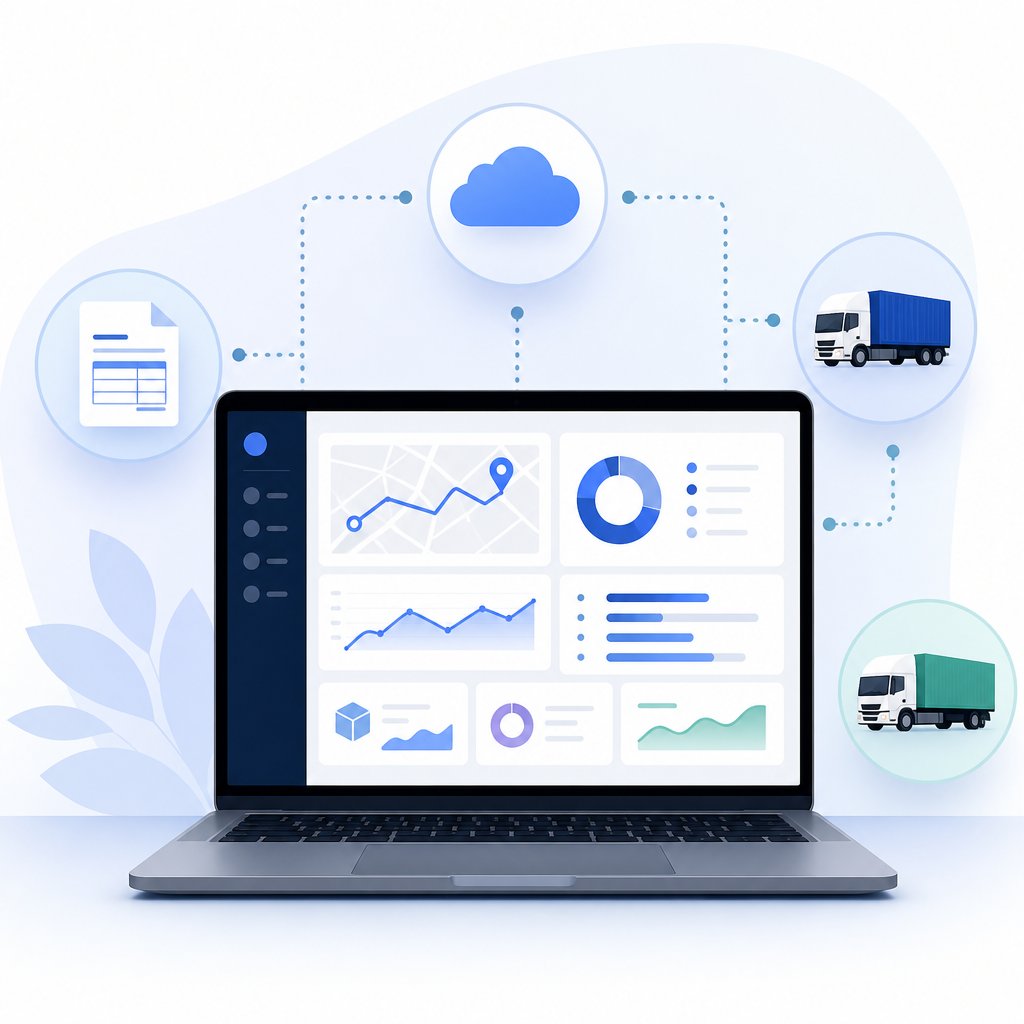
Everest is designed for carriers who want to tackle the reform without complicating their lives. Our approach is simple: you keep your usual tools, we integrate around them.
- Automated invoicing based on your transport orders and PODs, with automatic application of pricing grids and surcharges.
- Subcontractor pre-invoicing: Everest automatically generates invoicing proposals to be validated by your subcontractors, cutting processing time by a factor of five.
- PDP compatibility: Everest connects to any Partner Dematerialization Platform. You choose yours, or the one imposed by your customer, without changing tools.
- Flexible exports: PDF, Factur-X, CSV — to keep working with your current partners during the transition.
- Native integrations with Qonto, Pennylane, and the market’s main management and banking tools.
- API and MCP for carriers who want to automate further, connect their TMS, or manage invoicing from an AI assistant.
The idea isn’t to replace your accountant or your bank, but to send them clean, structured data ready to be processed — while complying with the new legal obligations.
Conclusion: anticipate, don’t just react
Electronic invoicing isn’t a threat, it’s an opportunity to professionalize a function often neglected in transport SMEs. Those who tackle the topic head-on from 2026 will win on three fronts: regulatory compliance, reduced payment delays, and stronger customer relationships.
The September 2027 deadline seems distant, but between choosing a PDP, restructuring pricing grids, and dematerializing PODs, twelve months go by quickly. Start with a simple audit of your current flows, then choose a tool that adapts to your ecosystem rather than the other way around. That’s exactly Everest’s promise: making you compliant without forcing you to change everything.