Dispatch and cargo bikes: the practical guide to running a low-carbon fleet day to day
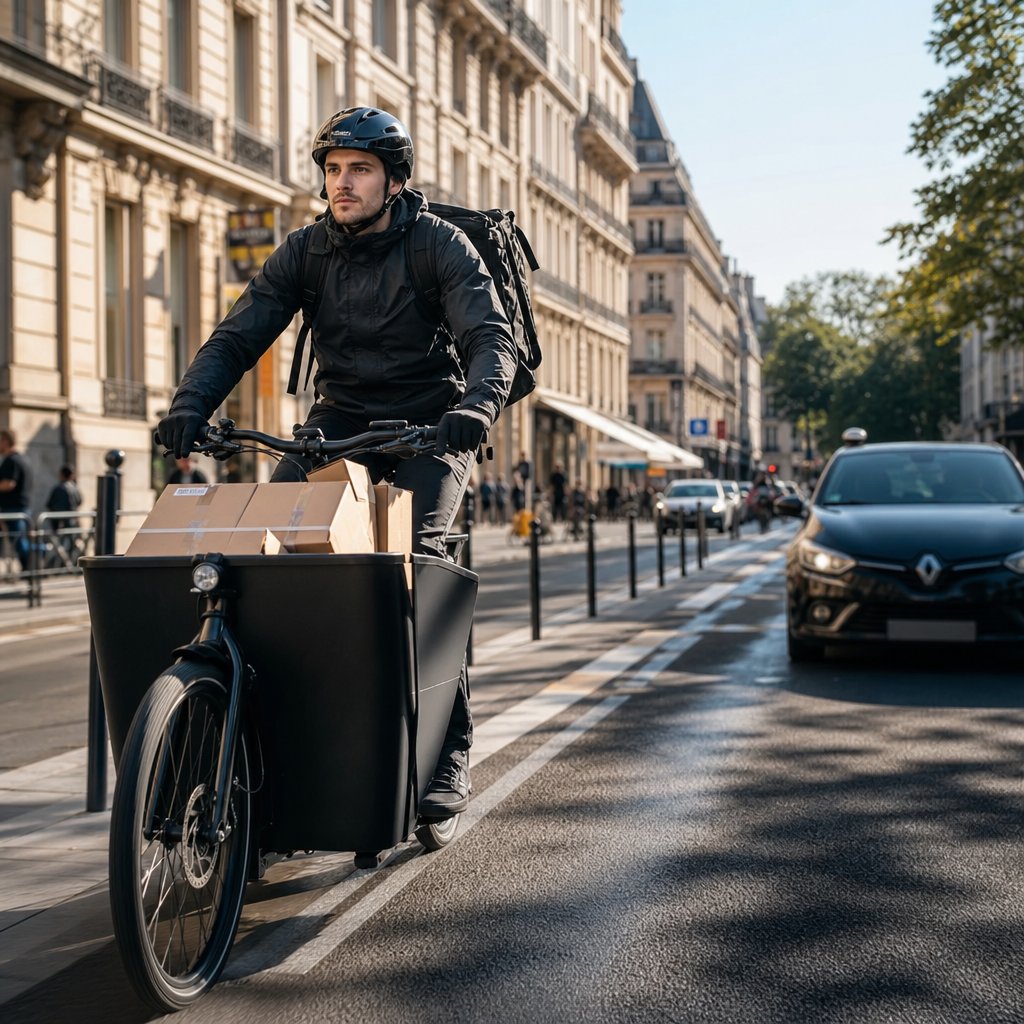
Managing a fleet of cargo bikes is nothing like managing vans. Cycle routes, courier range, weight constraints, tight city-centre time slots: cycle logistics has its own rules. And without the right software, dispatch quickly becomes a headache. Here’s how to structure your operations with the right tools, from must-have features to feedback from industry players.
Why cycle logistics demands a tailored dispatch
Last-mile delivery by cargo bike is not just a variant of road transport. It’s a profession in its own right, with its own specific constraints: low-emission zones, cycle lanes, transhipment points, urban micro-hubs, reduced loading capacity.
A cycle logistics dispatcher juggles daily with parameters that generic TMS platforms ignore: rider fatigue on a hilly route, the usable volume of a trailer, the tight delivery window of a shopkeeper in a pedestrian centre. Without a dispatch software designed for cargo bikes, these realities turn into unmanageable Excel files and suboptimal routes.
The daily challenges of a cargo bike dispatcher
- Assigning the right job to the right courier based on their zone, vehicle (bike, trailer, tricycle) and remaining load capacity
- Reacting in real time to new jobs, delays or unexpected events (punctures, bad weather)
- Ensuring traceability on every parcel with reliable proof of delivery
- Invoicing quickly clients with varied pricing structures (job-by-job, subscription, flat rate)
- Showcasing the carbon impact to clients who choose bikes for their CSR commitments
As François Mayaud, founder of Diligo, puts it: « The cargo bike isn’t a constraint, it’s a commercial asset. But you have to be able to prove it with hard numbers. »
The must-have features of cargo bike software
1. A route optimisation engine designed for bikes
Route optimisation in cycle logistics relies on parameters very different from road transport. Mileage, elevation, bike capacity (usable weight and volume), available cycle lanes, customer time slots: everything must be factored in.
A good engine calculates the optimal sequence in seconds, groups compatible jobs and provides a clear map view. The result: up to 30% more jobs per courier without lengthening the day.
2. Automatic dispatch with assignment rules
Automatic dispatch frees the dispatcher from repetitive tasks. You define your business rules (geographic zone, vehicle type, skills, priorities), and the software handles the assignment. A new urgent parcel comes in? It’s allocated to the nearest available courier in seconds.
The goal isn’t to replace the dispatcher, but to give them time to handle exceptions and customer relationships.
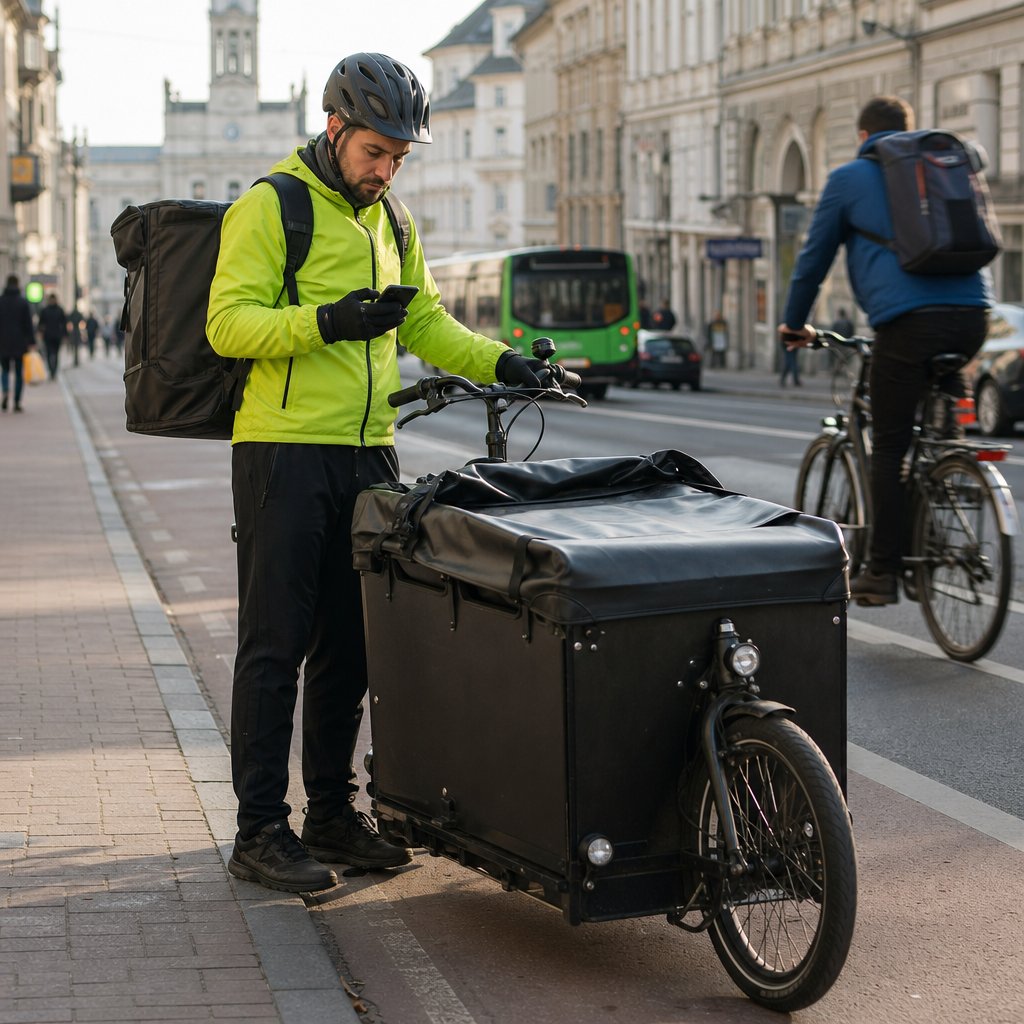
3. A robust and simple courier app
The cycle courier doesn’t have time to fight with a complex interface. They need a fast driver delivery app, readable in bright sunlight, working offline, with:
- Day’s job list in optimised route mode
- Built-in navigation to the next stop
- Parcel scanning and signature or photo capture as proof of delivery
- Customisable statuses (picked up, in progress, delivered, refused)
- Automatic geolocation for real-time tracking
4. Real-time tracking and customer notifications
The end customer expects an Amazon-worthy experience. Real-time tracking link, dynamic ETA, SMS and email notifications: these standards are now non-negotiable, even for a local shopkeeper.
A good platform offers full white-label branding: your name, your logo, your style on the tracking link sent to the recipient. It’s your image that stands out, not the software’s.
5. Reliable, automated proof of delivery
The POD (proof of delivery) is the key document in case of dispute. Photo, signature, drop-off code, QR code scan: your software must be able to collect and archive all this evidence automatically and link it to each mission. Better still, some tools now use AI to validate POD quality in real time.
6. Invoicing and pre-invoicing
Invoicing is the lifeblood of the business. A dispatcher sometimes spends several days a month compiling jobs to issue invoices. The right software automatically generates pre-invoices based on your pricing grids (job-by-job, subscription, flat rate, volume tier), applies the fuel surcharge when relevant, and triggers payment via Stripe or direct debit.
Real-world cases: what cycle logistics expects from a TMS
Vlove: industrialising express bike delivery
Christophe Bresch, founder of Vlove, built his business on the promise of fast, low-carbon delivery in Paris. To deliver on that promise at scale, he structured his dispatch around a tool capable of simultaneously managing urgent parcel jobs, scheduled rounds and reverse logistics.
Pickup Courrier: digitising the last mile
At Pickup Courrier, Chirine Chatila has bet on end-to-end traceability. Every parcel scanned, every delivery time-stamped, every proof of delivery archived: client trust is built on data.
Kargo Bike Service: optimising a multi-vehicle fleet
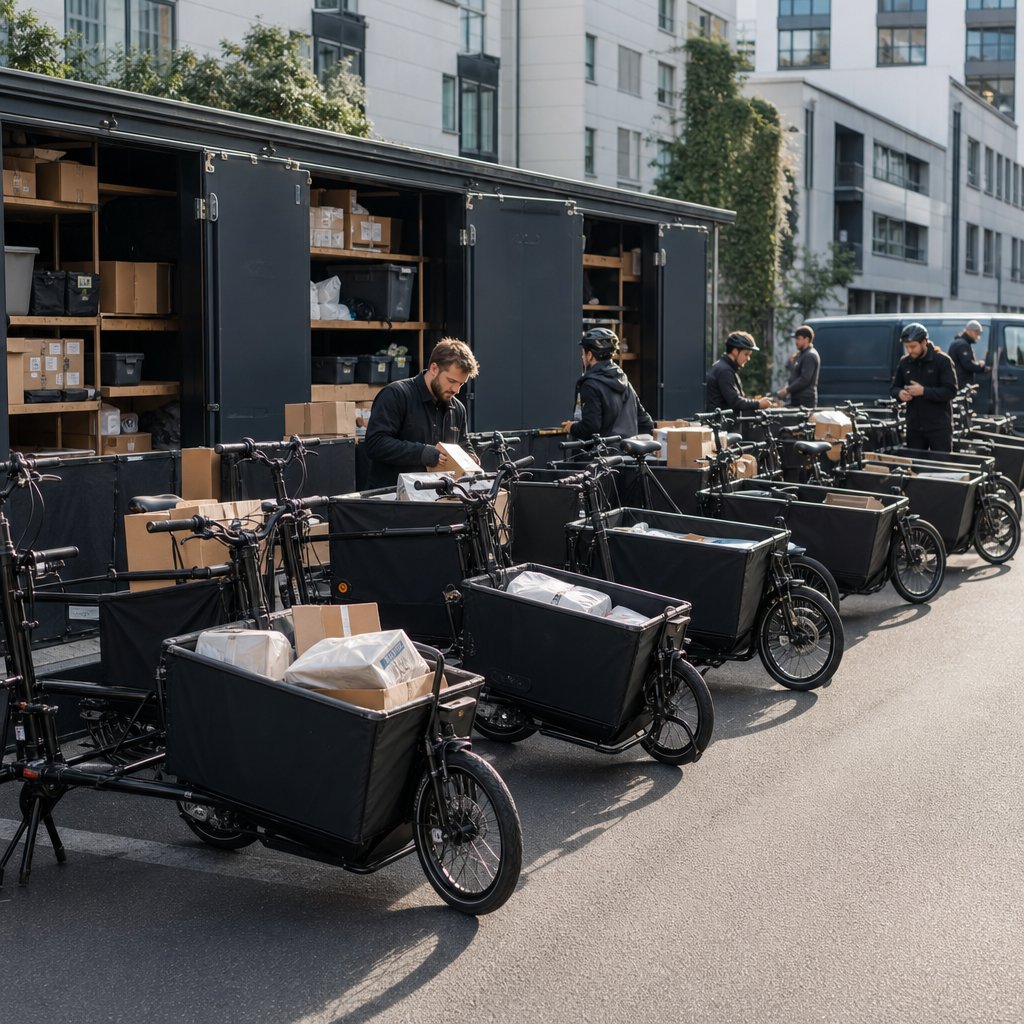
Gabriel Fernandez, head of Kargo Bike Service, manages a heterogeneous fleet: cargo bikes, trailers, tricycles. Allocating the right job to the right vehicle based on volume and zone is a daily challenge that only a configurable optimisation engine can handle effectively.
Measuring performance: the essential KPIs
Without monitoring, no progress. Here are the indicators a cycle logistics manager should track daily:
- Number of jobs per courier per day: a key productivity indicator
- First-time delivery rate: service quality
- Average delivery time by type (express, next-day, scheduled)
- Complete POD rate: operational quality and compliance
- Cost per job: financial health
- CO2 saved: commercial argument and CSR reporting
A well-designed logistics dashboard turns this data into operational decisions: redeploying couriers, adjusting prices, identifying profitable zones.
How Everest meets the challenges of cycle logistics
Everest was designed in partnership with cycle logistics operators. Here are the features most used by these customers:
- Multi-criteria route optimisation engine: takes into account bike capacity, courier skills, time windows and delivery zones to generate a genuinely workable route in seconds.
- Automatic dispatch with custom rules: assigns incoming jobs based on your business criteria, with list, map and schedule views synchronised in real time.
- Sherpas courier app: iOS and Android, works offline, parcel scanning, photo and signature POD capture, automatic geolocation for frictionless tracking.
- Full white-label branding: customer tracking link in your name, SMS and email notifications in your branding, logoed invoices. Your clients see only one brand: yours.
- Podchecker.ai: automated proof-of-delivery verification using artificial intelligence, with 99% accuracy and up to 16% fewer disputes.
- Automated invoicing: multiple pricing grids, subcontractor pre-invoicing, integrated Stripe payment, CO2 savings tracking for your CSR reports.
Key takeaways
- Cycle logistics demands a dispatch software designed for its constraints: capacity, elevation, tight time slots, multi-vehicle operations.
- An optimisation engine and automatic dispatch can deliver up to 30% productivity gains per courier.
- The customer experience relies on real-time tracking, branded notifications and the quality of proof of delivery.
- Automated invoicing and KPI-based management are the keys to profitability.
- Operators who invest in the right tool turn their low-carbon commitment into a measurable competitive advantage.
Choosing a dedicated platform means equipping yourself to industrialise a demanding profession while keeping the agility that makes cargo bikes so valuable in the city.