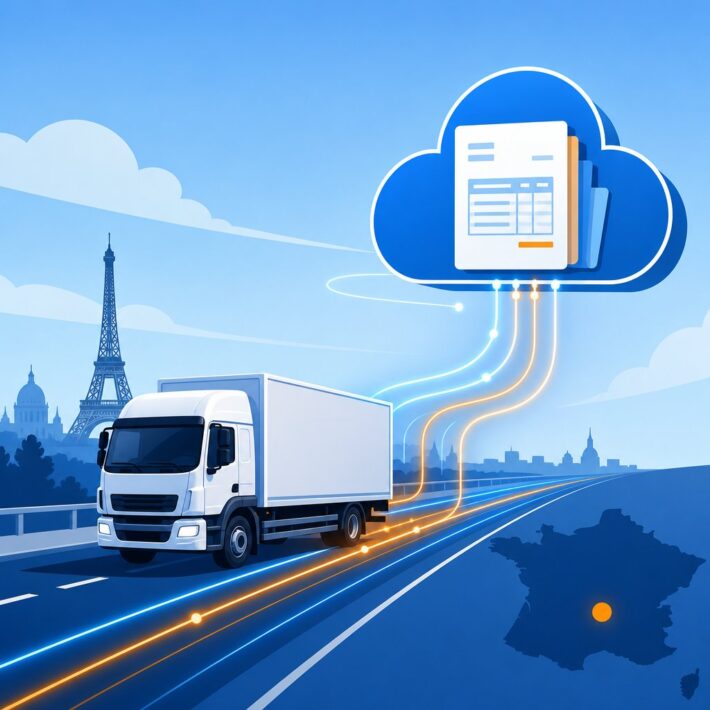
Transport pre-invoicing: definition, how it works and benefits for carriers

Transport pre-invoicing: a key but poorly understood mechanism
In the road freight transport sector, pre-invoicing is a common practice… but rarely well explained. Between carriers who subcontract part of their rounds, freight forwarders who orchestrate complex flows, and independent providers waiting to be paid, pre-invoicing plays a pivotal administrative and financial role.
Yet, as soon as you type “pre-invoice” or “pre-invoicing” into Google, you come across vague, sometimes contradictory definitions that are often far removed from field reality. This article has a simple goal: to provide a clear definition, explain how it actually works in transport, and show why automating this process is a game-changer for operators.
What is pre-invoicing? A simple definition
ptrPre-invoicing (sometimes written pre invoicing or prefacturation in French) refers to the process of preparing, validating and issuing a costed document upstream of the final invoice. This document, called a pre-invoice, summarises the services performed and their amount before an official invoice is issued.
Pre-invoice vs invoice: what’s the difference?
The confusion is common, but the difference is clear:
- The pre-invoice is an internal or contractual document, with no accounting value. It is used to validate the details of services between two parties.
- The invoice, on the other hand, is a legal and accounting document. Once issued, it triggers tax obligations (VAT, accounting entries) and the payment deadline.
In other words: the pre-invoice is a costed proposal to be validated, the invoice is the legal act of the transaction.
Pre-invoicing or pre invoicing: which spelling?
Both spellings coexist in professional usage. Standard English tends to favour the hyphenated form “pre-invoicing”, in line with the general rule for short prefixes such as pre-. But “pre invoicing” (without a hyphen) remains widely used in business software and contracts. Neither is incorrect: choose the one that matches your internal editorial guidelines.
How does pre-invoicing work in transport?
In transport, pre-invoicing mainly occurs in two contexts: the customer relationship (the carrier prepares a pre-invoice before invoicing the principal) and especially subcontractor management, which is by far the most strategic use case.
The typical case: pre-invoicing subcontractors
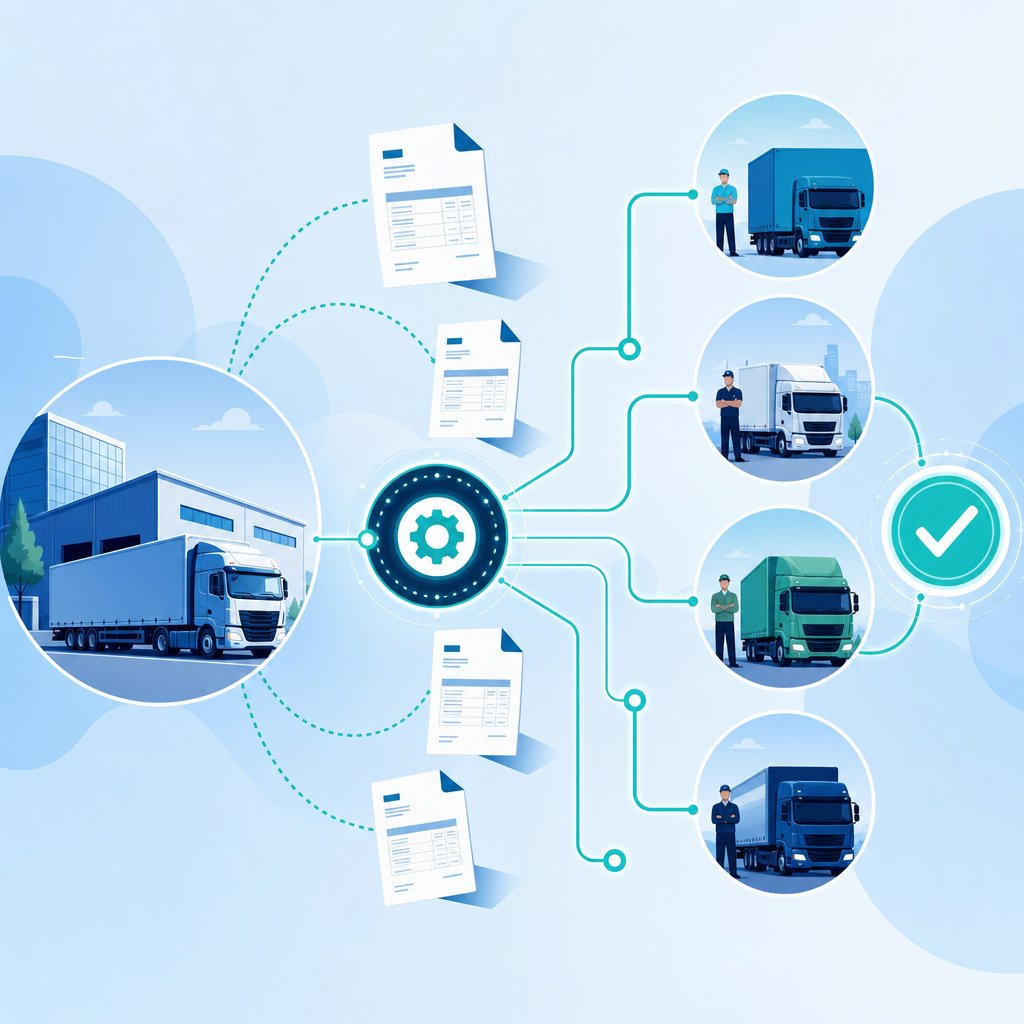
When a carrier or freight forwarder uses subcontractors (chartered hauliers, tractioners, occasional providers), the classic flow is as follows:
- The subcontractor carries out a service (round, traction, delivery).
- The operator collects the data: transport order, negotiated price, any additional fees (tolls, waiting times, fuel).
- A pre-invoice is generated on the principal’s side, summarising everything that will be paid to the subcontractor.
- The subcontractor validates or disputes this pre-invoice.
- Once validated, it becomes the basis for the official invoice issued by the subcontractor (or self-billed by the principal depending on the mandate).
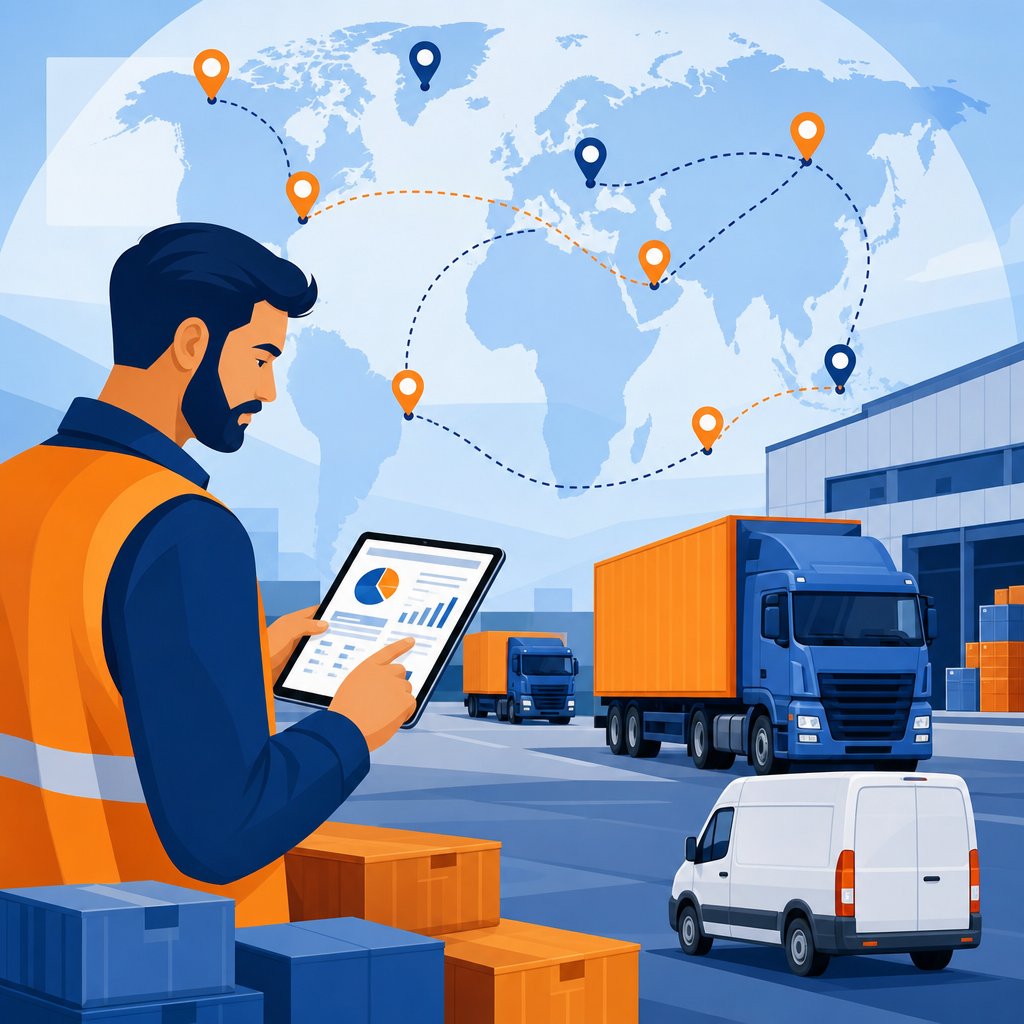
Why this process is crucial
Without pre-invoicing, two disastrous scenarios regularly arise:
- The subcontractor invoices from memory, with frequent discrepancies compared to what was agreed. The result: disputes, follow-ups, blocked payments.
- The operator quickly receives dozens of unverifiable invoices, which paralyses the accounting department and damages the provider relationship.
Pre-invoicing therefore acts as a contractual safety net: everyone validates the figures before the accounting machine kicks in.
What is pre-invoicing actually used for?
1. Securing the relationship with subcontractors
By sending a clear pre-invoice, the principal shows good faith. The subcontractor knows exactly what they will receive, with no surprises. This transparency strengthens subcontractor loyalty, a major issue in a market where finding reliable subcontractors is increasingly difficult.
2. Drastically reducing disputes
Rather than discovering a €200 discrepancy on an already-issued invoice, the discrepancy is identified and corrected upstream. Time-consuming disputes disappear.
3. Speeding up payment times
A validated pre-invoice = a pre-checked invoice. The accounting department no longer has to redo the verification work. Payments go out faster, which improves the provider relationship and the subcontractor’s cash flow.
4. Making round-by-round profitability reliable
By centralising transport purchase costs in real time via pre-invoicing, the operator has an accurate view of their margin by file, by customer, by round. This is an often underestimated management lever.
“Until you’ve pre-invoiced, you don’t really know how much you’ve earned on a file.”
The limits of manual pre-invoicing
Many transport companies still manage their pre-invoicing on Excel, or even on paper. This way of working raises several problems:
- Multiple data entry: the same information is re-entered from the TMS, the subcontractor’s email, the contract, etc.
- Human errors: a price miscopied, a fee forgotten, a waiting time not invoiced.
- No traceability: impossible to know who validated what, and when.
- Slowness: generating 50 pre-invoices by hand at month-end takes one person several days.
At moderate volumes, it’s manageable. But as soon as you go beyond a dozen regular subcontractors, automation becomes essential.
How to automate transport pre-invoicing?
Automating pre-invoicing means connecting three building blocks:
- The transport plan (orders, rounds assigned to subcontractors).
- The pricing terms negotiated with each subcontractor (grids, flat rates, surcharges).
- A validation portal where the subcontractor reviews, validates or disputes their pre-invoice.
Once these blocks are connected, the pre-invoice is automatically generated when the round closes. The subcontractor receives a notification, validates with one click, and the official invoice can be issued (or self-billed) immediately afterwards.
The measurable benefits of automation
- Up to 80% time saved on the monthly pre-invoicing process.
- Near-disappearance of disputes thanks to upstream validation.
- Better subcontractor satisfaction (fast payments, transparency).
- Real-time management of operating margin.
Everest: transport pre-invoicing designed for operators
Everest is a platform dedicated to managing subcontractors and providers in transport. Pre-invoicing is at the heart of the product, because we know it determines the entire operational and financial fluidity of a transport company.
With Everest, you can:
- Automatically generate pre-invoices for your subcontractors from your orders and pricing grids.
- Provide a dedicated portal to each subcontractor to validate or dispute amounts in a few clicks.
- Centralise all documents (CMR, delivery notes, supporting documents for additional fees) in one place.
- Track in real time the validation, invoicing and payment status of each file.
- Ensure compliance (self-billing, subcontractor document checks, URSSAF certificates).
The result: less time wasted on follow-ups and checks, a cleaner subcontractor relationship, and finally manageable profitability per file.
Conclusion: pre-invoicing, a standard to adopt
Long perceived as an administrative detail, pre-invoicing is in reality a major performance lever for transport companies. It secures the relationship with subcontractors, smooths cash flow, makes margin management reliable, and saves considerable time for operations and accounting teams.
Whether you write “pre-invoicing” or “pre invoicing”, the challenge remains the same: moving away from all-Excel and industrialising this critical process. Players who have done so see a rapid return on investment, and above all a transformed subcontractor relationship — a decisive competitive advantage in a tight market.
If you want to see what automated pre-invoicing tailored to transport actually looks like, the Everest team will be delighted to show you a demonstration tailored to your business.