Courier app and management software: the winning duo to steer your deliveries
Equipping your drivers with a mobile application has become second nature. But a courier app deployed on its own, without a delivery management software behind it, is like a GPS without a map: it tells you where you are, never where you’re going. Real operational performance comes from the pairing of field application + TMS (Transport Management System). One captures data on the ground, the other orchestrates it, invoices and delivers it to the end customer. Here’s why this duo has become the standard today for any carrier, cyclo-logistics operator or retailer who wants to steer their routes without losing control.
driver app alone: the limits of an isolated tool
Most companies start by looking for a driver app: a mobile tool the courier installs on their smartphone to receive missions, scan parcels and collect proof of delivery. It’s useful, but largely insufficient if you stop there.
A driver app disconnected from a centralised management system poses three major problems:
- No overview: the operator doesn’t know in real time which driver is running late, which is available, or where to reassign a route.
- Frozen data: proofs of delivery remain on the phone or in an inbox, with no link to invoicing or customer relations.
- No scalability: impossible to grow without multiplying spreadsheets and phone calls.
A courier app without management software is operations without piloting. You see the present, never the whole picture.
Delivery management software: the brain of the operation
A delivery management software (or TMS) is the platform that centralises everything the field app can’t do alone: order intake, planning, dispatch, tracking, invoicing and reporting. Without it, your drivers work, but your company doesn’t capitalise.
The four key functions of a modern TMS
- Smart dispatch: automatic or manual assignment of jobs to the right driver based on their zone, workload and vehicle.
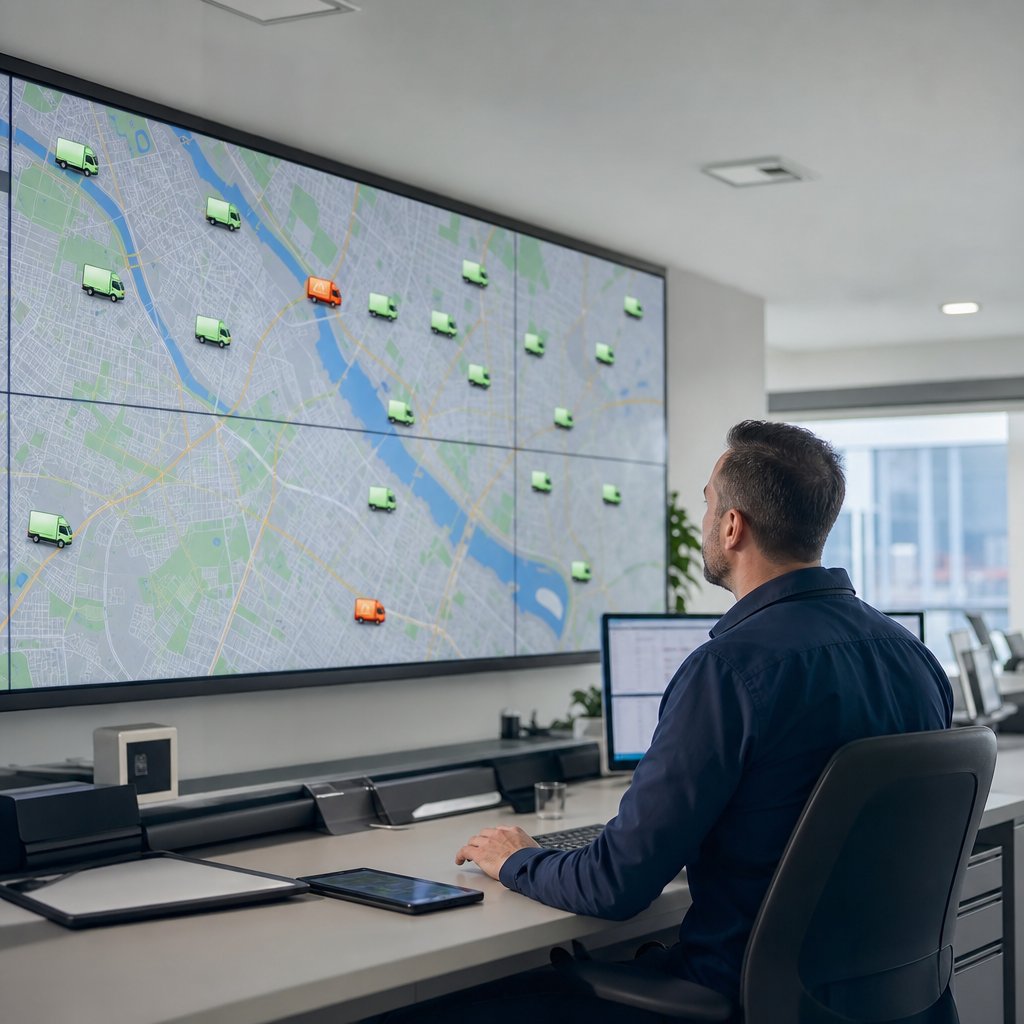
- Real-time tracking: courier geolocation, delivery statuses, alerts in case of discrepancies.
- Automated invoicing: invoice generation from completed jobs, with no re-entry.
- Reporting: performance KPIs (on-time delivery rate, average lead time, productivity per driver).
The TMS is the tool of the operator, the dispatcher and management. The courier app is the driver’s tool. The two don’t oppose each other: they complement each other.
Why the app + TMS duo is a game-changer
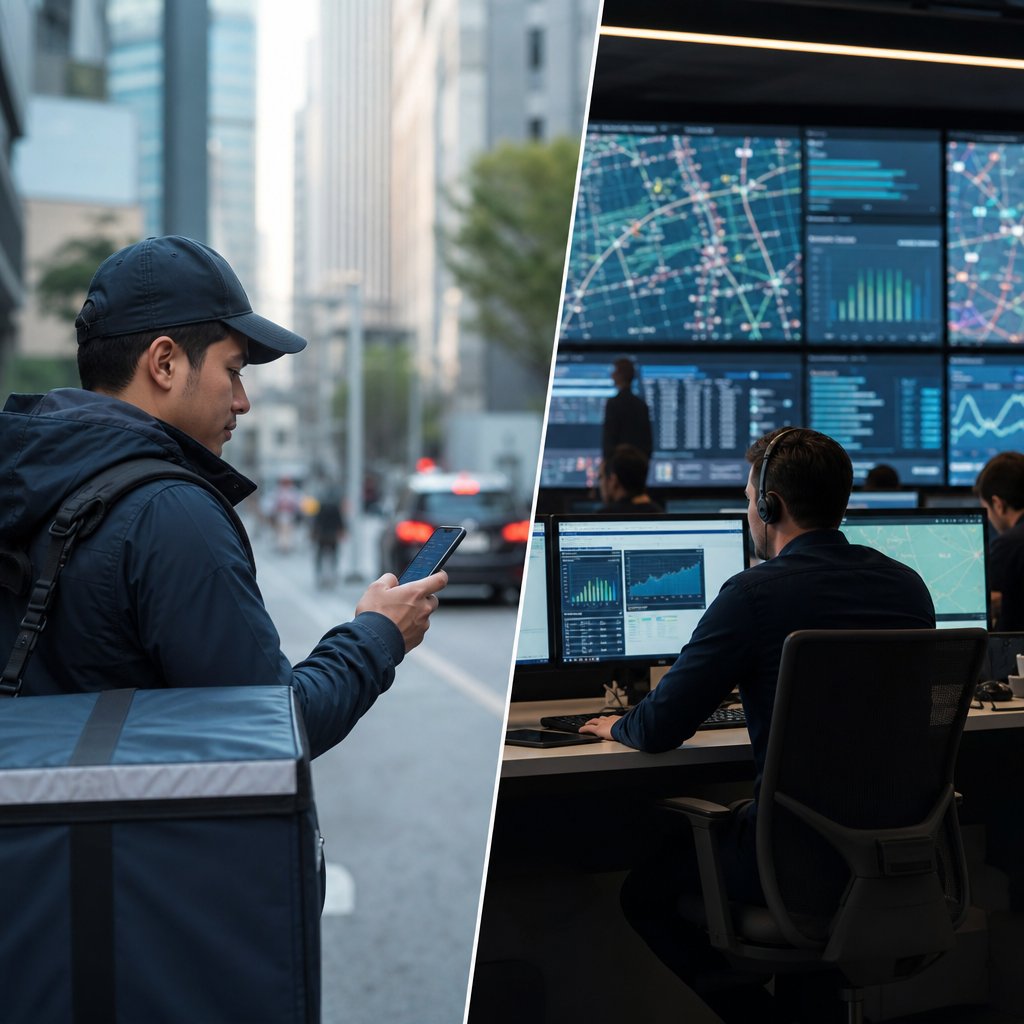
When the driver’s delivery management application communicates continuously with the TMS, every field action flows back instantly into the central system. It’s this bidirectional flow that turns a simple app into an operational lever.
Driver side: a simple app that doesn’t think for them
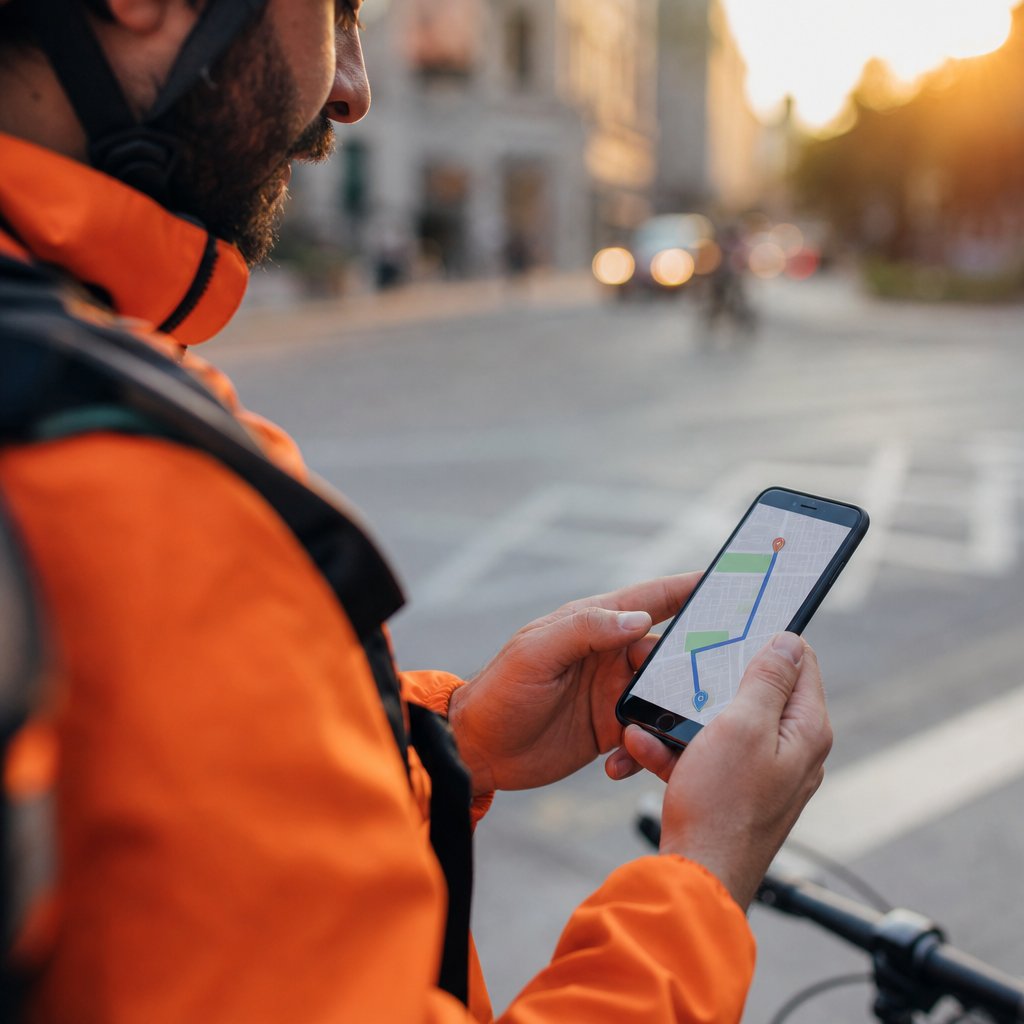
The courier app receives missions via push notification, displays the optimised route order, opens Waze or Google Maps in one tap, allows capturing a photo, signature or barcode scan as proof of delivery, and updates statuses (in progress, delivered, failed, refused) in real time.
Operations side: a 360° view
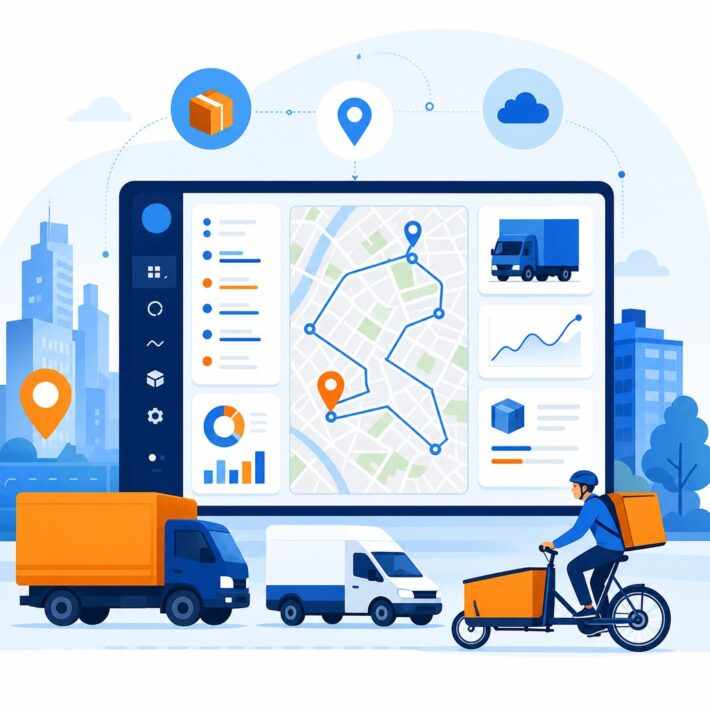
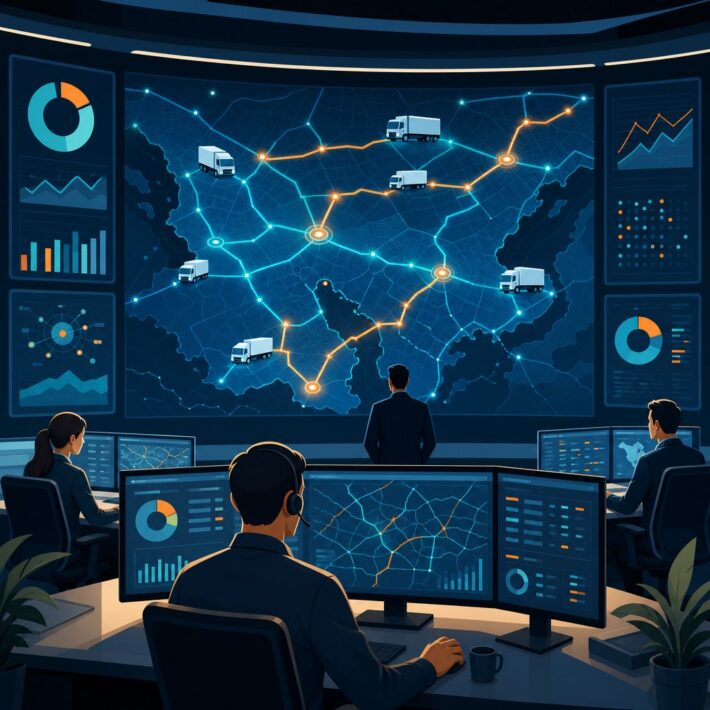
While the driver works, the operator sees on their map each courier moving, each parcel changing status, each proof of delivery automatically archived in the customer file. If a route falls behind, they can reassign in one click. If a customer calls to ask where their parcel is, the answer is on screen.
End customer side: a modern experience
The client receives a tracking link, sees their driver approaching in real time, receives proof of delivery by email and can retrieve their invoices from a dedicated portal. This is the level of service that wins — or loses — a tender today.
Criteria for choosing the right driver app
Not all courier apps are created equal. Before signing, systematically check these points:
- Field ergonomics: a driver must be able to use the app with gloves on, in the rain, with a minimum of clicks.
- Offline mode: basements and car parks exist. The app must keep working without a network and sync as soon as the connection returns.
- Complete proofs of delivery: photo, signature, scan, geotag, timestamp.
- Android and iOS compatibility, on personal smartphones (BYOD) or company fleets.
- Native integration with a TMS: this is the decisive criterion. A standalone app with no connector to a management system will block you within 12 months.
Choosing based on your business: carrier, cyclo-logistics, retailer
The app + TMS duo plays out differently depending on your activity.
For the multi-client carrier
You manage dozens of clients, several types of jobs (express, scheduled, distribution) and a mixed fleet. You need a TMS capable of handling multi-rate invoicing, EDI with your customers and a driver app that supports several mission types in a single day.
For the urban cyclo-logistics operator
Your challenges: stop density, last mile, bike constraints. You need an ultra-fast app to use between two stops, a dispatch capable of optimising dense routes, and metre-accurate real-time tracking to reassure your e-commerce customers.
For the retailer insourcing deliveries
You deliver your own customers from your stores or warehouses. Above all you’re looking for a premium customer experience: tracking, respected time slots, named proofs of delivery. The TMS must integrate with your e-commerce or ERP, and the app must reflect your brand.
Everest and Sherpas: an ecosystem designed for this duo
This is exactly the philosophy behind our offering. Everest is the delivery management software (TMS) that centralises order intake, dispatch, real-time tracking and invoicing. Sherpas is the driver app your couriers install on their smartphones to execute the routes.
The two don’t operate in silos: they are natively connected. Every action in Sherpas (mission accepted, parcel scanned, delivery validated) flows back instantly into Everest. Every decision made in Everest (new job, reassignment, address change) pushes immediately to the right driver’s phone.
Concretely, you benefit from:
- A unified dispatch: one screen to steer your entire fleet.
- End-to-end traceability: from customer order to archived proof of delivery.
- Automatic invoicing based on jobs actually completed and validated by the app.
- A client portal for your customers, with real-time tracking and access to supporting documents.
Whether you’re an independent courier starting out, a growing carrier or a retailer structuring its deliveries, the Everest + Sherpas pairing adapts to your scale.
Conclusion: stop choosing between app and software, choose both
The real question isn’t “which driver app should I choose?” but “which software ecosystem should I use to steer my deliveries?”. A courier app without a TMS is an orphaned field tool. A TMS without a driver app is blind piloting. The duo, on the other hand, gives you what every delivery professional is looking for: visibility, productivity and quality of service.
Before signing for a standalone application, ask yourself the right question: in 6 months, when you’ve doubled your volume, will your tool keep up? If the answer isn’t a clear yes, then you’re missing half the solution.