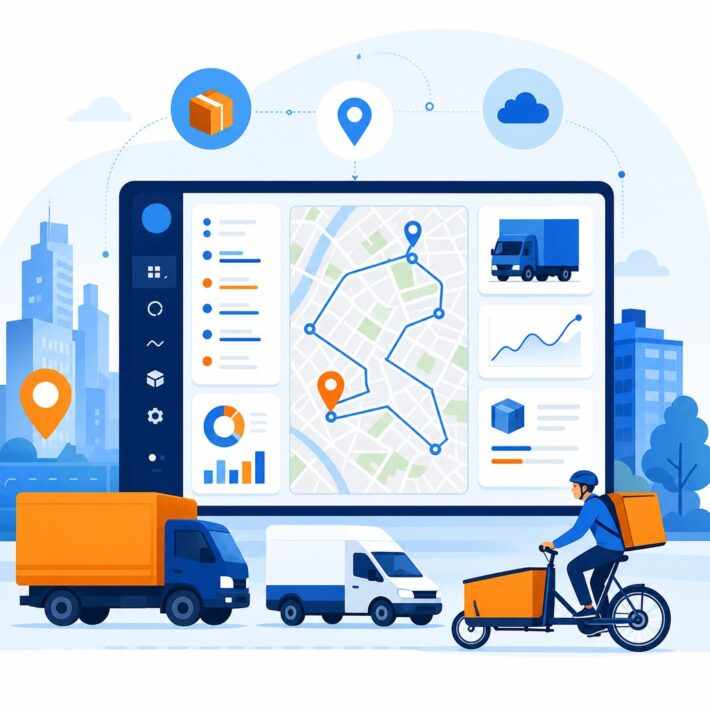
What is a TMS Software? Everything You Need to Know About Digitalized Transport Management
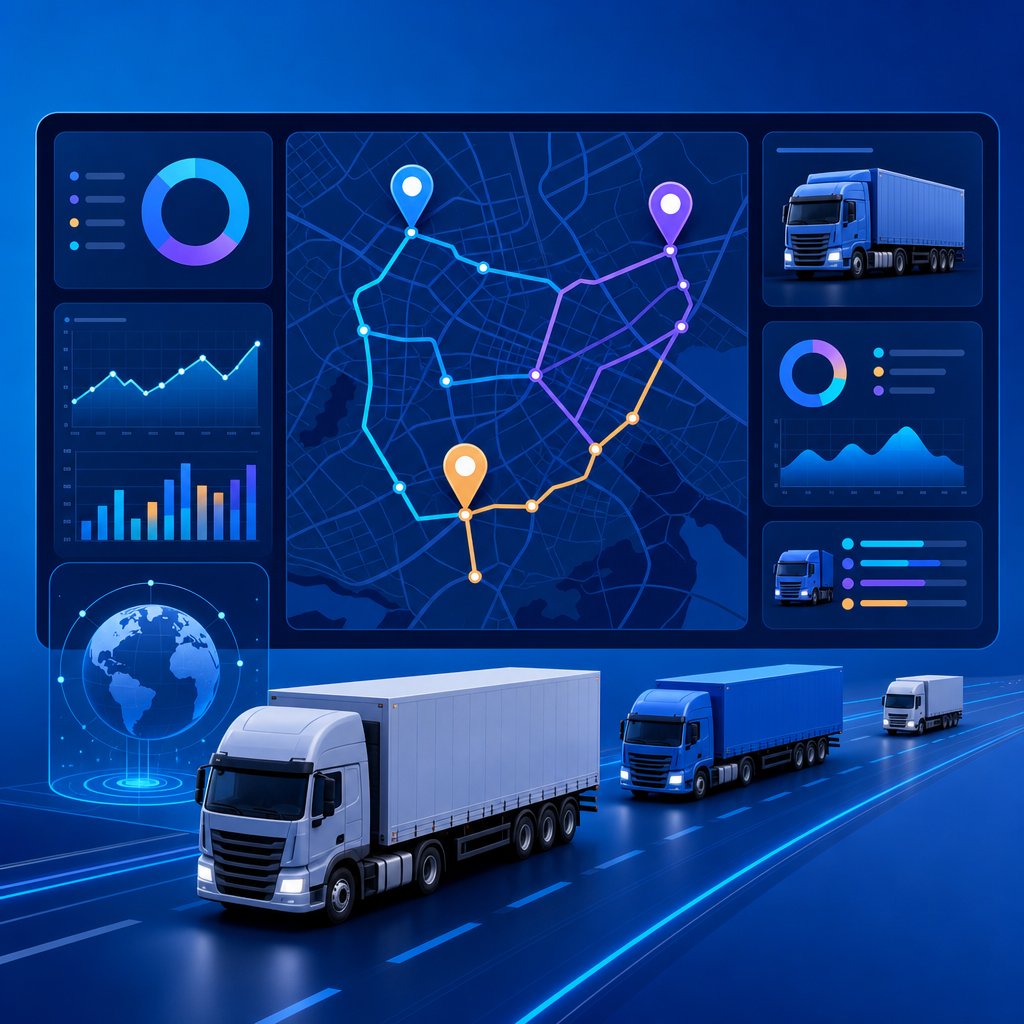
TMS software: the digital backbone of your transport chain
In a logistics sector where every minute, every kilometer and every liter of fuel counts, TMS software (Transport Management System) has established itself as an essential tool. Whether you are a carrier, industrial shipper or 3PL provider, a well-chosen TMS can radically transform your productivity, your margins and the quality of service offered to your customers.
But concretely, what is a TMS? What is it really used for? What features should you expect and what measurable benefits can you derive from it? This article provides a complete overview of the subject to help you understand — and decide.
Definition: what is a TMS software?
A TMS software is an IT solution designed to plan, execute, track and invoice freight transport operations. It acts as a digital conductor between customer orders, internal resources (drivers, vehicles, subcontractors) and the information flows related to delivery.
Where an ERP manages the company as a whole and a WMS handles warehouse management, the TMS focuses specifically on the movement of goods: from order intake to payment of the service, including route optimization and real-time tracking.
Who is a TMS for?
- Road carriers: to manage their fleet, optimize their routes and automate invoicing.
- Industrial shippers and e-merchants: to orchestrate their multi-carrier shipments and control their costs.
- 3PL/4PL logistics providers: to offer their customers visibility and performance indicators.
- Distributors and retailers: to ensure reliable last-mile deliveries.
The key features of modern TMS software
Not all TMS are equal, but the most complete solutions generally cover four major functional blocks.
1. Route planning and optimization
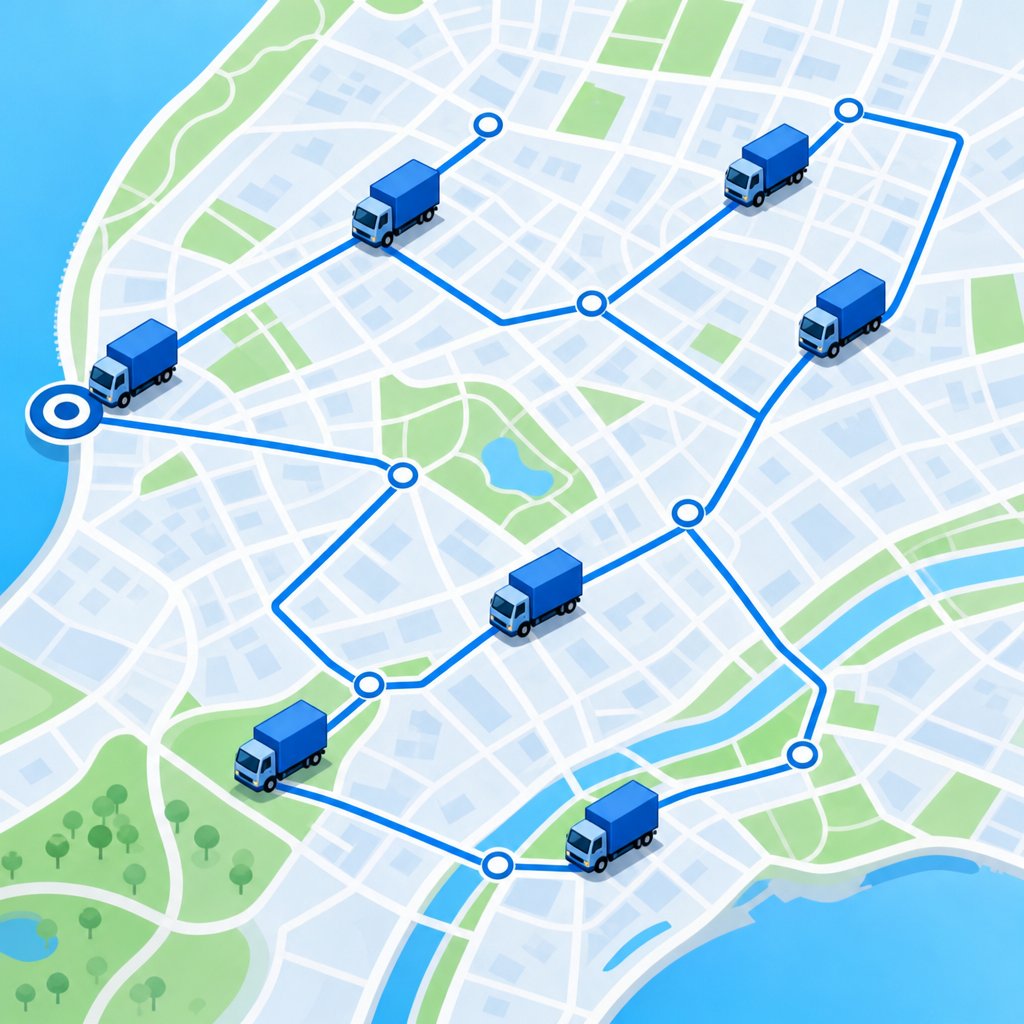
This is the historical core of the TMS. The planning module makes it possible to automatically build optimized routes by taking into account:
- delivery constraints (time slots, accessibility, vehicle type)
- available capacity (volume, weight, pallets)
- distances, driving times and cost per kilometer
- social regulations (driving hours, CSR)
A good optimization algorithm can reduce mileage by 10 to 25% and generate immediate fuel savings.

2. Execution and dispatch
Once the routes have been planned, the TMS handles their operational execution:
- sending route sheets to drivers via a mobile application
- managing last-minute changes (cancellations, additions)
- dynamic resource allocation in case of unexpected events
- automated communication with recipients (SMS, notification emails)
3. Real-time tracking and traceability
End-to-end visibility has become a strong customer requirement. The TMS centralizes GPS positions, delivery statuses and digital proof (electronic signature, photos, e-CMR) to offer complete traceability.
“Today, an end customer who does not have access to tracking of their delivery considers the service as deficient, regardless of the actual quality of the service.”
4. Invoicing and cost control
The last link, often underestimated: the TMS automates customer invoicing based on the services actually performed and makes it possible to control supplier invoices (charterers, subcontractors). It also provides detailed cost accounting by route, by customer or by vehicle.
What concrete benefits for your business?
The value of a TMS software is not limited to digitalization. The measurable gains break down along three main axes.
Reduction of operational costs
- -10 to -30% on transport costs thanks to route optimization
- -50% of time spent on repetitive administrative tasks
- Significant decrease in disputes and credit notes thanks to documentary traceability
Improved quality of service
A TMS directly improves key indicators of logistics performance: service rate (OTIF), respect of time slots, complaint rate, customer NPS. The transparency offered to recipients strengthens the perception of reliability.
Strategic management through data
By consolidating all operational data, the TMS becomes a true control tower. Dashboards, KPIs and predictive analytics make it possible to identify areas of waste, better negotiate with subcontractors and anticipate activity peaks.
SaaS TMS or on-premise TMS: which model to choose?
The vast majority of modern solutions are now offered in SaaS mode (cloud), with a monthly subscription. This model has several advantages:
- fast deployment (a few weeks instead of several months)
- automatic updates without interruption
- multi-device accessibility (PC, tablet, smartphone)
- controlled entry cost, with no hardware investment
On-premise solutions, installed on the company’s servers, remain relevant for organizations with strong confidentiality constraints or very specific integration needs.
How to successfully integrate a TMS?
Adopting a TMS software is a structuring project. A few best practices to maximize the return on investment:
- Frame the need by involving operations, sales, administration and IT.
- Prioritize features according to your maturity: no need to aim for predictive AI if planning is still manual.
- Check integration capabilities with your ERP, your WMS and your partners (EDI, API).
- Support change: training of dispatchers and drivers is often the key success factor.
- Measure gains from the first months with precise KPIs (cost/km, service rate, fill rate).
The Everest of digitalized transport: aiming for the summit of performance
Deploying a TMS is a bit like preparing to climb Everest: you don’t tackle the summit without preparation, without suitable equipment or experienced guides. Companies that succeed in their digital transformation are not those that choose the most powerful software, but those that progress through controlled stages.
The base camp is the digitalization of routine operations: transport orders, route sheets, proof of delivery. The intermediate camps correspond to route optimization, connection with partners and invoicing automation. The summit is called data-driven logistics: predictive algorithms, artificial intelligence, multi-criteria optimization scenarios in real time.
As in high mountains, each stage consolidates the next. A well-integrated TMS then becomes the indispensable sherpa of your supply chain: discreet in appearance, but without which the ascent would be impossible.
Conclusion: a structuring investment for your logistics
A TMS software is no longer a luxury reserved for large groups. With the advent of SaaS, high-performance and accessible solutions exist for all players in transport and logistics. Beyond the immediate gains on costs and productivity, it above all makes it possible to sustainably professionalize your business, build customer loyalty through quality of service and build a competitive advantage that is difficult to catch up with.
Before getting started, take the time to analyze your processes, identify your friction points and define your priority objectives. The right TMS is the one that matches your current maturity while giving you the ability to evolve tomorrow. One thing is certain: in a sector that is digitalizing at high speed, sticking with manual tools or Excel spreadsheets becomes a little more risky every day.