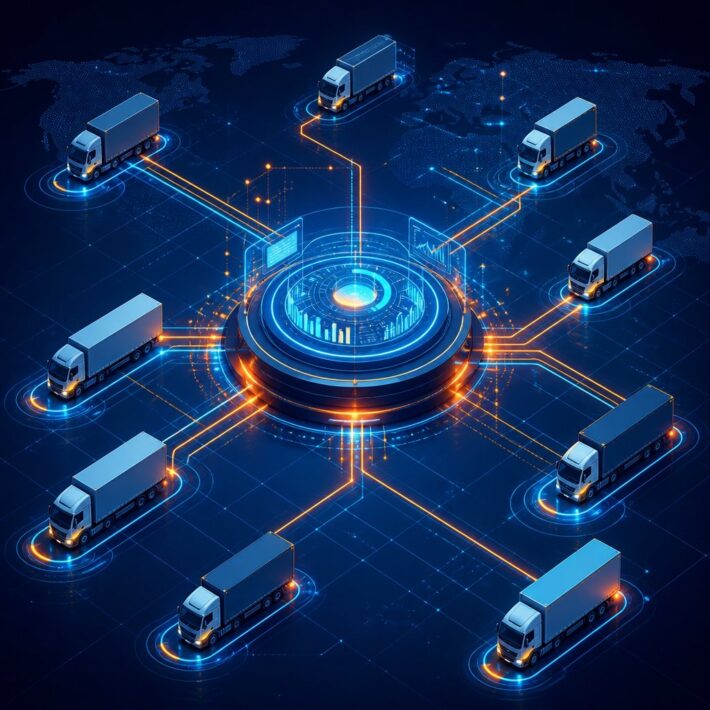
Reducing mileage, respecting time slots, satisfying customers: the multi-criteria optimization challenge
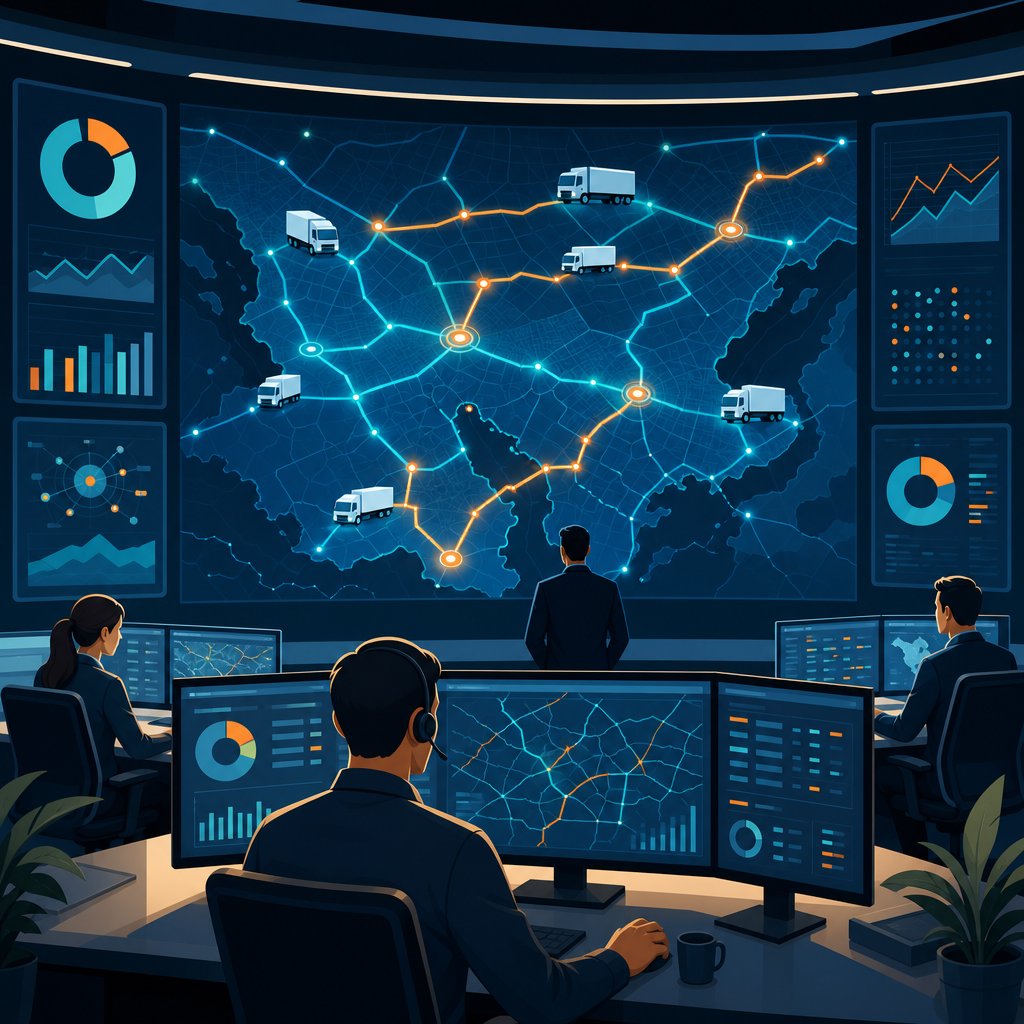
Route optimization: much more than a simple itinerary calculation
For a long time, optimizing a delivery route boiled down to a simple question: what is the shortest path between points A, B and C? This vision, inherited from the classic traveling salesman problem, no longer matches the operational reality of modern carriers. Today, a logistics manager must juggle dozens of simultaneous constraints: customer-imposed time slots, mandatory driver breaks, variable vehicle capacities, restricted city-center zones, VIP account priorities, and — increasingly — carbon footprint.
The good news? Multi-criteria optimization algorithms, coupled with intelligent TMS platforms like Everest, can now solve this complex equation in just a few seconds. Let’s break down this challenge together and explore the levers to overcome it.
The invisible constraints that complicate every route
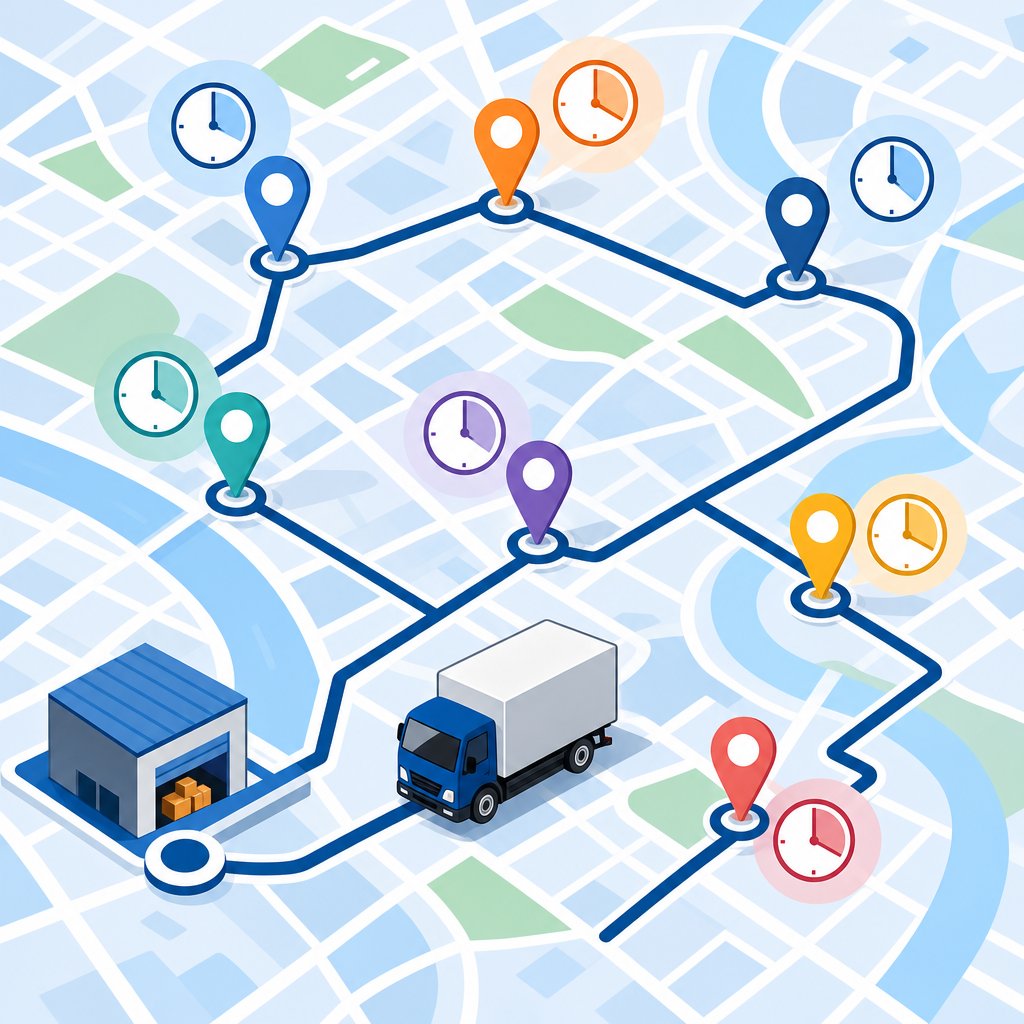
Delivery windows: the tyranny of the time slot
An e-commerce customer expects their parcel between 2 PM and 4 PM. A supermarket can only receive its pallets between 6 AM and 9 AM. A private individual is only available after 6 PM. These time windows, as they’re known in logistics jargon, turn every mission into a temporal puzzle. Missing a slot means risking a redelivery the next day — doubling the mileage, emissions, and costs.
Service time: the underestimated variable
A delivery isn’t just about the trip. You have to account for unloading, signing the proof of delivery (POD), sometimes a quality check, or even packaging returns. This service time varies enormously:
- 2 to 5 minutes for a simple mailbox drop-off
- 10 to 20 minutes for a B2B delivery with inspection
- 30 to 60 minutes for a home installation
An algorithm that ignores this variable produces completely unrealistic schedules.
Mandatory breaks: regulations are non-negotiable
A heavy-goods vehicle driver must take a 45-minute break after 4.5 hours of continuous driving. This non-negotiable constraint must be integrated from the planning stage. Too often, it’s treated as a last-minute adjustment that throws the entire route out of balance.
Vehicle capacity and geographic zones
A 12 m³ van cannot carry the same load as a 20-tonne truck. Likewise, certain urban zones prohibit Crit’Air 3 diesel vehicles on weekdays, or limit tonnage in historic city centers. Capacity (volume + weight) and geographic compatibility determine mission assignment well before route optimization even begins.
The real challenge: reconciling conflicting objectives
Here’s the heart of the problem: optimization criteria are often antagonistic.
Reducing mileage can extend delivery times. Meeting every time slot can cause costs to explode. Balancing workload between drivers can degrade overall efficiency.
This is what we call multi-criteria optimization. Unlike classic optimization that seeks the best solution, it seeks the best compromise between several weighted objectives:
- Total distance traveled — direct impact on fuel costs
- Compliance with time windows — impact on customer satisfaction
- Workload balance between drivers — social and HR impact
- Priority for VIP customers — commercial impact
- CO₂ emissions — environmental and regulatory impact
- Overall operational cost — financial impact
The VIP customer paradox
Let’s take a concrete example. A strategic customer requires delivery before 10 AM. In purely kilometric terms, this point should be visited mid-route. Serving it first requires an extra 15 km. Is it worthwhile? It depends on the customer’s relational value, the cost per kilometer, and the risk of penalty. A good algorithm must be able to integrate these business trade-offs, not just mathematical ones.
Human availability: the forgotten constraint
A route plan that looks perfect on paper can collapse if you forget that drivers are… human. Vacations, training, sick leave, specific skills (EB license, ADR for hazardous materials, refrigeration certification): all these parameters limit assignment options.
On top of that comes current workload. Assigning three heavy routes in a row to the same agent while others drive empty is not only unfair, but also counterproductive: fatigue, turnover, delivery errors.
From theory to practice: intelligent algorithms
Solving this type of problem with an Excel spreadsheet is illusory. The possible combinations for 30 missions and 5 vehicles exceed the number of atoms in the observable universe. That’s why modern TMS platforms rely on advanced heuristics and artificial intelligence:
- Genetic algorithms that “evolve” solutions over iterations
- Tabu search and simulated annealing to avoid local optima
- Machine learning to refine predicted service times based on historical data
- Real-time optimization to respond to unforeseen events (traffic jams, cancellations, urgent additions)

Everest: intelligent orchestration of your routes
It’s precisely to address this complexity that the Everest platform was designed. Far from a simple route calculator, Everest is a true logistics conductor that natively integrates all the constraints mentioned in this article.
Genuine consideration of all parameters
Everest allows logistics managers to fine-tune their priorities: weighting of criteria (km vs. deadlines vs. workload), management of strict or flexible time windows, definition of excluded zones, consideration of driver skills and availability.
Automated but transparent dispatching
The platform proposes optimized assignments in just a few seconds, while still allowing the dispatcher to take back control. Every decision is justified, which facilitates communication with field teams and avoids the “black box” effect that often discredits AI tools.
Metrics that speak to the business
Everest doesn’t just optimize — it measures. Kilometers saved, time slot compliance rate, workload balance between agents, CO₂ emissions avoided. So many concrete indicators that transform logistics data into strategic decisions and feed CSR reports.
A scalable platform
Because every transport activity has its own specifics, Everest adapts equally well to urban courier services and regional distribution, to B2B and B2C, to medical emergencies and refrigerated routes.
Conclusion: multi-criteria optimization, a strategic lever
Reducing mileage, meeting time slots, satisfying customers, balancing workload, and minimizing carbon footprint: these objectives are no longer antagonistic — provided you equip yourself with the right tools. Multi-criteria optimization is no longer a luxury reserved for large corporations; it has become a survival requirement in a market where punctuality is a given, margins are a daily battle, and ecology is a societal demand.
With platforms like Everest, logistics managers finally have an ally capable of turning complexity into competitive advantage. The question is no longer if you should optimize your routes intelligently, but when you’ll take the leap.