Laboratory Sample Delivery Traceability: How to Stop Losing Samples in Transit
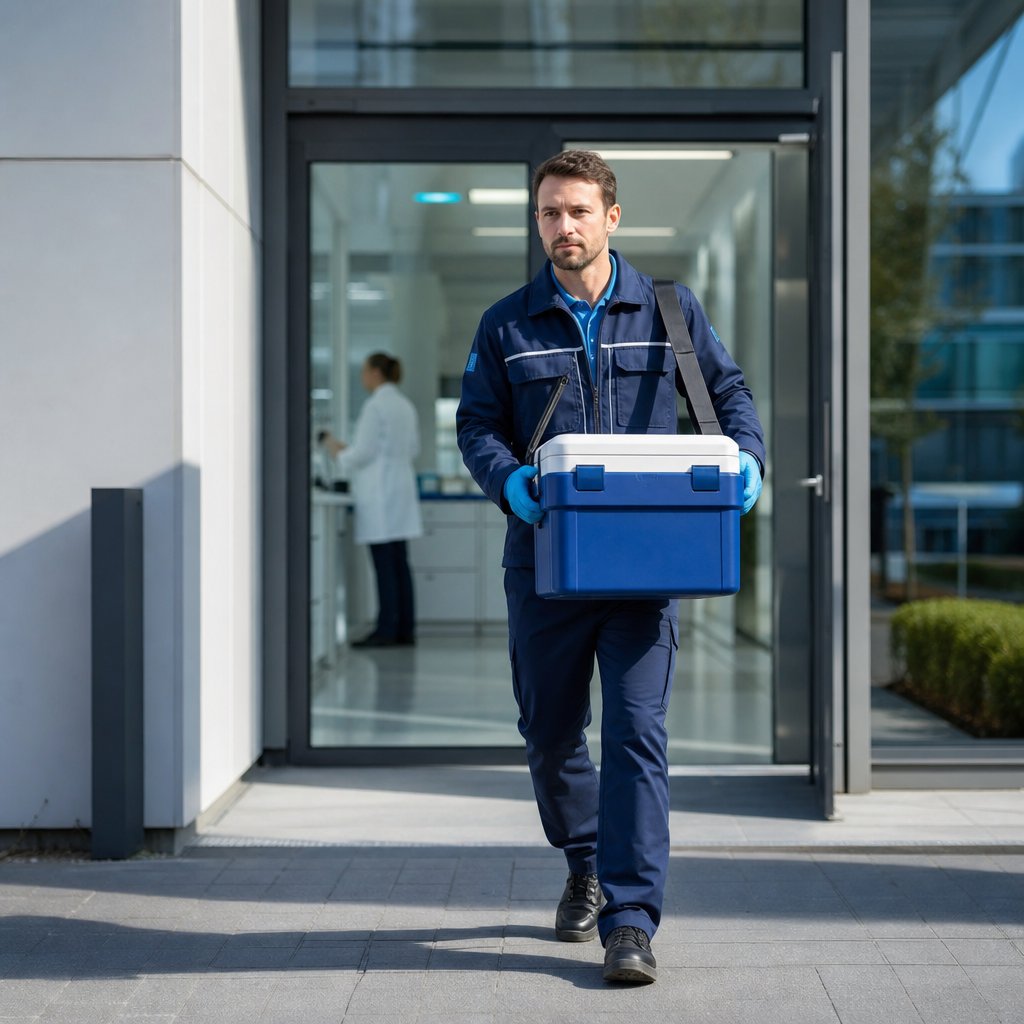
A lost biological sample means a delayed diagnosis, a waiting patient, an analysis to redo — and sometimes a legal dispute. In medical transport, traceability is not optional: it is a regulatory and ethical obligation. Yet many laboratories still manage their routes with approximate tools. Here is how high-performance traceability software transforms every delivery into a reliable chain of evidence, from sampling to analysis.
Why sample traceability is a critical issue
The transport of biological samples (blood, urine, tissues, PCR specimens) is governed by a strict framework: the French decree of 11 July 2003, ISO 15189 standards, COFRAC requirements, temperature conditions, and stability windows sometimes shorter than two hours. Every link in the chain must be documented.
The consequences of poor traceability are severe:
- Sample loss: new sampling, delayed diagnosis, additional cost
- Cold chain break: invalid results, health risk
- Patient or prescriber dispute: inability to prove delivery
- Audit non-compliance: laboratory accreditation called into question
According to industry stakeholders, up to 3% of samples are subject to a transport incident. For a laboratory processing 5,000 specimens per day, this represents 150 potential daily incidents. Unacceptable.
The specific requirements of sample transport
A chain of events to document
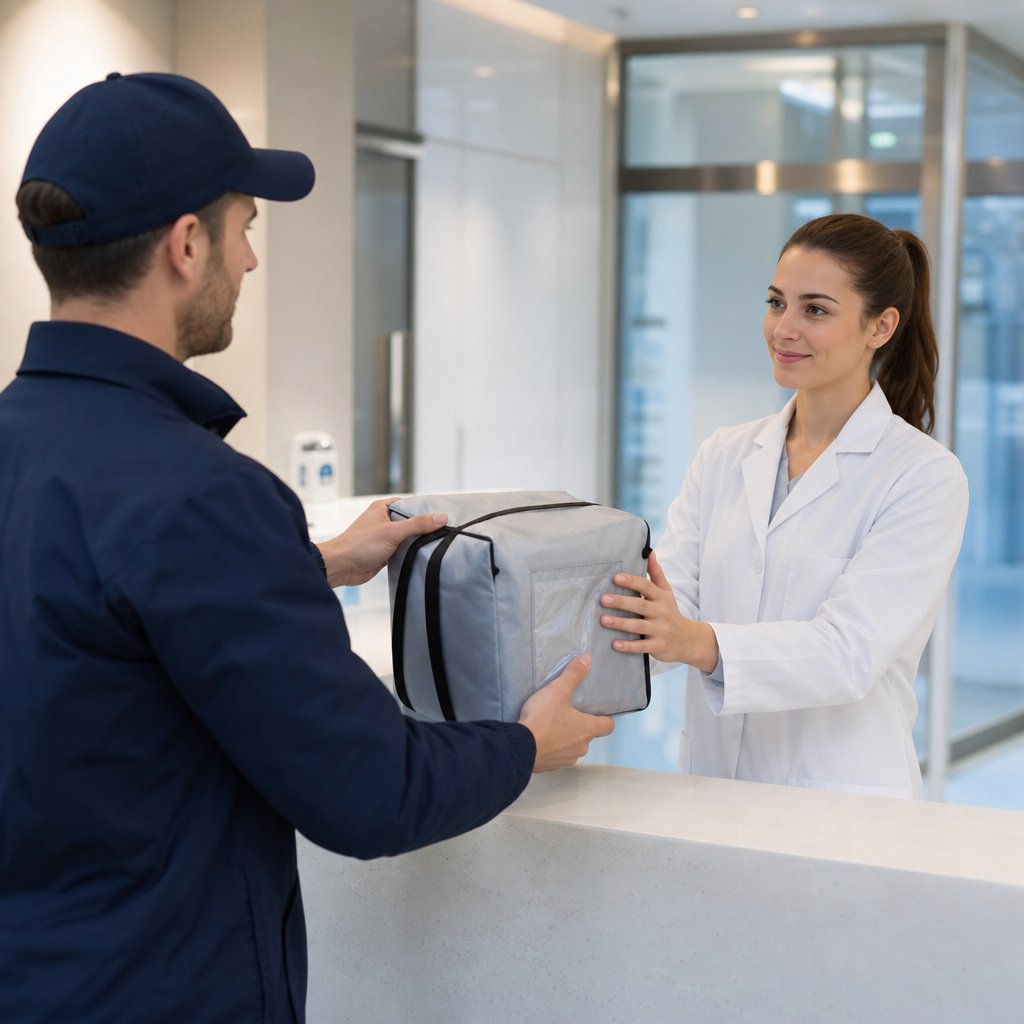
Unlike a standard delivery, a laboratory sample changes hands several times: sampler, courier, sorting platform, inter-site shuttle, technical platform. Every transfer of responsibility must be timestamped, geolocated and signed.
Extreme time constraints
Some tests (blood gases, lactates, ammonia) require analysis to begin within less than 30 minutes. Dispatch must be instantaneous, the route optimised in real time, and the ETA accurate to the minute.
Flawless proof of delivery
The POD (Proof of Delivery) must include: identity of the sender, identity of the recipient, timestamp, photo of the package condition, temperature check if applicable, signature. A simple “delivered” is not enough.
The essential features of traceability software
Package scanning and unique identification
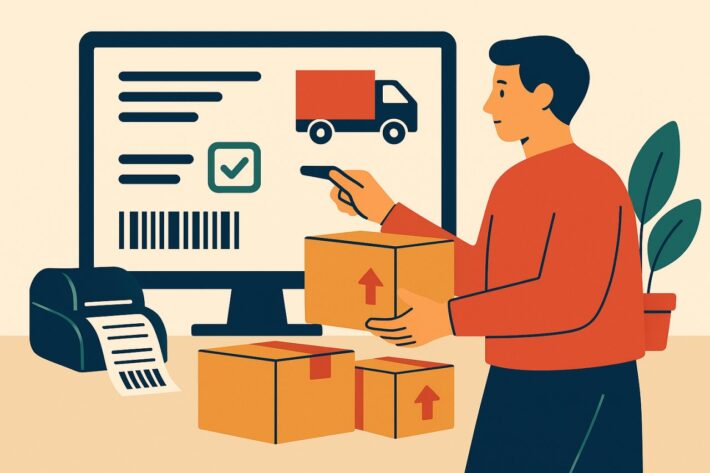
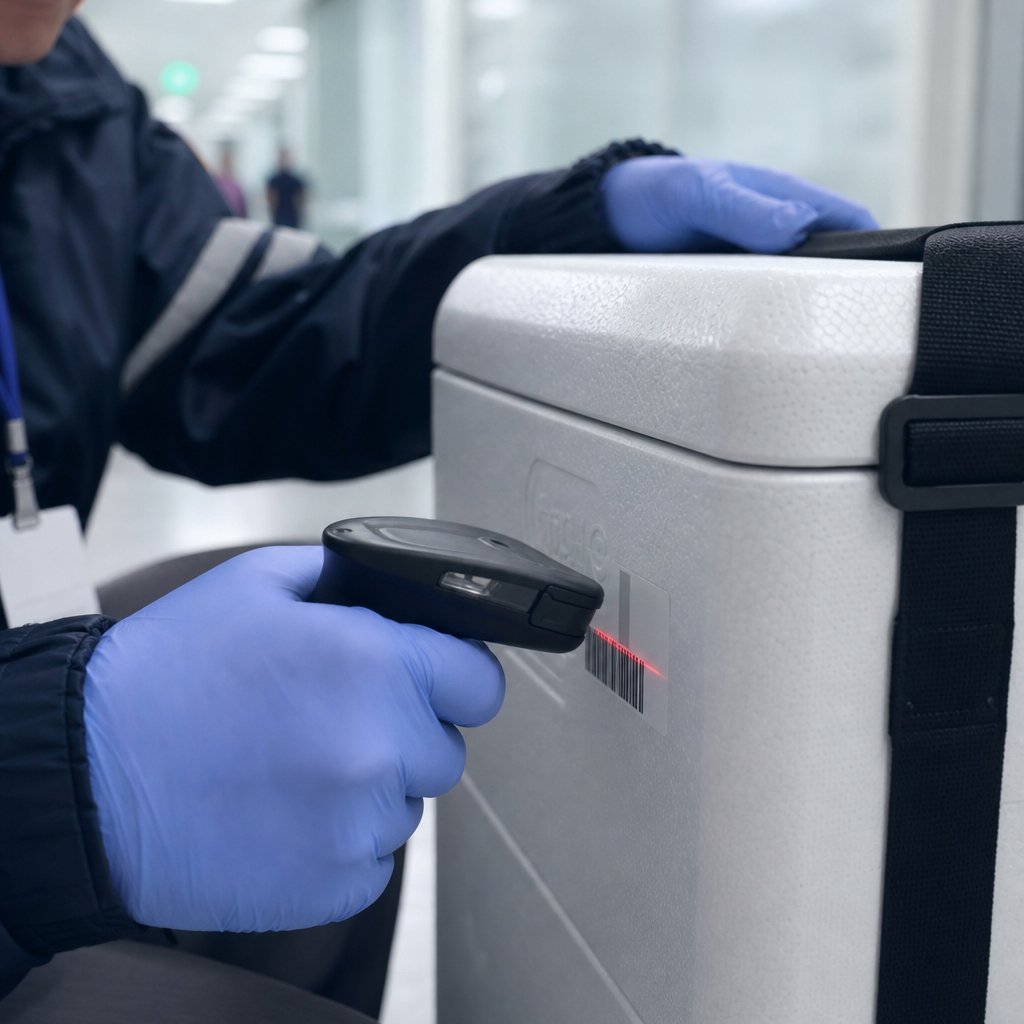
Every sample, every isothermal container, every rack must have a unique identifier scanned at each step. The courier scans at pickup, at each transfer, and at delivery. The system reconstructs the complete chain of custody.
Real-time geolocation
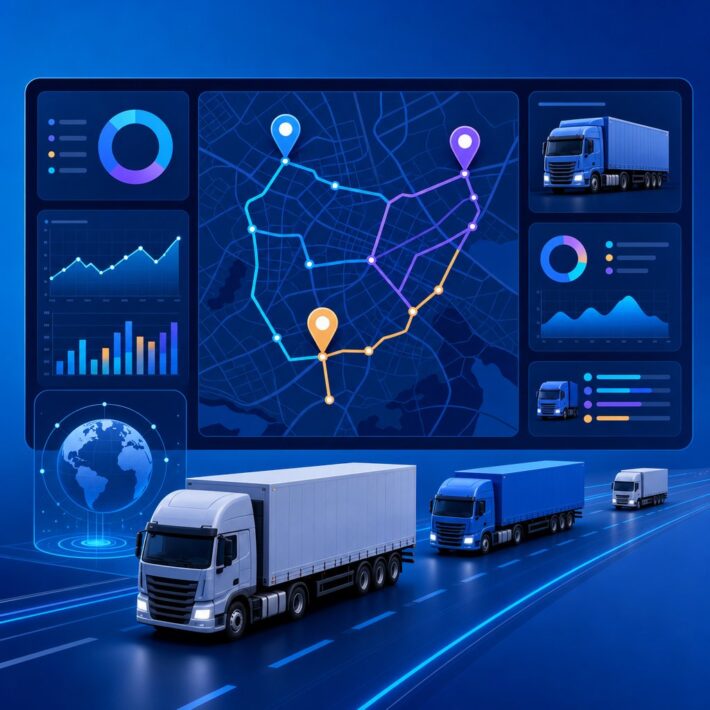
The laboratory must know, at any moment, where a critical sample is located. Driver geolocation, combined with a dynamic ETA, makes it possible to anticipate delays and notify the technical platform.
Customisable statuses and alerts
“Collected”, “En route to platform”, “Sorting in progress”, “In shuttle”, “Delivered to platform”: statuses must reflect the reality of the medical flow. Any anomaly (delay above a threshold, missing scan, temperature deviation) triggers an automatic alert.
Enriched proof of delivery
Photo, electronic signature, visual inspection of package integrity, temperature data logger reading. Everything is archived in a digital file accessible for the legal retention period.
Automated POD verification
With hundreds of deliveries per day, manually checking every proof is impossible. AI automatically detects missing signatures, blurry photos, and anomalies — and alerts you only on problematic cases.
Notifications to prescribers and patients
The prescribing physician, the partner clinic or the home patient receives a white-label tracking link. Total transparency, inbound calls cut in half.
Beyond tracking: managing performance
Traceability software is not only used to find a lost sample. It feeds a continuous improvement approach.
- On-time delivery rate per route, per site, per courier
- Average transport time between sampling site and technical platform
- Incident rate and typology (delay, temperature anomaly, missing sample)
- Complete POD rate on first verification
- Heatmap of the highest-risk sampling points
These logistics KPIs feed quality reviews, COFRAC audits and negotiations with prescribers.
Automation, an accelerator of reliability
Manual data entry is the leading cause of error. Good software integrates natively with:
- The LIS (Laboratory Information System) to retrieve transport orders
- Connected temperature probes to automatically archive readings
- Billing tools to generate invoices by prescriber, by route, by contract
- Patient platforms to synchronise home appointments
With an automation platform such as n8n or Zapier connected to the TMS, a laboratory can move an order from the LIS to the courier in less than 10 seconds, with no re-entry.
How Everest addresses these challenges
Everest is a TMS designed for flows with high traceability requirements. Several medical transport players use it daily, such as Speedcare (organ transport) and Minute Pharma (medication delivery) — fields where error is not an option.
- Sherpas app: native package scanning (compatible with Zebra DataWedge), real-time geolocation, photo capture, signature, temperature check. Works offline and synchronises as soon as the network returns.
- Customisable statuses: adapt the workflow to your processes — sampling, sorting, shuttle, technical platform. Each step is automatically timestamped and geolocated.
- Podchecker.ai: automated proof-of-delivery verification with 99% accuracy, up to 85% time saved on quality controls, and an average 16% reduction in disputes.
- Multi-criteria route optimisation: prioritisation of urgent samples, consideration of stability windows, dynamic recalculation in case of disruption.
- White-label notifications: prescribers and patients receive tracking under your visual identity, with a tracking link and dynamic ETA.
- REST API and native n8n: bidirectional connection with your LIS, your IoT probes and your billing tool. No-code workflows deliver an average gain of 3 hours per day and a 95% reduction in data entry errors.
The Everest dashboard, enhanced by the AI assistant Walter, turns data into decisions: detection of weak points, optimisation recommendations, automatic reporting for your quality audits.
Key takeaways
- Traceability is non-negotiable in laboratory sample transport: regulatory requirements, analysis quality, patient safety.
- High-performance software must cover the entire chain: scanning, geolocation, customisable statuses, enriched PODs, temperature monitoring.
- AI and automation turn proof-of-delivery verification from a time-consuming chore into an instant, reliable process.
- KPIs allow you to manage quality, anticipate incidents and defend your accreditation.
- Native integration with the LIS and peripheral tools eliminates re-entry, the leading cause of error.
In a sector where every minute counts and every sample tells a patient’s story, equipping yourself with a TMS designed for traceability is no longer a luxury — it is the condition for preserving both the quality of your analyses and the trust of your healthcare partners.