What is transport dispatching? Role, tools and impact of AI in 2026
Transport dispatching: definition and challenges in 2026
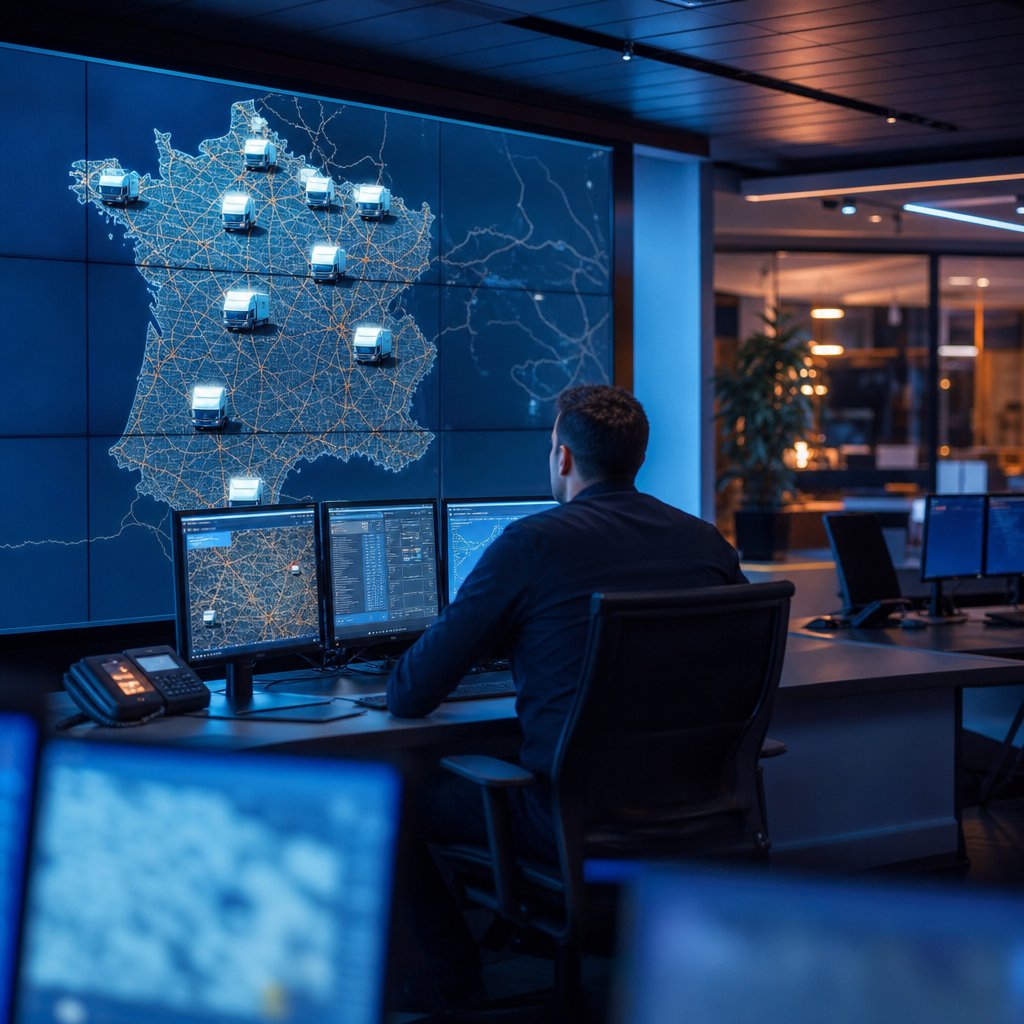
Transport dispatching refers to the activity of assigning, in real time, transport missions (trips, rounds, deliveries) to the right drivers and the right vehicles. Behind this word lies a strategic profession: that of the dispatcher, the true conductor of operations. Without them, trucks run empty, customers wait and margins shrink.
In 2026, this profession is undergoing a profound transformation. The arrival of generative AI, automatic assignment rules and driver mobile applications is reshuffling the deck. The dispatcher is moving from the role of “firefighter” putting out emergencies to that of a strategic pilot assisted by data.
What is a dispatcher? Role and day-to-day missions
A logistics dispatcher is the person in charge of organizing, planning and monitoring the execution of transport operations. They are simultaneously a planner, a coordinator and the point of contact between drivers, customers and operations.
The dispatcher’s main missions
- Assign missions to drivers based on their location, availability, skills and remaining driving time.
- Optimize rounds to reduce empty kilometers and meet customer time slots.
- Manage unexpected events: breakdowns, delays, absences, delivery incidents.
- Communicate with drivers, often via phone, radio or mobile application.
- Monitor KPIs: service rate, punctuality, fill rate, cost per kilometer.
- Feed the IS with proofs of delivery, hours and field events.
A good dispatcher can manage between 20 and 60 drivers depending on the complexity of the activity. Beyond that, the mental workload becomes unmanageable without high-performance tools.
Key skills for the dispatcher profession
The transport dispatcher profession requires a rare balance between technical skills and human qualities.
Technical skills
- Knowledge of transport regulations (social regulations, driving times, ADR, cabotage).
- Mastery of TMS software (Transport Management System) and geolocation tools.
- Understanding of logistics flows, vehicle constraints and customer typologies.
- Basics in route optimization and map reading.
Human qualities
- Composure in the face of multiple and simultaneous unforeseen events.
- Communication skills to manage drivers and customers, sometimes under pressure.
- Quick decision-making ability with partial information.
- Analytical mindset to arbitrate between cost, deadline and service quality.
What is dispatching in the digital age?
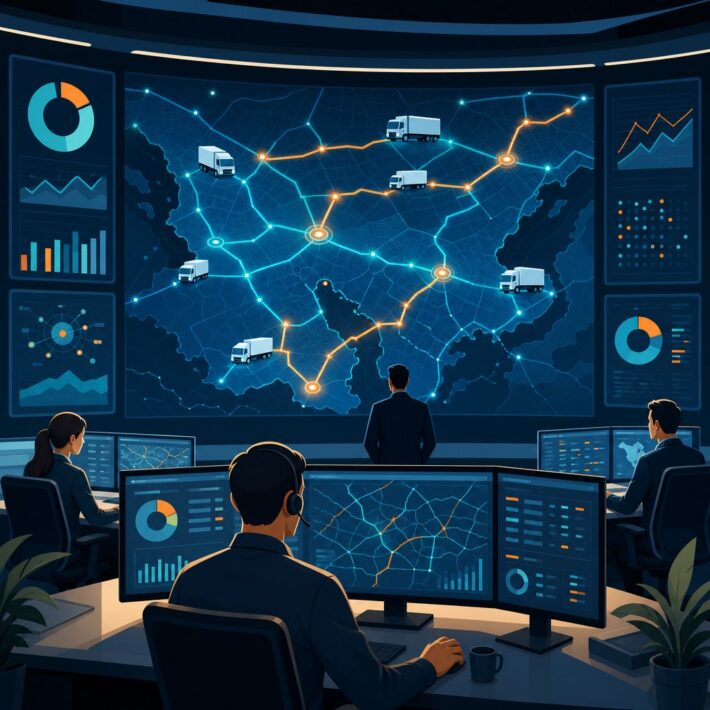
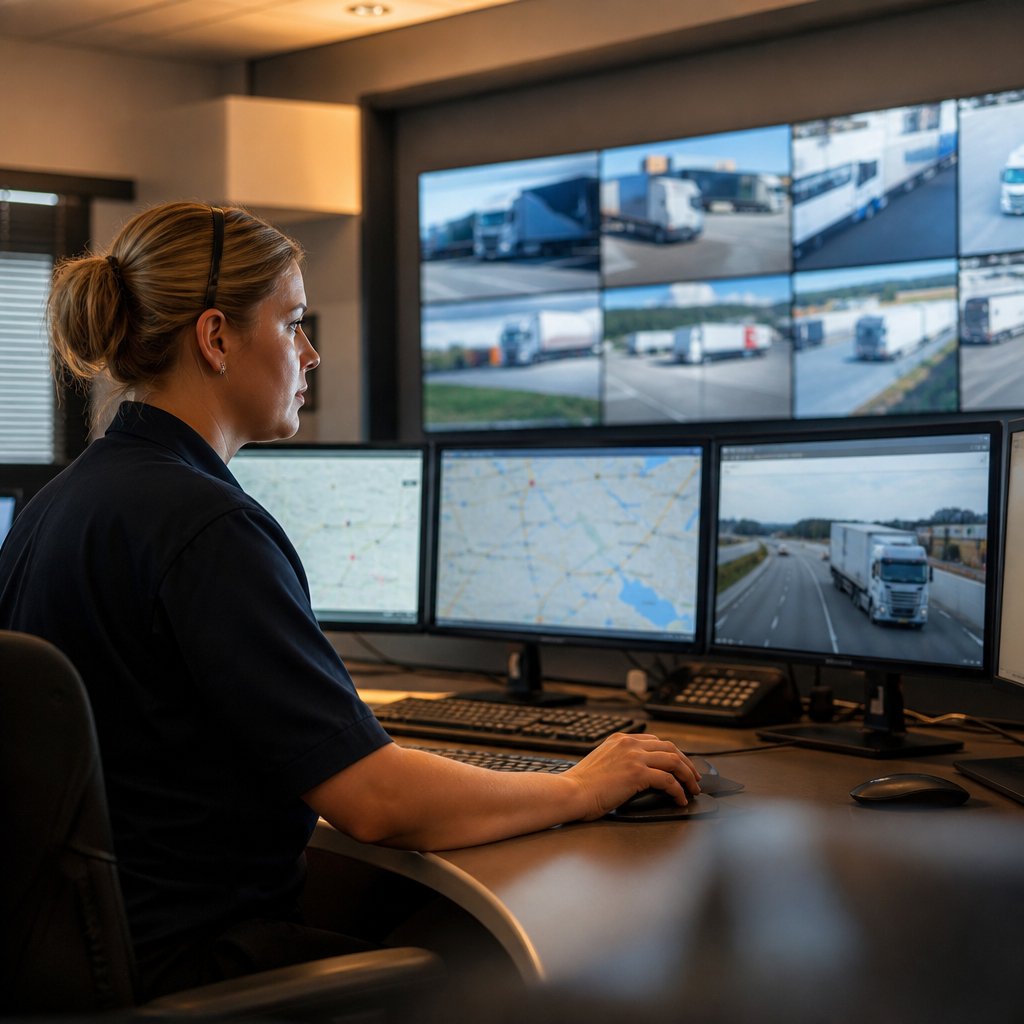
Historically, dispatching was done on a whiteboard with magnets and a landline phone. Today, a modern dispatch software centralizes the entire flow: transport orders, available resources, GPS positions, regulatory constraints and communication with drivers.
The building blocks of modern dispatch software
- Real-time visual planning of drivers and vehicles.
- Assignment engine based on configurable business rules.
- Driver mobile application to receive missions, scan, sign, send photos.
- Customer tracking with dynamic ETA and automatic notifications.
- Dashboards to monitor performance live.
The impact of AI on dispatching in 2026
AI in dispatch is no longer a gadget. It takes over low-value-added tasks to free up the dispatcher for arbitration and human relations. Three uses dominate in 2026.
1. Automatic assignment rules
The system suggests — or directly assigns — the best resource for each mission, according to criteria defined by the company: proximity, skills (ADR, tail lift, refrigerated), remaining driving time, customer history, cost. We move from reactive dispatching to prescriptive dispatching.
2. The operator’s AI assistant
Assistants such as Walter continuously analyze the planning, detect anomalies (predictable delays, undercapacity of a vehicle, exceeding driving time regulations) and suggest corrective actions. The dispatcher validates in one click instead of scanning ten screens.
3. The augmented driver mobile application
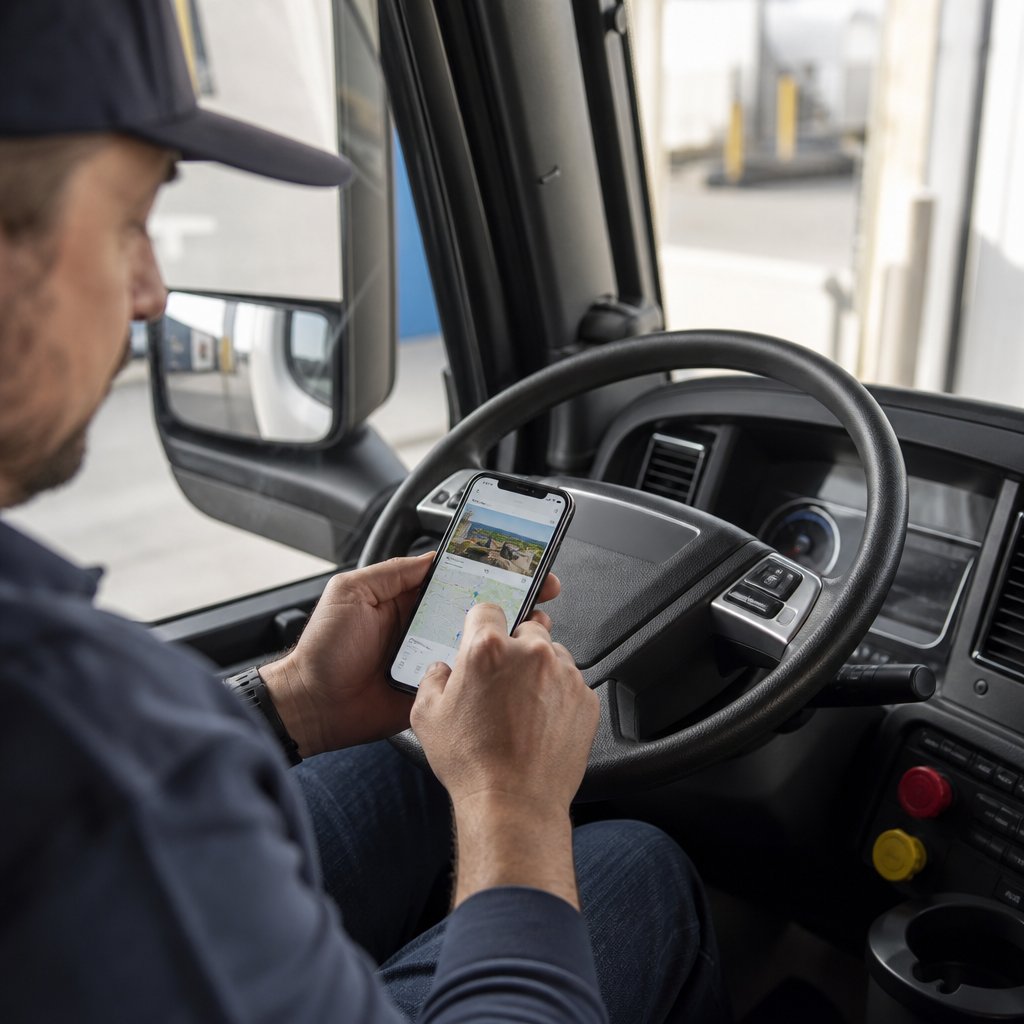
Applications like Sherpas turn the driver’s smartphone into a connected cockpit: mission reception, navigation, proofs of delivery, chat with the dispatcher, incident reporting. The information flow becomes bidirectional and instantaneous.
In 2026, a dispatcher equipped with AI manages 40% more drivers than a dispatcher using traditional tools, with a higher service rate and reduced mental workload.
How to choose your dispatch software in 2026?
Faced with the proliferation of offers, a few criteria help to sort things out.
- Rules configurability: every carrier has its specificities, the tool must adapt, not the other way around.
- Quality of the driver mobile application: it is the daily point of contact with the field.
- Real level of AI: distinguish predictive engines from mere rebadged automations.
- Integrations with TMS, telematics, invoicing, customer portals.
- Support for deployment and change management.
Everest: climbing the mountain of transport performance
Managing transport operations is a bit like preparing to climb Everest. You don’t set off in flip-flops with a paper map. You need suitable equipment (the software), experienced guides (the dispatchers), a trained team (the drivers) and methodical preparation (data and business rules).
AI is not there to replace the sherpa: it is the altitude sensor, real-time weather and GPS combined. It gives the dispatcher the visibility they were missing to make the right decisions at the right time. The summit? Transport where every kilometer driven makes sense, where every driver works in good conditions and where every customer is delivered as promised.
Conclusion: the dispatcher of 2026, augmented and strategic
Transport dispatching is no longer a mere operational activity: it is a major competitiveness lever. The dispatcher profession is evolving toward a role of analyst and pilot, supported by tools that automate assignment, anticipate problems and streamline field communication.
Companies that invest now in intelligent dispatch software — with automatic assignment rules, embedded AI and driver mobile application — gain a lasting head start. The others will keep chasing emergencies.
Want to see concretely what AI-augmented dispatching can change in your operations? Request a demo and discover how your dispatchers can, as early as tomorrow, manage more missions with less stress.