Dispatcher: Definition, Role and Missions of a Key Logistics Profession
Dispatcher: the invisible conductor of logistics
In the shadow of trucks travelling the roads and parcels arriving on time, there is an essential yet often overlooked profession: that of the dispatcher. A true control tower for transport operations, this professional coordinates, arbitrates and anticipates so that the supply chain runs smoothly. Yet behind this strategic role lies a demanding and sometimes exhausting reality, now summed up by the expression “toxic dispatch”.
In this comprehensive guide, we’ll explore the definition of the profession, its daily missions, essential skills, the modern tools transforming the job, and finally the sensitive topic of the mental workload weighing on these flow professionals.
What is a dispatcher? A precise definition
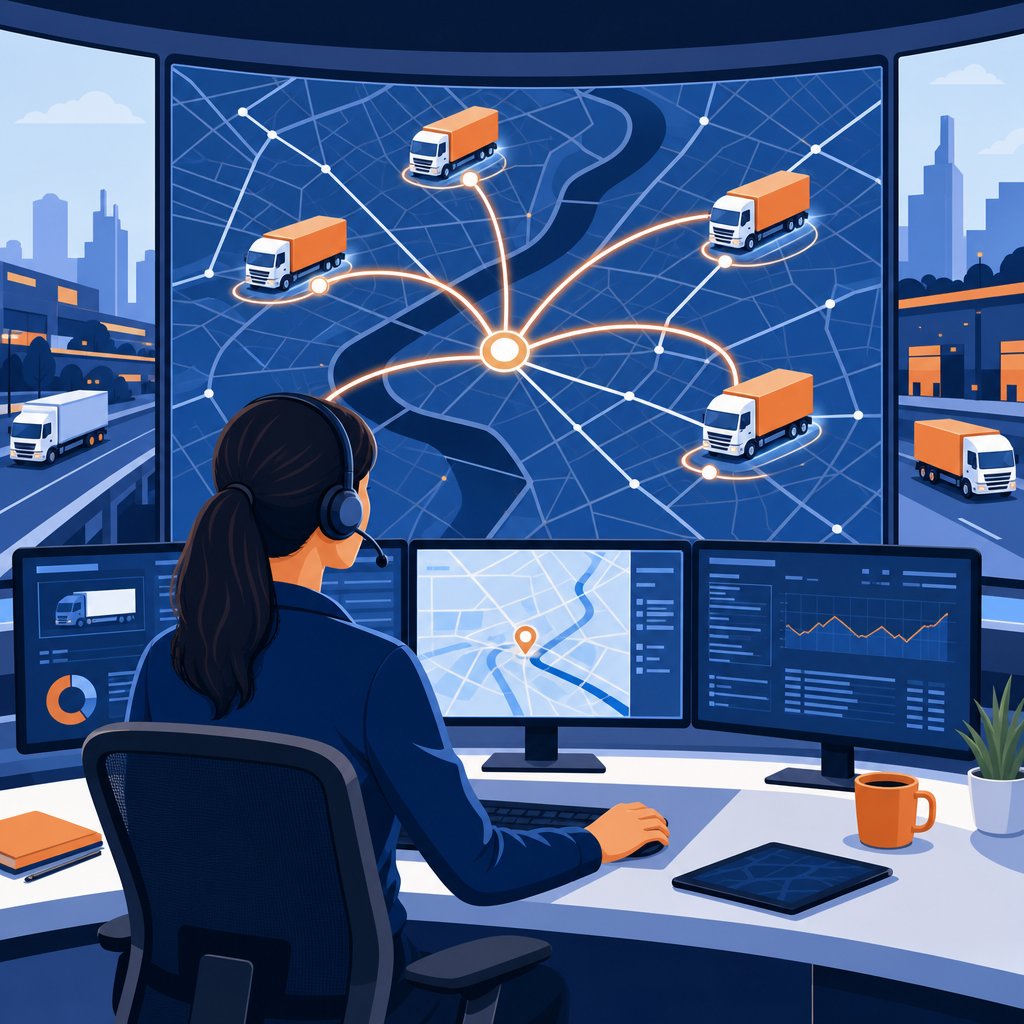
The dispatcher is a logistics and transport professional responsible for organising, allocating and monitoring in real time the missions entrusted to a fleet of vehicles, drivers or operational teams. The term comes from the English verb to dispatch, meaning “to send”, “to forward” or “to distribute”.
In concrete terms, the dispatcher is the one who decides who does what, when and how. They assign routes, adjust schedules to handle the unexpected (delays, breakdowns, absences, customer emergencies) and ensure communication between drivers, customers and management. Dispatchers are found in many sectors:
- Road freight transport
- Courier services and last-mile delivery
- Taxis, private hire vehicles and ambulances
- Emergency services (fire, police, breakdown assistance)
- Construction (coordination of machinery and site teams)
- Passenger transport and rail
Dispatcher, operations manager, controller: what’s the difference?
Titles vary from company to company. A transport operations manager often has a broader role that includes commercial relationships and route profitability. A controller focuses on real-time management, particularly in passenger transport. The dispatcher sits at the interface: they run day-to-day operations with a strong focus on responsiveness.
A typical day for a dispatcher
No two days are alike, but certain constants structure the dispatcher’s daily routine. Here’s what a typical day looks like:
Morning: preparing and launching routes
As soon as they arrive at the office — often before 6 a.m. — the dispatcher reviews the day’s orders, checks driver and vehicle availability, and validates the route sheets. They brief the teams, hand over the necessary documents (delivery notes, customer instructions) and make sure every departure is on time.
Late morning and afternoon: managing flows and unexpected events
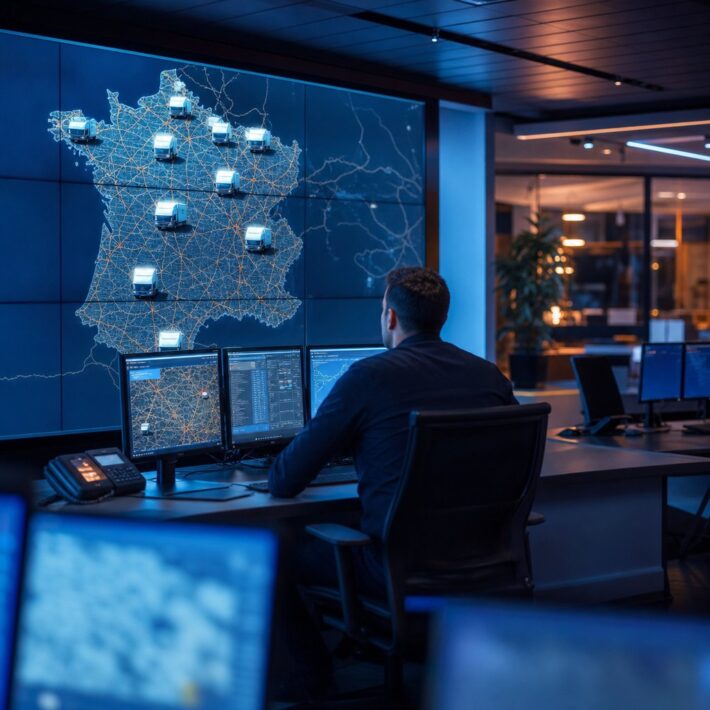
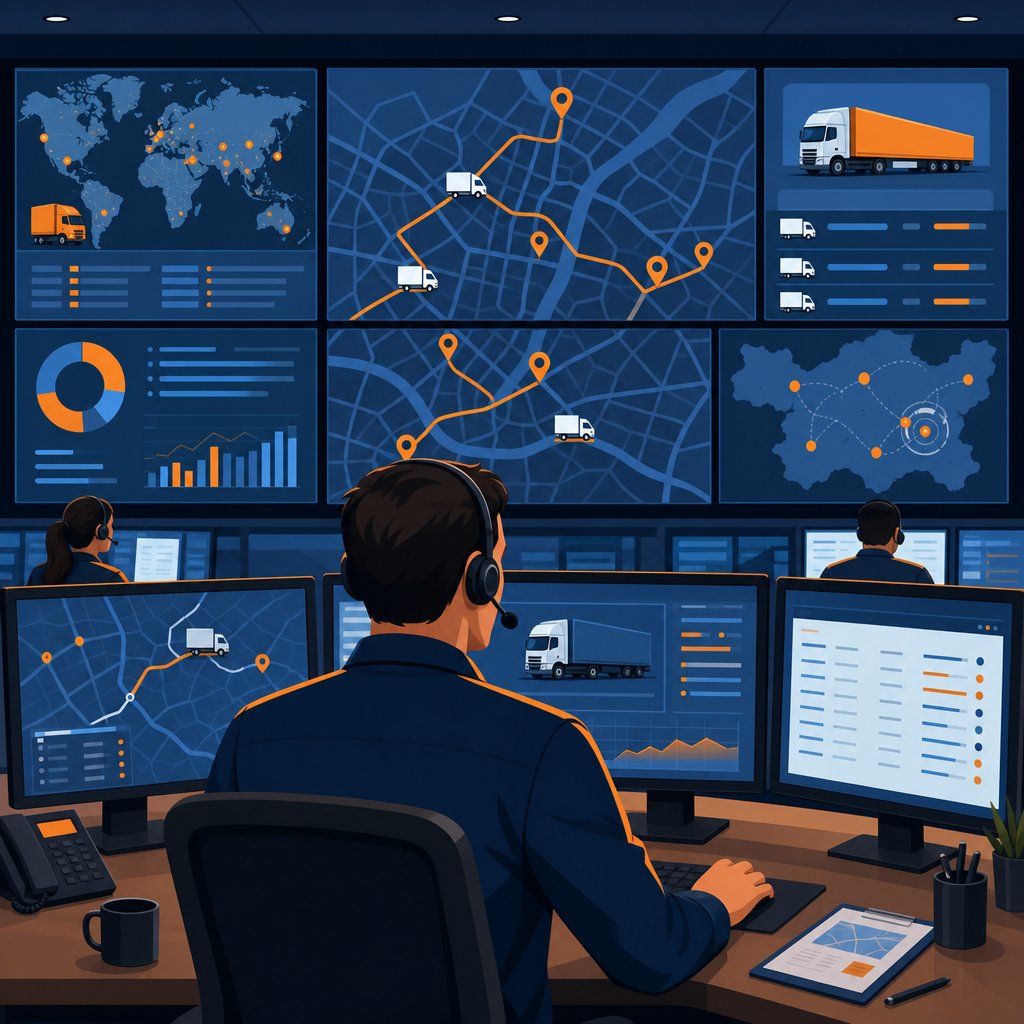
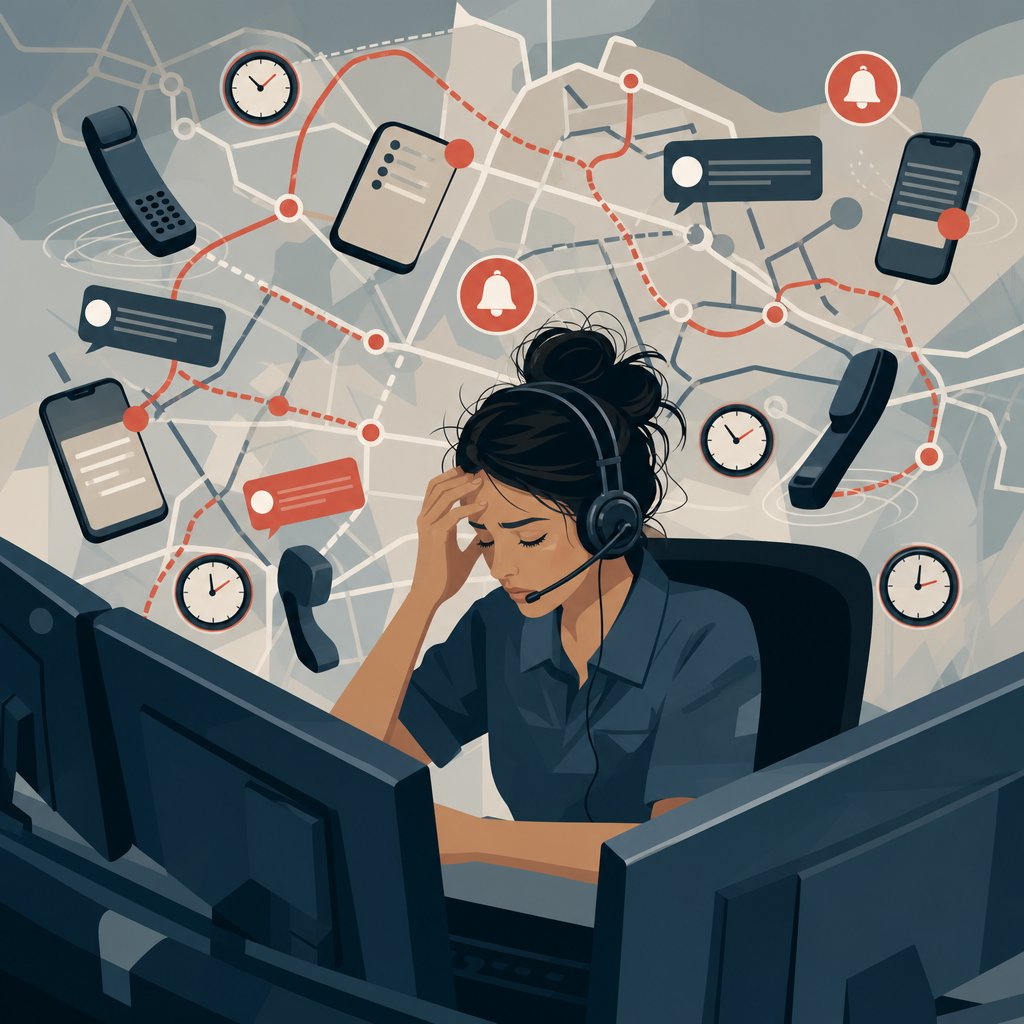
This is the heart of the job. The dispatcher monitors GPS positions, handles incoming calls from drivers and customers, reorganises routes in case of delays, finds a replacement if a driver falls ill, and arbitrates between multiple emergencies. They juggle several screens, several phones, and make decisions in a matter of seconds.
End of day: closing and anticipating
Once deliveries are complete, they check returns, handle any disputes (damaged parcels, customer absences), update The TMS and start preparing for the next day: assigning routes, checking mandatory rest periods, anticipating activity peaks.
A good dispatcher is someone who is always one step ahead… with three plan Bs already in mind.
Key skills of a good dispatcher
The job requires a rare blend of technical and interpersonal skills. Among the most important:
- Composure and stress resistance: unexpected events pile up, sometimes simultaneously.
- Organisational skills: managing 20, 50 or 200 vehicles requires a rigorous method.
- Responsiveness and quick decision-making: every minute lost costs the company and the customer.
- Interpersonal skills: you need to know how to talk to drivers and customers alike, defuse conflicts and motivate teams.
- Geographical knowledge: knowing your area, main roads, traffic zones, urban constraints.
- Knowledge of transport regulations: driving times, working time rules, ADR, tachograph, etc.
- Comfort with digital tools: TMS, GPS, spreadsheets, professional instant messaging.
Training and career path
There is no single qualification to become a dispatcher. Many come from the field (former drivers), while others come from specialised training: transport and logistics diplomas, logistics degrees, professional bachelor’s programmes or specialised schools.
Tools of the modern dispatcher
The job has been profoundly transformed by digitalisation. Gone are the days of the whiteboard, sticky notes and constantly ringing phones. Today, dispatchers rely on an ecosystem of powerful tools:
The TMS (Transport Management System)
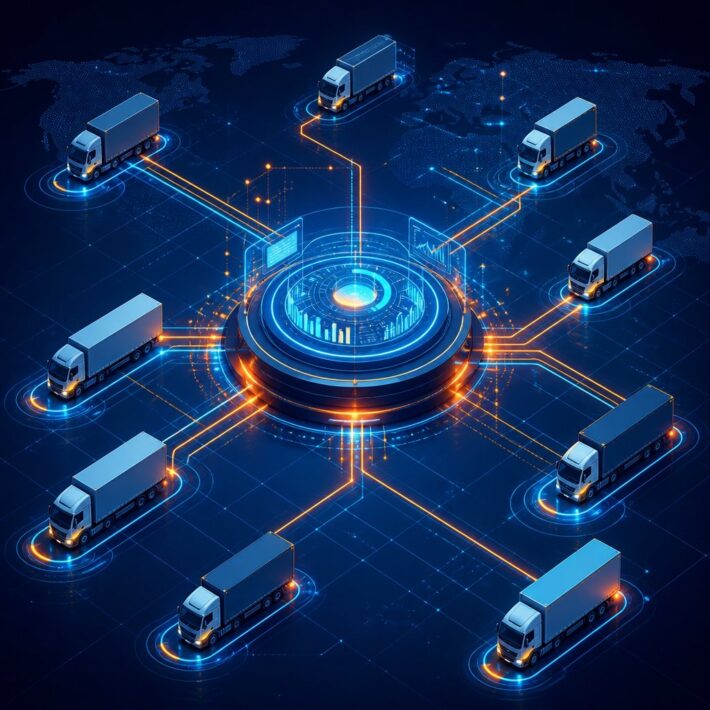
This is the central tool. The TMS allows you to plan routes, optimise itineraries, track vehicles in real time and generate administrative documents. Solutions such as Shippeo, Dashdoc, AntsRoute and Mapotempo have gained traction in recent years.
Geolocation and on-board telematics
On-board units and smartphone apps allow every vehicle to be tracked live, measuring driving times, fuel consumption and anticipating delays.
Route optimisation tools
Optimisation algorithms calculate in seconds the best sequence of deliveries based on constraints (customer time slots, vehicle capacity, traffic). They save the dispatcher valuable time.
Communication tools
Dedicated messaging apps, driver applications, electronic proof of delivery (e-POD) systems… communication is smoother, but also more continuous. Which brings us to the sensitive topic of mental workload.
“Toxic dispatch”: when mental workload explodes
Dispatching is regularly cited as one of the most stressful jobs in logistics. People now speak of “toxic dispatch” to describe this environment where pressure is constant, mental workload immense, and recognition sometimes scarce.
Stress factors
- Constant over-solicitation: phones, emails, messaging apps, radios… the dispatcher is interrupted every 2 to 3 minutes on average.
- Responsibility: an allocation error can cost the company thousands of pounds.
- Real-time pressure: there’s no “taking a break” — everything is decided by the minute.
- Human conflicts: caught between unhappy drivers, demanding customers and cost-focused management, the dispatcher is often the shock absorber.
- Atypical working hours: very early starts, on-call duties, weekend work.
Health consequences
Studies show a high prevalence of burnout, sleep disorders and musculoskeletal disorders (prolonged sitting, tension in the shoulders and neck) among dispatchers. Turnover in operations departments is significantly higher than the industry average.
How can we reduce dispatch toxicity?
Several levers can improve working conditions:
- Automate repetitive tasks (planning, alerts, reporting)
- Spread the workload across several dispatchers with clear scopes
- Implement centralised tools that reduce channel dispersion
- Train managers in recognition and prevention of psychosocial risks
- Establish genuine disconnection time, including during on-call periods
The mountain to climb: the dispatcher’s Everest
Being a dispatcher is a bit like climbing Everest every day. Every morning, the mountain rises again: pending orders, drivers to brief, customers to reassure, unexpected events to absorb. There’s no plateau, no rest at the summit — just a new ascent the next day. What makes the profession great is precisely this ability to start over, to hold the course in the storm, to turn chaos into an orderly flow. The best dispatchers are those who learn to breathe between two climbs, to equip themselves with the right tools, and never to climb alone.
Conclusion
The dispatcher is an indispensable link in the modern supply chain. Without them, no on-time deliveries, no optimised flows, no satisfied customers. Their profession, demanding and exciting, combines technical skill, human insight and quick decision-making. But it also carries a mental workload that can no longer be ignored.
At a time when digitalisation is transforming operational jobs, the challenge is not to replace dispatchers with algorithms, but to give them the tools that free them from repetitive tasks so they can focus on what matters: people, relationships, sound decisions. Only then will “toxic dispatch” give way to a sustainable, valued and attractive profession.