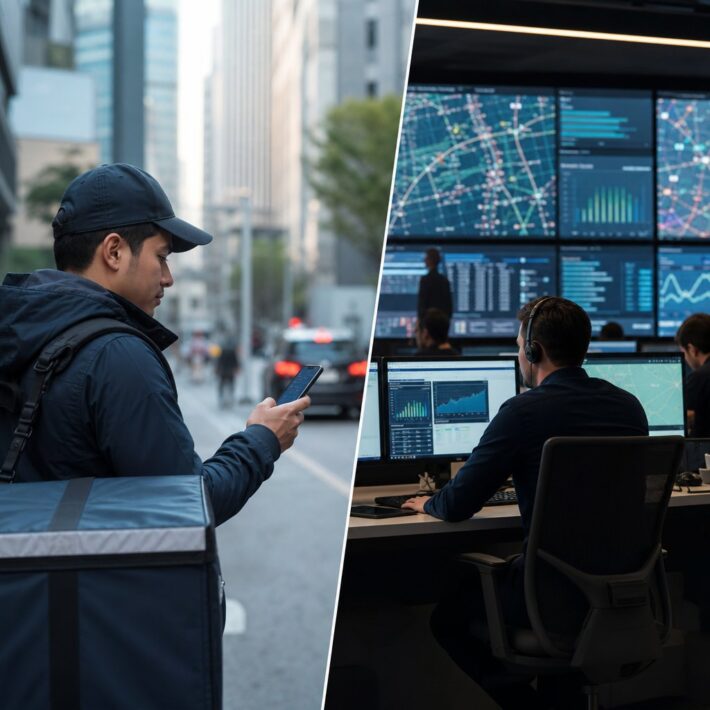
Ship from store, dark stores, last mile: how retailers are reinventing their supply chain
Retail supply chain in the omnichannel era
In less than ten years, consumer expectations have radically transformed retail logistics. Delivery in under 24 hours, in-store pickup in two hours, free returns, real-time tracking: the customer promise has become the new battleground for retailers. To deliver on it, retailers must completely rethink their supply chain, relying on hybrid models and increasingly sophisticated technological tools.
Between ship from store, dark stores, last-mile delivery and optimized replenishment, the logistics landscape is being reinvented. But behind these buzzwords, what are the truly winning strategies? And above all, what tools enable field teams to keep up the pace?
Ship from store: turning stores into mini-warehouses
The concept is simple but remarkably effective: use the stock available in store to prepare and ship online orders. Rather than centralizing all logistics in a single warehouse, the retailer mobilizes its network of points of sale as so many local hubs.
The strategic advantages
- Reduced delivery times: the parcel ships from the store closest to the end customer
- Stock optimization: clearing slow-moving items present in stores
- Fewer stockouts online thanks to a unified view of inventory
- Lower carbon footprint linked to long-distance transport
Retailers such as Decathlon, Fnac-Darty and Sephora have massively deployed this model, with some fulfilling up to 30% of their e-commerce orders from their physical stores.
Operational challenges
But turning a store into a mini-warehouse is no small feat. Teams must juggle customer service and picking, manage spaces not designed for order preparation, and meet tight SLAs. Without the right tools, ship from store quickly becomes counterproductive.
Dark stores and quick commerce: the promise of ultra-fast delivery
Emerging with the quick commerce boom, dark stores are points of sale closed to the public, entirely dedicated to order preparation. Located in city centers, they enable deliveries within 15 to 30 minutes for groceries or everyday products.
While some pure players have suffered economic setbacks (Gorillas, Getir…), the model now inspires traditional mass-market retail. Carrefour, Monoprix and Franprix are experimenting with hybrid formats combining a classic store and a dark store area, in order to pool stock and fixed costs.
“The dark store is not an end in itself, but a link in a logistics chain redesigned around proximity and speed.”
The last mile: the crux of the matter
The last mile alone accounts for up to 50% of total delivery cost. It is also the most visible link for the customer, and therefore the one that determines final satisfaction.
New last-mile strategies
- Lockers and pickup points: pooling deliveries to reduce costs
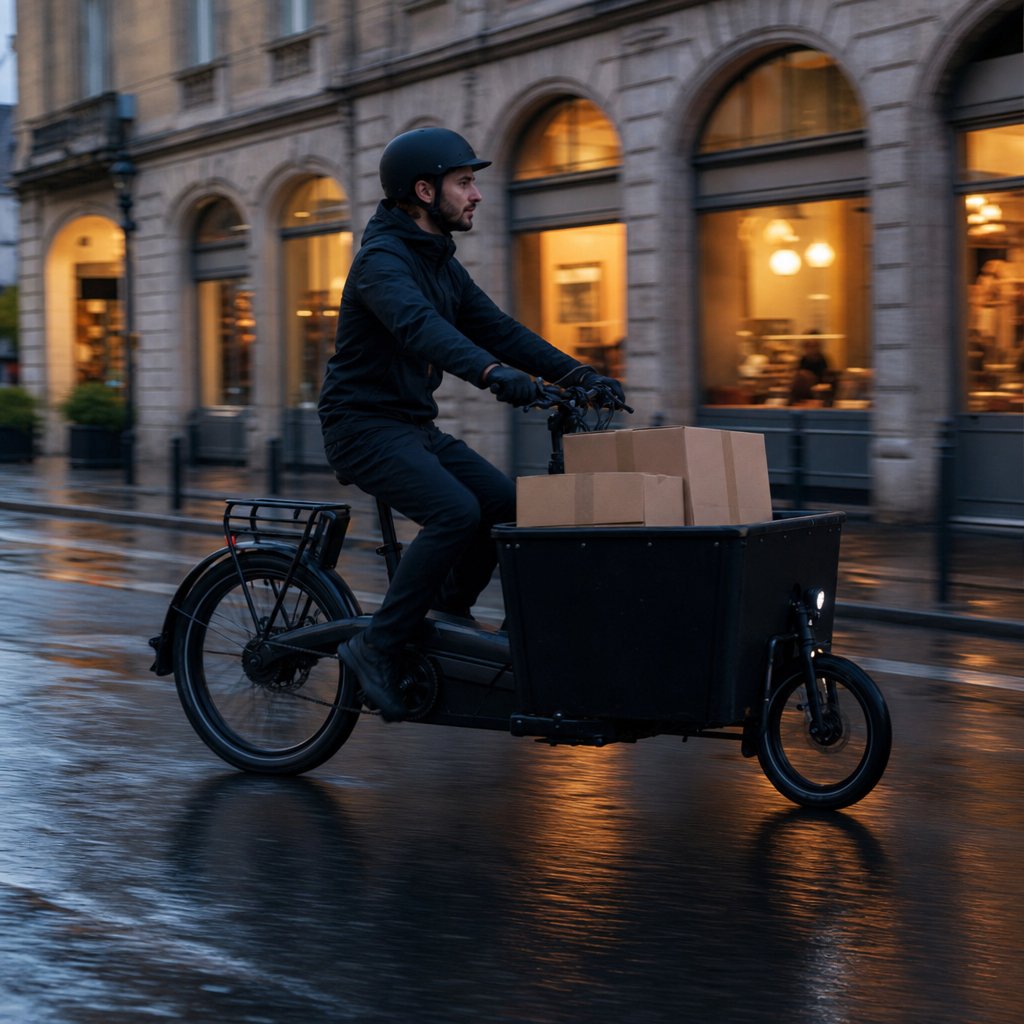
- Cyclo-logistics: cargo bikes in dense urban areas
- Crowdshipping: using independent drivers via platforms
- Click & collect: transferring the last mile to the customer themselves
- Chosen delivery time slots to reduce failed deliveries
The players who succeed are those able to dynamically orchestrate these different channels based on the order, the customer and the geographic area.
Warehouse vs. store preparation: two worlds, same requirements
Whether the order is prepared in an automated warehouse or in the back room of a city-center store, the requirements for reliability and speed are identical. But the tools differ.
The warehouse: automation and cutting-edge WMS
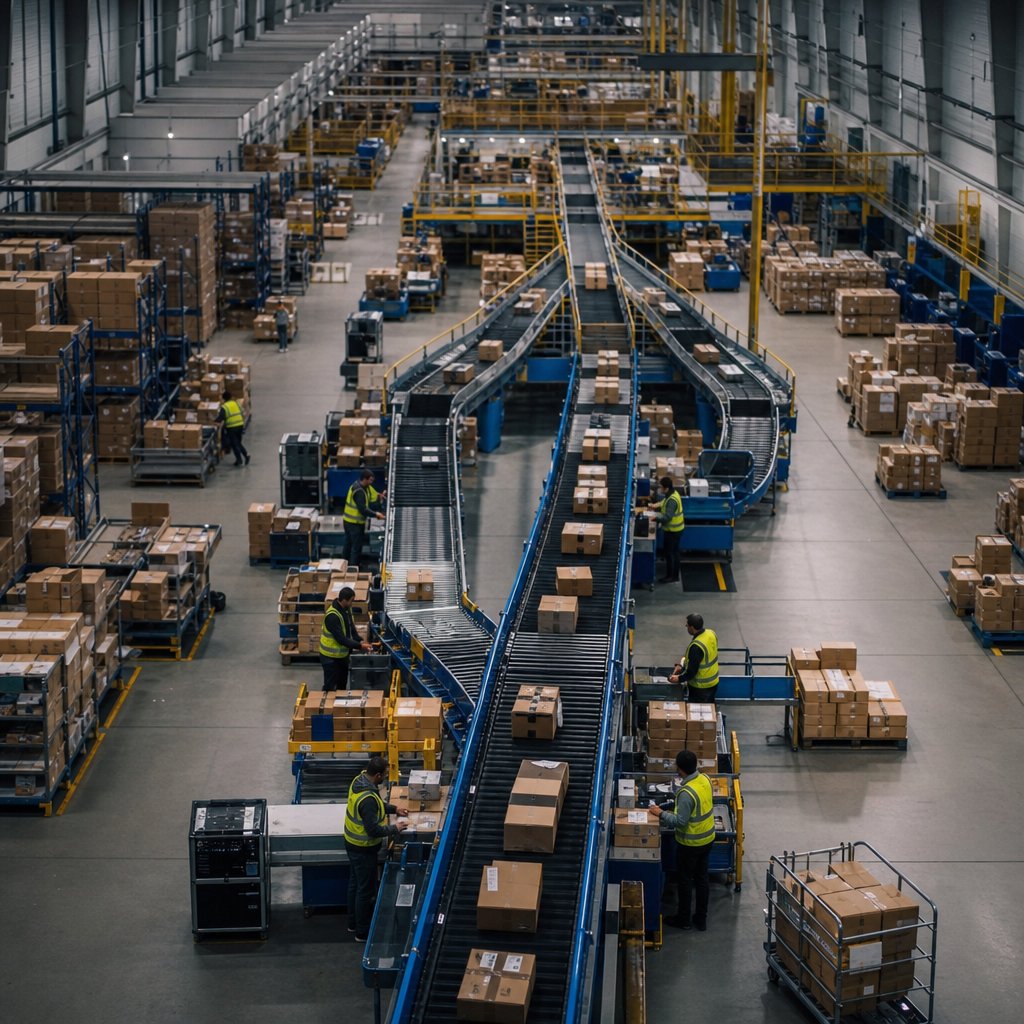
Large warehouses are massively equipping themselves with sophisticated WMS (Warehouse Management Systems), coupled with picking robots, smart conveyors and automated sorting systems. The goal: process thousands of orders per hour with a near-zero error rate.
The store: agility and mobile applications
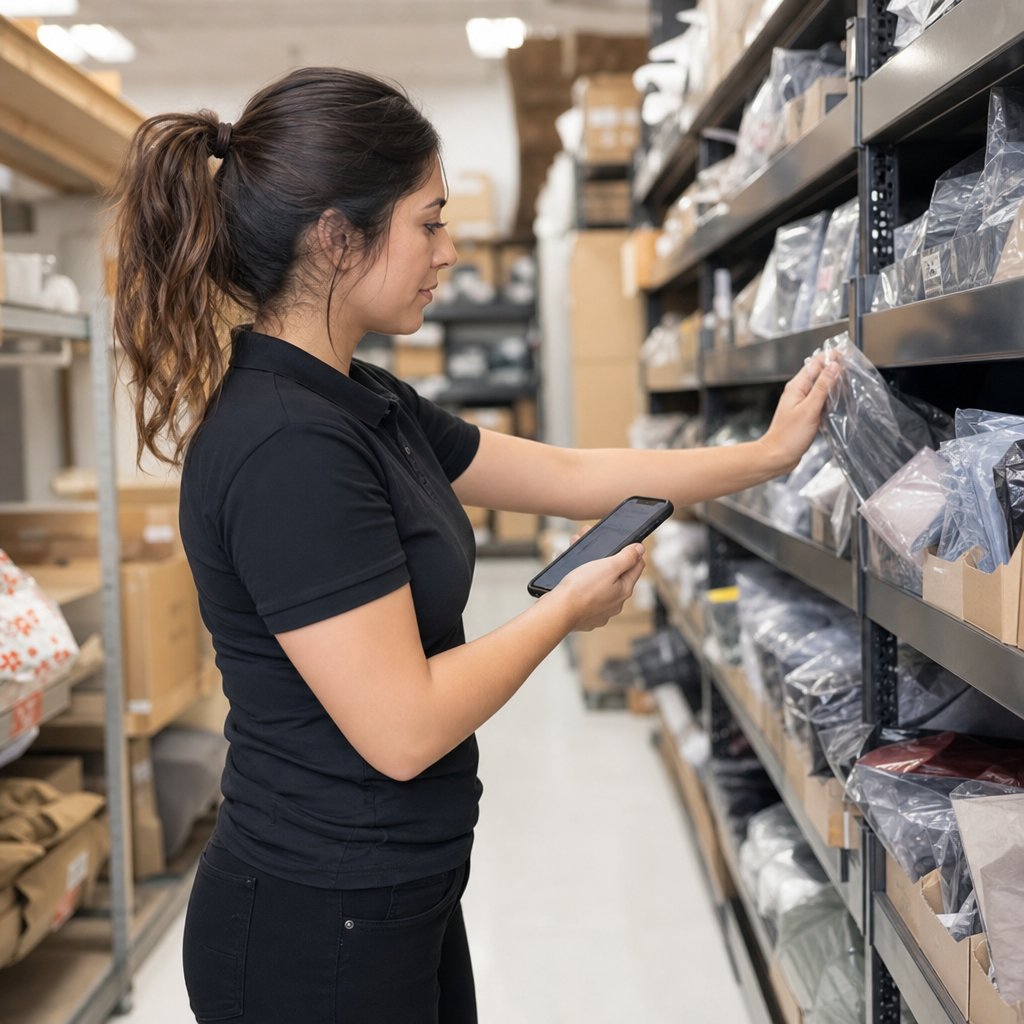
In store, the equation is different. No robots, but salespeople who must pick quickly between two customers. Here, mobile picking applications make the difference: optimized in-aisle path, barcode scanning, substitution management, photo validation.
The tools that orchestrate it all
Behind this operational complexity, several technological building blocks are becoming essential.
The OMS: the conductor
The Order Management System has become the cornerstone of omnichannel. It centralizes all orders (web, mobile, store, marketplace), consults unified stock in real time and intelligently decides on the optimal shipping point: warehouse, store A or store B depending on availability, proximity and preparation capacity.
The WMS and its lighter cousins
While the classic WMS drives the warehouse, lighter Store Fulfillment solutions are emerging to equip stores without weighing down their IT systems. These tools manage ship from store orders, click & collect and replenishment.
Picking apps: the field interface
Everything plays out on the picker’s smartphone. A good picking application must be intuitive, fast and resilient to connection losses. It guides step by step, suggests alternatives in case of stockouts, and ensures full traceability.
The TMS for transport
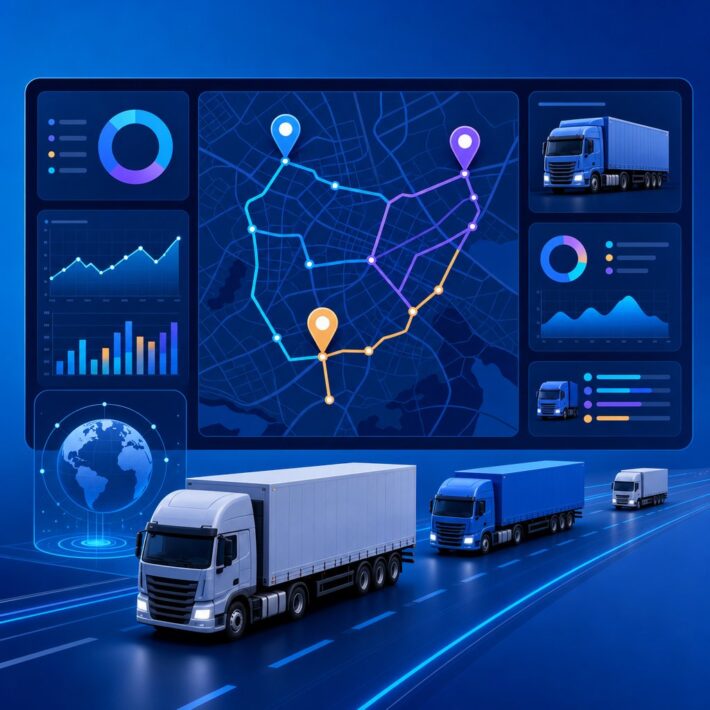
On the delivery side, the Transport Management System optimizes routes, selects carriers and arbitrates between options. Coupled with track & trace solutions, it provides the visibility expected by the end customer.
The Everest of the supply chain: a unified view of stock
If we had to identify the summit to climb for retailers, it would undoubtedly be the unified and reliable real-time view of stock. This is the Everest of the modern supply chain: until it is conquered, all omnichannel strategies rest on fragile foundations.
Promising delivery in two hours from a store when the displayed stock isn’t real is a guarantee of a bad customer experience and a canceled order. Conversely, an accurate view enables triggering the right action at the right time: ship from store, click & collect, delivery from warehouse, or redirection to another point.
Reaching this summit requires:
- Reliable inventories via RFID, cycle counts and predictive AI
- Seamless integration between ERP, WMS, OMS and POS
- Operational discipline in stores to capture every movement
- A shared data culture across IT, logistics and retail
Smart replenishment: another major challenge
Beyond customer orders, the supply chain must also replenish the stores themselves. Data-driven replenishment is progressively replacing calendar-based restocking. Thanks to machine learning, algorithms anticipate demand by SKU and by point of sale, integrating weather, local events and historical data.
The result: fewer stockouts, less overstock, and accelerated rotation. The most advanced retailers combine this predictive replenishment with cross-docking logistics that avoid intermediate storage.
Conclusion: a supply chain that has become strategic
The supply chain is no longer a cost center to be optimized; it has become a major competitive advantage. Retailers that can intelligently combine ship from store, dark stores, optimized last mile and high-performing technological tools will gain a lasting edge.
But technology alone is not enough. Success depends as much on the tools as on the field teams: pickers, salespeople, drivers. Giving them the right applications—simple and effective—is undoubtedly the investment with the best ROI for retailers in 2025. Because in the end, it is indeed the customer promise that is kept—or broken—on the last meter.