Optimising deliveries in London: the guide to choosing the right TMS
Delivering in London is far from a simple transport operation. Between the ULEZ now covering the whole of Greater London, the Congestion Charge in the heart of the City, narrow medieval streets and customers demanding one-hour windows, every round becomes a regulatory and operational headache. The right TMS software makes the difference between a profitable delivery and a day lost in traffic. Here’s how to choose the tool that will truly drive your London operations.
Why London is a unique playing field for logistics
The British capital combines constraints that few European cities impose simultaneously. Low emission zones are only part of the challenge: you also have to deal with record traffic density, narrow delivery windows imposed by retailers and individuals, and an ultra-demanding B2C clientele when it comes to real-time tracking.
Regulatory constraints that weigh on costs
- ULEZ (Ultra Low Emission Zone): applicable 24/7, with daily charges for any non-compliant vehicle
- Congestion Charge: daily fee in the central zone between 7am and 6pm on weekdays
- LEZ (Low Emission Zone): restrictions on older diesel HGVs and vans
- Loading time restrictions and expanding pedestrian zones
For a carrier operating 30 vehicles in London, miscalibrating these variables can mean several thousand pounds of avoidable penalties every month.
Demanding customer expectations
The London market is one of Europe’s most mature when it comes to delivery customer experience. Recipients expect real-time tracking, accurate notifications, the ability to reschedule in one click, and delivery windows sometimes shorter than 60 minutes. Without a connected TMS able to handle these flows, the experience deteriorates rapidly.
Essential features of a TMS for London
A multi-criteria route optimisation engine
Classic distance-based optimisation is no longer enough. A good route optimisation engine must simultaneously incorporate:
- Low emission zones and their hours of application
- The type of vehicle assigned (cargo bike, electric van, diesel van)
- Delivery windows promised to the customer
- Required skills (handling, refrigeration, mandatory signature)
- Weight, volume and loading constraints
Expected outcome: denser routes, fewer empty miles, and a measurable reduction in ULEZ costs through intelligent allocation of compliant vehicles to regulated zones.
A dispatch capable of arbitrating in real time
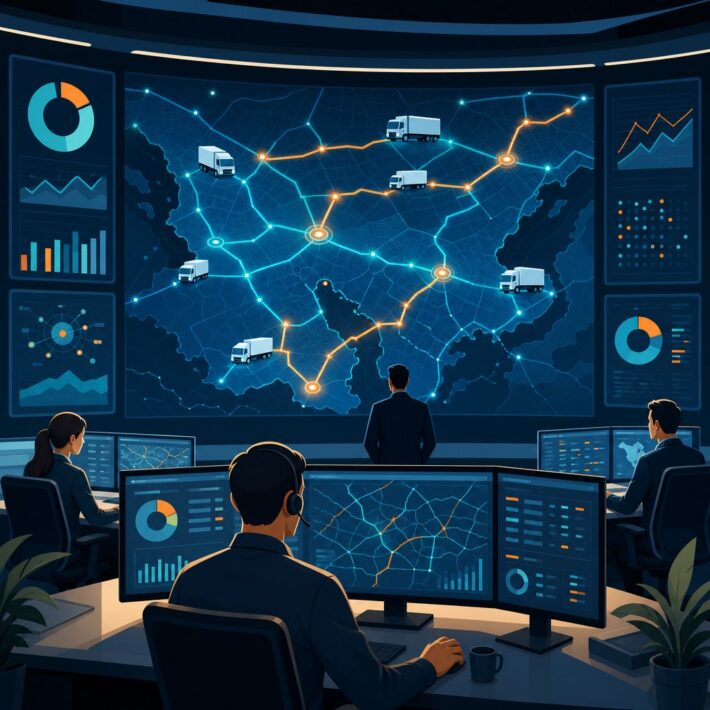
In London, a perfect 8am route can become obsolete by 9.30am. An accident on Marylebone Road, a surprise closure, a priority order: the dispatcher must be able to reassign in just a few clicks. A modern dispatch software offers a real-time map view, automatic assignment rules and push notifications direct to the driver app.
A robust driver app in the field
The driver delivery app is the most exposed link. It must work in low-coverage areas (basements, underground car parks), handle parcel scanning, capture proof of delivery (signature, photo, code), and guide the driver precisely to the right building entrance — a crucial detail in areas like Canary Wharf or the City.
High-quality customer notifications
SMS, email, push, white-label tracking link: customer communication must be smooth and personalised. A self-service rescheduling link avoids the “I wasn’t home” situations that drag down first-attempt success rates.
Automated billing including surcharges
Volatile fuel, urban tolls, ULEZ fees: your TMS must be able to re-invoice these variables without re-keying. Automatic pre-billing of subcontractors and management of complex pricing grids (by zone, by goods type, by time slot) are must-haves to protect margins.
An AI layer to go further
Logistics AI opens up unprecedented levers: predictive delay analysis, automated POD verification, recommendations on optimal departure times. In a market as competitive as London, these productivity gains can swing a customer account.
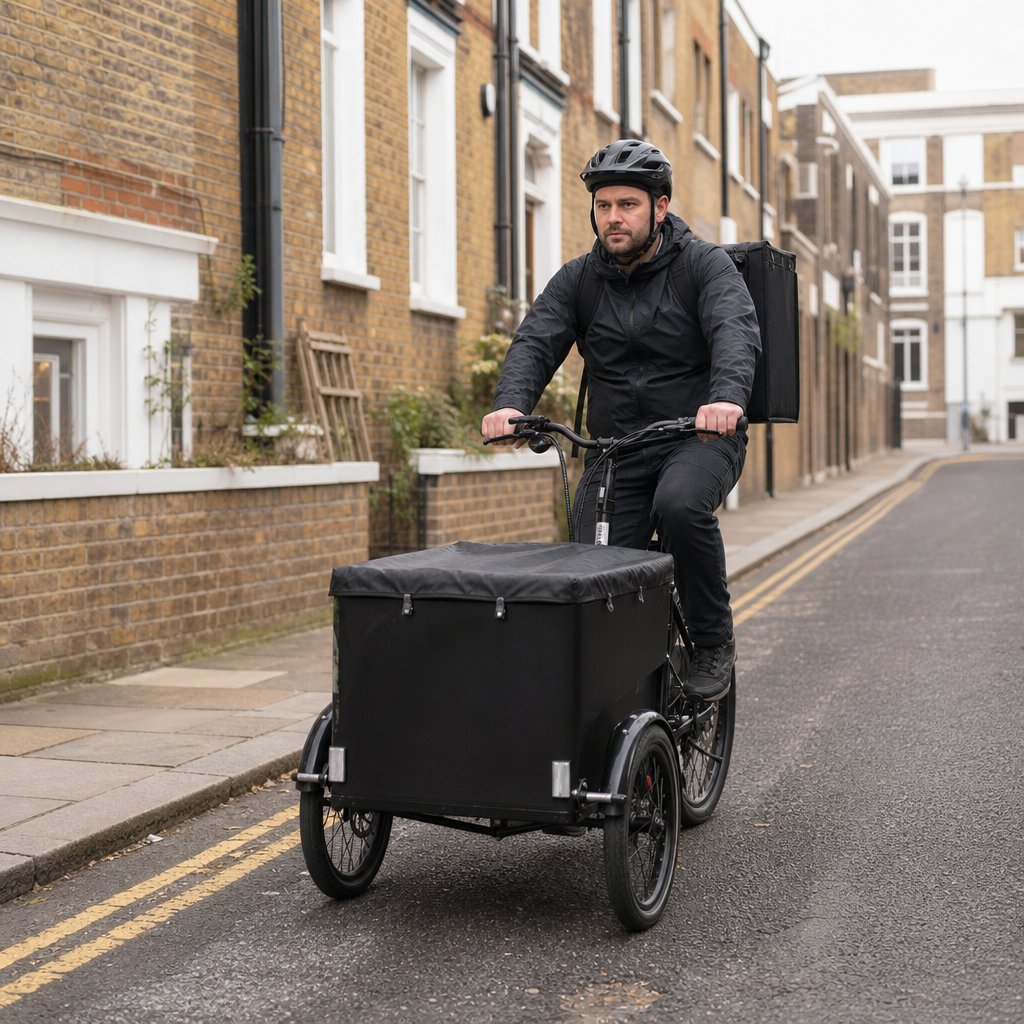
Cyclo-logistics: the right answer for London’s last mile
London is one of the European capitals where cyclo-logistics is progressing fastest. Cargo bikes bypass ULEZ and the Congestion Charge, access pedestrian zones, and often offer faster delivery times in dense areas than vans.
An adapted TMS must be able to mix diesel, electric and bike fleets within a single transport plan, intelligently assigning each order to the right vehicle based on weight, distance and destination zone. This is precisely the approach adopted by players like Diligo or Pickup Courrier, who run their urban operations via Everest.
How Everest addresses these challenges
Everest is a TMS designed for complex urban environments, with a modular approach that adapts to London’s specific constraints.
- Multi-criteria route optimisation: integration of regulatory zones, vehicle type, customer windows and required skills to generate truly executable transport plans.
- Real-time dispatch: map, list and schedule views, automatic assignment rules and one-click reassignment when something unexpected happens mid-route.
- Sherpas app: iOS/Android driver app with geolocation, parcel scanning (Zebra DataWedge compatible), proof of delivery capture and operation in low-network areas.
- Podchecker.ai: automated POD verification with 99% accuracy, up to 85% time saved on quality control and 16% fewer disputes.
- White-label customer notifications: SMS, email and push branded for the principal, with branded tracking link and self-service rescheduling.
- Automated billing: bespoke pricing grids, fuel surcharge management, subcontractor pre-billing and integrated Stripe payment.
- Walter: AI assistant to query your data in natural language, obtain recommendations and generate reports without going through an analyst.
“Switching to a modern TMS has allowed us to make our urban routes more reliable and gain visibility on the real margin of each job,” says one European cyclo-logistics director.
How to evaluate a TMS before signing
Questions to ask the vendor
- Does the optimisation engine natively handle low emission zones?
- Is the API open (REST JSON, webhooks) and publicly documented?
- What native connectors exist (Zapier, Make, n8n) to automate without development?
- Does the driver app work offline?
- Does the system support genuine white labelling (domain, theme, invoices, notifications)?
- What AI and automation coverage is included as standard?
KPIs to monitor after deployment
- First-attempt delivery rate
- Average cost per parcel (including ULEZ and Congestion Charge fees)
- Number of parcels per route
- Rate of valid PODs first time
- CO₂ emissions per delivery
Key takeaways
- London imposes unique constraints: low emission zones, dense traffic, tight windows and demanding customers.
- A high-performance TMS must integrate these variables natively in its optimisation engine, not as an option or through manual configuration.
- The driver app and customer notifications are the two links that make the difference on the final experience.
- AI and automation are no longer a luxury: they are becoming a measurable competitive advantage in such a mature market.
- Cyclo-logistics must be able to coexist with motorised fleets within a single tool to fully exploit London’s last-mile potential.
Choosing a TMS for London means choosing a technology partner capable of absorbing urban complexity without weighing down your operations. The right tool doesn’t just organise your routes: it turns your regulatory constraints into operational advantages.