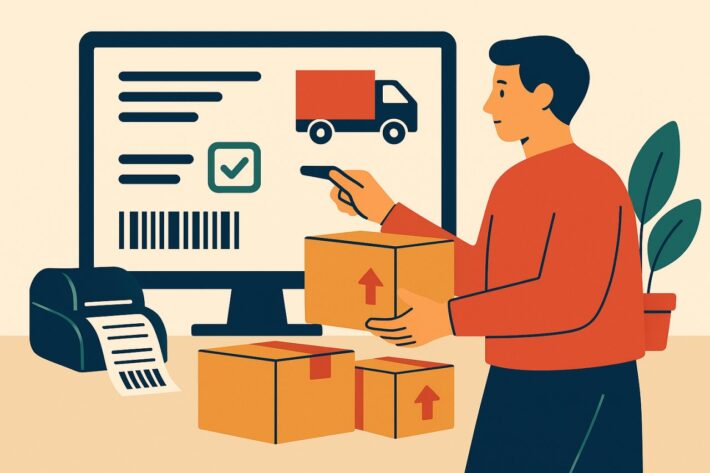
Traceability in Transport: Complete 2026 Guide (Tech & ROI)
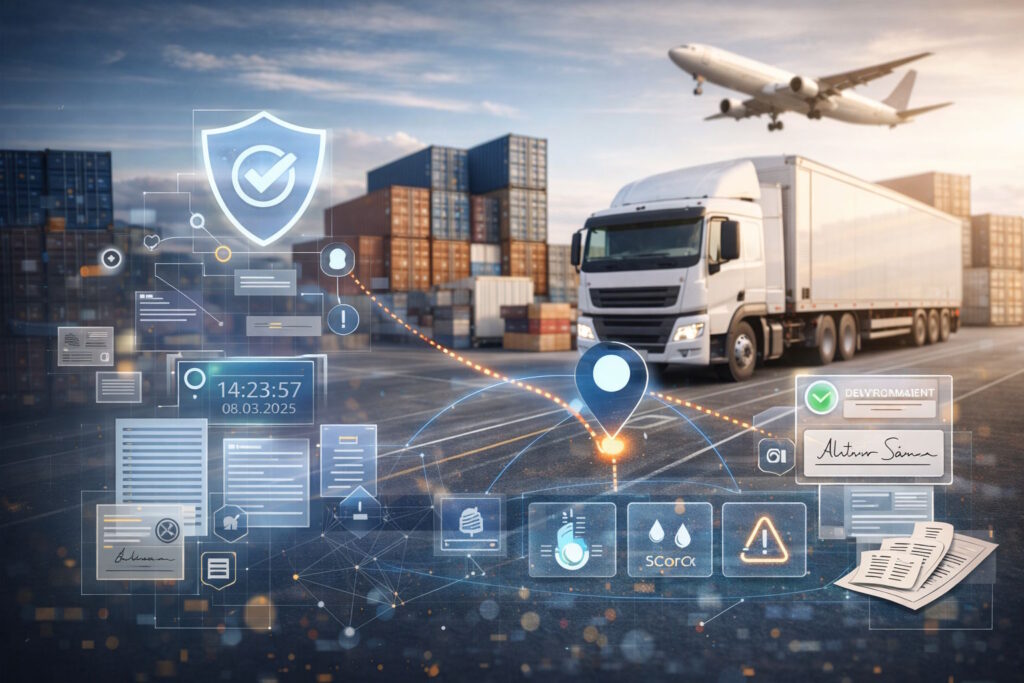
Traceability is no longer a simple option in modern transport: it has become the backbone of any successful logistics operation. Between growing regulatory pressures, increasingly demanding customer requirements and legal liability issues, carriers who neglect traceability take considerable risks. A breakdown of technologies, legal obligations and return on investment for traceability in 2026.
The Era of Total Transparency: When Traceability Becomes Non-Negotiable
A Market That No Longer Tolerates Approximation
Freight transport is undergoing a profound transformation. Delivery-related disputes cost transport companies an average of €150 per incident, not to mention the impact on reputation and customer loyalty. In a sector where margins oscillate between 2% and 8%, every error weighs heavily.
Traceability has become the shield that protects carriers against three major threats: unfounded customer disputes, costly operational errors and regulatory sanctions. Without a robust traceability system, a transport company navigates blindly in an increasingly demanding environment.
Convergence of B2B and B2C Expectations
A major phenomenon is transforming the sector: B2C delivery standards are now contaminating B2B. Professional buyers, accustomed to tracking their Amazon parcels in real time in their personal lives, demand the same level of transparency for their professional orders.
This convergence forces carriers to completely rethink their approach to traceability. What was acceptable five years ago – a simple acknowledgment of receipt – is no longer sufficient. Customers want to know where their goods are, precisely when they will arrive and who took them in charge.
The Five Technological Pillars of Modern Traceability
Real-Time Geolocation: Much More Than a Dot on a Map
Geolocation technology for delivery tracking has evolved considerably. Beyond simple GPS tracking, modern systems integrate predictive algorithms that calculate dynamic ETAs taking into account traffic, weather conditions and delivery history.
The operational benefits are concrete:
- 40% reduction in customer calls asking “where is my parcel?”
- Automatic detection of delay risks with preventive alerts
- Real-time optimization of routes in case of unforeseen events
- Proof of passage timestamped at each delivery point
Geolocation is no longer a marketing gimmick but an essential operational management tool.
Digital Proof of Delivery: The End of Paper
Traditional paper proofs of delivery accumulate disadvantages: lost documents, illegible signatures, time-consuming archiving and no guarantee in case of dispute. The shift to digital radically transforms the equation.
Digital PODs (Proof of Delivery) encompass several types of complementary evidence:
Electronic signatures: captured on smartphone or tablet, they are automatically timestamped and geolocated. Their legal value is now recognized and they offer far superior traceability to paper signatures.
Delivery photos: essential to prove the condition of goods upon delivery, they protect against abusive claims. Timestamped and geolocated photos constitute irrefutable evidence in case of dispute.
Parcel scanning: integration with professional scanners like Zebra DataWedge allows tracking of every parcel movement. Each scan generates a precise timestamp that documents the transfer of responsibilities between different actors in the chain.
Timestamps: The Guardians of Responsibility
Timestamps represent the backbone of any serious traceability. Every event in the life of a delivery must be precisely timestamped:
- Taking charge of the goods
- Departure from depot or warehouse
- Arrival at delivery site
- Start of actual delivery
- Signature and closure
This granularity makes it possible to identify precisely where and when a problem occurred. In case of dispute over a delay, timestamps make it possible to determine whether the delay comes from the carrier, excessive waiting time at the customer’s premises or a traffic problem.
Timestamps don’t lie: they constitute objective proof that puts an end to sterile discussions.
IoT Sensors: Monitoring the Invisible
For certain types of sensitive goods, simple location is not enough. Connected IoT sensors continuously monitor critical parameters:
Temperature: crucial for the pharmaceutical and food cold chain. Sensors record continuously and alert in case of drift, allowing immediate reaction.
Shocks and vibrations: essential for transporting fragile or electronic equipment. The data makes it possible to determine whether damage occurred during transport.
Humidity: critical for certain chemicals or humidity-sensitive products.
These sensors generate massive data flows that feed traceability and constitute as much objective evidence in case of dispute over the condition of goods.
Artificial Intelligence: Automated POD Verification
The major innovation of 2026 in traceability is the arrival of AI in the verification of proof of delivery. Solutions like Podchecker.ai automatically analyze PODs with 99% accuracy, detecting:
- Illegible or obviously fake signatures
- Blurry or non-compliant photos
- Inconsistencies in delivery data
- Missing or incomplete documents
The time savings are spectacular: what took 4-5 minutes per document is now done in a few seconds. Administrative teams save up to 85% of time on POD verification, allowing them to focus on problematic cases that really require human intervention.
AI transforms POD verification from a time-consuming bottleneck into a smooth and reliable process.
Regulatory Framework: What the Law Says About Traceability
Legal Obligations of the Carrier
Regulations impose strict traceability obligations on professional carriers. The legal framework precisely defines what a carrier must be able to prove:
The waybill remains mandatory for all freight transport. This contractual document must be producible at any time and contain precise information about the sender, recipient, nature of the goods and transport conditions.
The delivery obligation requires the carrier to be able to demonstrate that they have properly transported the goods to the designated recipient. This proof relies on the combination of several elements: recipient’s signature, delivery photo, parcel scan and geolocation.
Transfer of Responsibilities and Burden of Proof
The transfer of responsibilities between different actors in the logistics chain is a major legal issue. Precise traceability makes it possible to establish unambiguously:
- When the carrier took charge of the goods
- What condition they were in at the time of takeover
- Who accepted the delivery and when
- The condition of the goods upon delivery
Without robust traceability, it is the carrier who bears the burden of proof in case of dispute. A complete traceability system reverses the balance of power: the carrier has all the necessary evidence to defend against unfounded claims.
Specific Regulations for Sensitive Products
Certain sectors impose enhanced traceability obligations:
Pharmaceutical: temperature traceability is mandatory for many medications. Carriers must be able to prove that the cold chain was maintained throughout the transport duration.
Food: HACCP regulations impose complete traceability of food products with conservation of records for defined periods.
Waste and WEEE: transport of electronic waste requires strict traceability with specific tracking slips.
Failure to comply with these obligations exposes carriers to administrative and criminal sanctions. Traceability is therefore not only a matter of operational efficiency but also legal compliance.
ROI of Traceability: When Investment Quickly Becomes Profitable
Drastic Reduction in Customer Disputes
The figures speak for themselves: companies that implement a complete traceability system see an average reduction of 75% in customer disputes. This spectacular drop is explained by two mechanisms:
On one hand, the simple existence of detailed traceability deters abusive claims. When a customer knows that the carrier has photos, geolocated signatures and precise timestamps, they hesitate before contesting a delivery made according to the rules.
On the other hand, when a dispute actually occurs, resolution is 10 times faster. No more endless investigations: traceability data makes it possible to establish the facts in a few minutes.
Acceleration of the Billing Cycle
Billing is a pain point for many carriers. Without reliable and quickly accessible proof of delivery, the billing cycle stretches over several weeks.
With automated traceability and AI verification of PODs, this time drastically reduces:
- Instant validation of proof of delivery upon receipt
- Elimination of manual work in document verification
- Automatic generation of invoices with attached PODs
- 85% reduction in time between delivery and invoice sending
This acceleration directly improves cash flow. A carrier who bills two weeks earlier mechanically improves their WCR and reduces their financing needs.
Operational Optimization and Productivity
Beyond dispute reduction, traceability generates multiple productivity gains:
Fewer incoming calls: when customers can track their deliveries in real time, they no longer contact customer service. Carriers report a 40 to 60% drop in “where is my parcel?” calls.
Better resource allocation: real-time geolocation makes it possible to identify late drivers and dynamically reassign urgent missions to available drivers nearby.
Elimination of data entry errors: digitization of PODs eliminates manual re-entry errors that generate inconsistencies in systems.
Commercial Differentiation
In a saturated market where competition is often on price, traceability becomes a differentiating commercial argument. Shippers are willing to pay a premium for carriers who offer:
- Real-time tracking of their deliveries
- Proactive notifications in case of delay
- Direct access to proof of delivery
- Detailed reporting on quality of service
This differentiation allows equipped carriers to negotiate higher rates and retain their customers on criteria other than price.
Common Mistakes That Sabotage Traceability
Tool Fragmentation
The most common mistake is to multiply unconnected tools: one system for geolocation, another for PODs, an Excel sheet for planning and separate software for billing.
This fragmentation creates data silos that destroy the value of traceability. The information exists but it is scattered, impossible to cross-reference and requires manual re-entries that generate errors.
Effective traceability requires a centralized platform where all data converges automatically.
Lack of Status Granularity
Some carriers settle for overly generic statuses: “in progress”, “delivered”, “failed”. This binary approach does not make it possible to identify precisely where the problems are.
High-performance traceability requires granular and customizable statuses that reflect operational reality: “arrived on site”, “awaiting unloading”, “signature refused – recipient absent”, “partial delivery accepted”, etc.
This granularity makes it possible to finely analyze the causes of delays and identify improvement levers.
Absence of Proactive Monitoring
Many companies collect traceability data but do not use it to anticipate problems. However, the major interest of real-time traceability is precisely to detect anomalies before they become delivery failures.
A high-performance system must integrate automatic alerts:
- Driver immobilized for more than 20 minutes
- Expected delay greater than 30 minutes compared to ETA
- Mission not started 15 minutes after scheduled time
- Temperature leaving the authorized range
These alerts allow immediate corrective intervention rather than crisis management after the fact.
Neglecting POD Quality
Collecting PODs is not enough: they must still be usable and legally valid. Too many companies accept blurry photos, illegible signatures or incomplete information.
This tolerance turns against them in case of dispute: a poor-quality POD has no probative value. Automatic AI verification of PODs therefore becomes essential to guarantee the quality of collected evidence.
How Everest Centralizes All Your Traceability
A Single Platform That Eliminates Silos
Everest was designed precisely to solve the fragmentation problem. All traceability data converges in a single interface:
- Real-time geolocation of drivers with dynamic ETA calculation
- Automatic status updates from the Sherpas mobile application
- Centralization of PODs (photos, signatures, scans) with integrated AI verification via Podchecker.ai
- Automatic archiving and instant search of all evidence
- Generation of exportable traceability reports for your customers
This centralization radically transforms the user experience. No more juggling between 5 tools: all information is accessible in two clicks from the dashboard.
Automation of Customer Notifications
Everest completely automates communication with your customers through customizable white-label notifications:
- Confirmation of takeover with tracking link
- Preventive alerts in case of detected delay
- Notification of driver’s imminent arrival
- Delivery confirmation with direct access to PODs
- Possibility of rescheduling in case of absence
This automation drastically reduces the customer service load while improving satisfaction. Your customers are proactively informed without needing to contact you.
Native Interconnection with Your Ecosystem
Traceability does not live in a vacuum. Everest integrates natively with your existing tools via:
- Robust REST API to connect your systems (ERP, e-commerce, CRM)
- Webhooks to receive traceability events in real time
- Integrated Automation platform based on n8n to create intelligent workflows without development
- Customizable exports to feed your Business Intelligence tools
This interconnection ensures that your traceability data automatically feeds all your business processes, from billing to customer reporting.
Native Regulatory Compliance
Everest natively integrates regulatory requirements:
- Automatic archiving of waybills
- Conservation of PODs with certified timestamping
- Traceability of transfers of responsibilities
- Compliant exports for regulatory audits
You don’t have to worry about compliance: it’s guaranteed by design.
The Essential Takeaways
Traceability has become the central nervous system of any modern transport operation. It is no longer limited to knowing “where is the parcel” but encompasses a complete ecosystem of digital evidence, IoT sensors and artificial intelligence that transform delivery management.
The benefits are multiple and measurable: 75% reduction in disputes, 85% acceleration in billing, 40% drop in customer calls and strong commercial differentiation. These gains transform traceability from a cost to a quickly profitable investment.
The technologies are mature and accessible. The question is no longer if you should invest in traceability but when you will do it. In a market where your competitors are equipping themselves, each month of delay deepens your competitive disadvantage.
Traceability is not a luxury reserved for large groups: it is now a survival condition for all transport players.