
TMS and AI: 5 Concrete Use Cases Transforming Dispatch Today
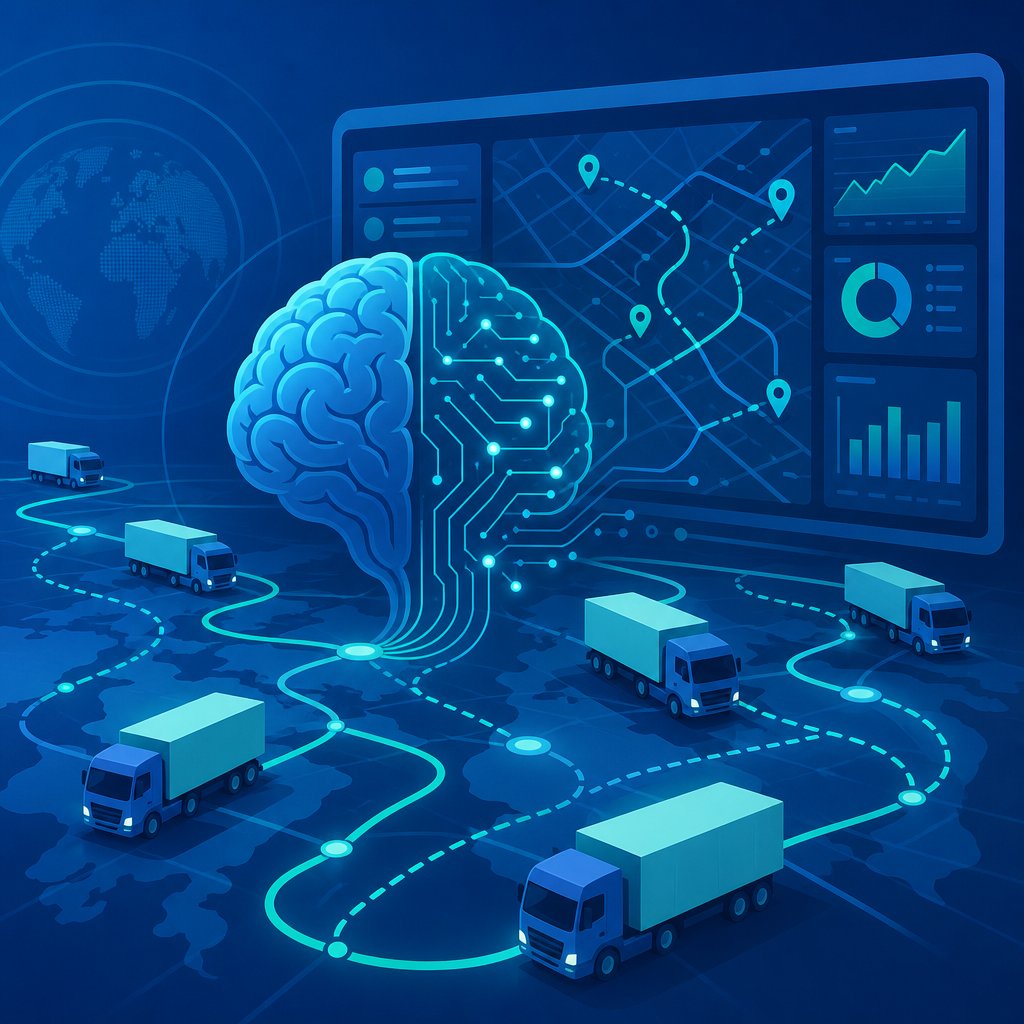
AI in TMS: finally moving beyond the demo effect
For the past two years, every logistics trade show has showcased AI agents theoretically capable of running an entire operation. On stage, the demo is stunning. In production, the reality is often more modest: a POC that drags on, poorly prepared data, dispatchers who go back to Excel as soon as the agent hesitates.
Yet something changed in 2024-2025. AI workflows are leaving the lab to settle into transport operations. Not everywhere, not for everything, but on specific use cases where the return on investment is measurable within the first few weeks. Here are five of them, as we observe them among carriers using Walter, our AI layer integrated into the Everest TMS.
1. Querying your TMS in natural language
The first use case — and probably the most transformative on a daily basis — is the ability for a dispatcher, operator or operations director to ask a question to their TMS the way they would ask a colleague.
What it looks like in practice
- “How many rounds are running late today in the Rhône-Alpes area?”
- “Which customers have a service rate below 95% this month?”
- “Show me the drivers who haven’t yet returned their CMRs from last week.”
Where it used to require building a BI report, filtering, exporting, operations optimization AI responds in seconds, with up-to-date data and the associated source. The benefit isn’t just time-related: it democratizes access to information. The dock supervisor or operations assistant can now query the system without going through BI.
2. Detecting anomalies before they become costly
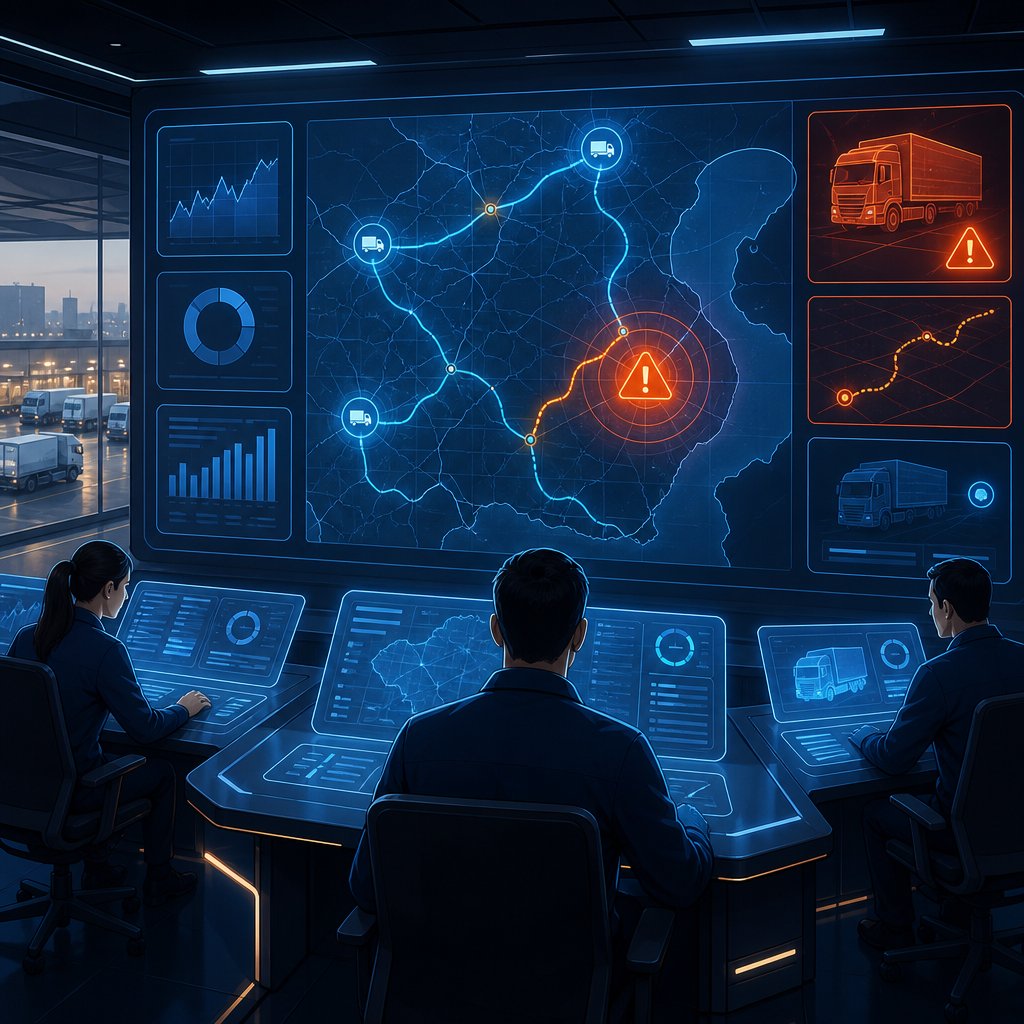
The second use case concerns proactive anomaly detection. A TMS generates thousands of events per day: GPS positions, delivery statuses, driving times, mileage discrepancies, fuel costs. No human can monitor everything.
A well-calibrated AI workflow can:
- Spot a round whose margin is collapsing compared to the customer’s historical data;
- Flag a driver whose driving style changes abruptly (an indicator often linked to fatigue or a mechanical issue);
- Alert on a delivery site where the average waiting time drifts week after week.
“We identified 4% of lost margin on a key account simply because AI highlighted a drift in unloading time that no one had noticed.” — Operations Director, SME carrier with 45 vehicles
3. Generating custom reports on demand
Third use case: report generation. Every industrial customer has their requirements: monthly quality reporting, weekly KPIs, CSR dashboard. Historically, these reports tie up one or two FTEs in large operations.
The typical workflow
The user describes what they want (“a monthly report for customer X with service rate, punctuality, incidents and CO2 emissions per round”). The AI:
- Queries the right TMS tables;
- Applies the requested formatting (PDF, Excel, email delivery);
- Schedules recurrence if needed.
The report becomes a reproducible artifact, versioned, editable in natural language. No more Excel macros maintained by a single person in the company.
4. Building dedicated business apps with Walter Apps
This is probably the most differentiating use case, and the one that generates the most curiosity among our customers. The idea: rather than waiting 6 months for a vendor to develop a feature, the operator describes their need and a mini business application is generated, connected to the TMS data.
Real examples of deployed Walter Apps
- Euro pallet tracking: a custom app for a parcel carrier, with mobile entry by drivers and automatic reconciliation with delivery notes.
- Tanker washing management: traceability of washing certificates, alerts before expiration, history by tank.
- Pre-invoicing of waiting hours: automatic detection of overruns, generation of a statement to be validated by the operator, injection into invoicing.
These applications don’t replace the TMS: they complement the core business with workflows specific to each carrier. This is the end of the trade-off between “vendor standard vs. costly custom development.”
5. Assisting dispatch in real time
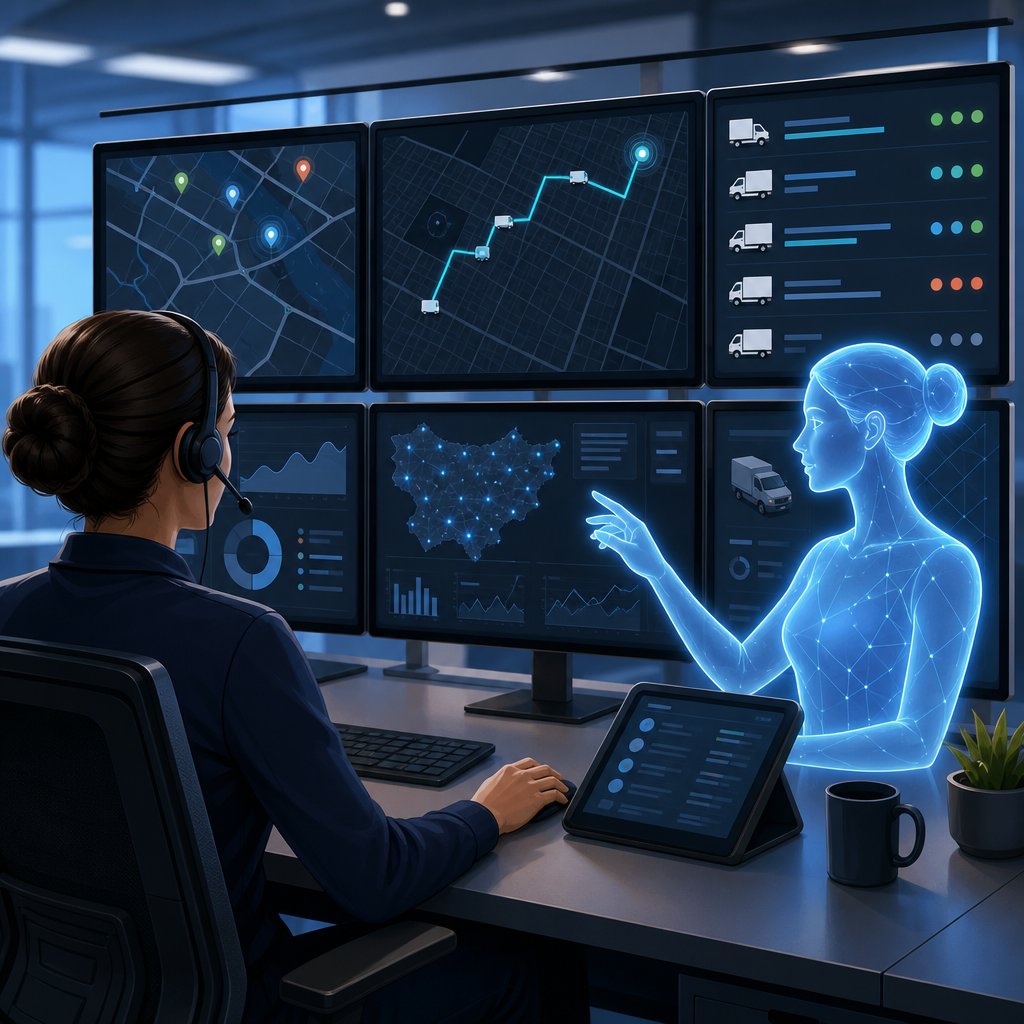
The fifth use case — the closest to the original promise of “AI agents” — is that of assisted AI dispatch. Caveat: we’re not talking here about a system that decides in place of the operator, but a copilot that suggests.
What the assistant actually does
- Propose a reassignment when a driver reports an unexpected event (breakdown, customer delay);
- Suggest merging two under-filled rounds in the same area;
- Anticipate driving time overruns before they occur;
- Recommend a qualified subcontractor for a spot order based on history.
The decision remains human. But AI saves those 10 to 15 minutes per hour that operators used to spend juggling between screens, calls and spreadsheets.
What AI doesn’t (yet) do well
Being honest about limitations is also what distinguishes lasting adoption from an abandoned project. Today, AI in transport operations remains fragile on:
- Customer negotiation: no agent replaces a sales rep to renegotiate a framework contract;
- Crisis management: labor disputes, major weather events, cyberattacks — humans remain essential;
- Input data quality: a poorly maintained TMS will produce mediocre AI responses. The “garbage in, garbage out” rule has never been more true.
Everest and Walter: AI designed for operations
Everest is a TMS designed for road freight carriers, from fleets of 20 vehicles to those with several hundred tractors. Its distinctive feature: an open architecture and a native AI layer, Walter, which makes the five use cases described above accessible without a heavy integration project.
With Walter Apps, operators no longer suffer the pace of the vendor roadmap: they create, test and deploy their own business micro-applications in a few hours, connected to their operational data. It’s this combination — a solid TMS + an AI that speaks the language of operations + a business app studio — that makes the difference between an impressive demo and real productivity gains.
Conclusion: moving from POC to production
AI in logistics no longer needs to convince: it needs to be industrialized. The five use cases presented here are neither futuristic nor experimental: they are already in production at carriers using them daily. The real challenge, now, is no longer “should we do AI?” but “how do I integrate AI into my operation without breaking what already works?”
The answer boils down to three principles: start with use cases with measurable ROI, rely on a TMS whose data is clean and accessible, and choose an AI that augments operators rather than claiming to replace them. This is exactly the philosophy guiding the development of Walter and Walter Apps at Everest — and it’s what allows our customers to transform their dispatch with AI, today.