Transport Traceability: The Anti-Bankruptcy Weapon for Carriers in 2026

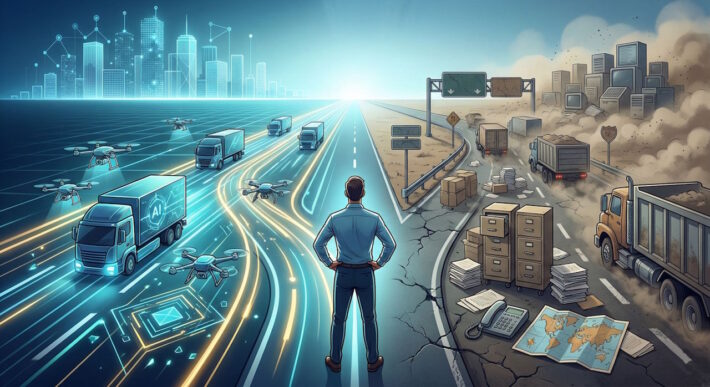
Your drivers spend two hours a day on the phone tracking packages. Your customer service is overwhelmed with calls. Your transport disputes eat up 2% of your revenue. Meanwhile, 3,000 French carriers filed for bankruptcy in 2024, crushed by 2-3% margins and relentless low-cost competition. The difference between surviving and disappearing? A transport traceability system that transforms your delivery data into measurable performance leverage. More proof, fewer disputes, reassured customers without mobilizing your teams.
Key Takeaways
- Transport disputes represent up to 2% of revenue with 45-60 min processing time per case
- A complete traceability system reduces disputes by 75% and support calls by 40-60%
- White-label traceability transforms your data into a commercial differentiator against low-cost
- Automatic carbon reporting becomes a selection criterion for shippers in 2026
- A unified dashboard saves 1 to 2 hours per day on operational management
Why transport traceability becomes a survival issue in 2026?
Margins under pressure that no longer forgive any error
Your margins oscillate between 2 and 3%. You know it. Your Eastern European competitors display costs 38 to 50% lower. Result: 3,000 French carriers filed for bankruptcy in 2024. Every dispute, every hour lost on the phone with an unhappy customer eats into your profitability. Transport disputes represent up to 2% of your revenue, with 45 to 60 minutes of processing per case and 15% additional internal management time, according to Shiptify Logtech.
Without robust traceability, you’re flying blind:
- Impossible to prove the exact delivery time
- Impossible to justify a delay caused by an unexpected roadwork
- Your customer service is overwhelmed with calls: “Where is my delivery?”
- Your team spends two hours a day reassuring customers instead of optimizing your routes
Traceability as an operational shield
Transports TDF reduced its dispute rate to less than 0.22% in 2023, down 10% versus 2022. How? Packaging optimization, yes. But above all: a transport traceability system that documents every step. Digital proof of delivery. Real-time geolocation. Automatic customer notifications.
Companies equipped with a complete traceability system reduce their disputes by 75% on average. They decrease their support calls by 40 to 60%. A transport company saw its customer complaints drop by 40% after deploying real-time tracking, according to Everest data. This gain is no gimmick: it frees up time, reduces hidden costs, and strengthens your commercial credibility.
A differentiator against low-cost competition
You can’t match your rates with those from the East. Your advantage? Proven quality of service. A shipper comparing two quotes will choose the one that guarantees complete visibility on their shipments. Eagles Courses saves 1 to 2 hours per day thanks to its unified delivery management. Diligo went from 1 to 21 cargo bikes in two years, relying on real-time traceability that reassures its B2B customers.
“Carriers who survive transform their delivery data into performance leverage.”
Carriers who survive transform their delivery data into performance leverage. But concretely, what is an effective traceability system?
What is a TMS and how does it structure your traceability?
You still manage your routes on Excel? Your drivers call every hour to find out where to deliver next? A TMS (Transport Management System) ends this artisanal management. This transport management software centralizes all your transport operations: automated dispatch, route optimization, real-time tracking, invoicing. A single interface replaces your dozens of files and your time-consuming phone calls.
Carrier TMS vs shipper TMS: radically different needs
| TMS Type | Main Function | Target Users |
|---|---|---|
| Carrier TMS | Own fleet management: driver assignment, vehicle management, digital PODs | Carriers, couriers, delivery companies |
| Shipper TMS | Freight orchestration: carrier comparison, multi-provider tracking, flow consolidation | Retailers, e-merchants, manufacturers |
| Hybrid TMS | Internal fleet management + external provider coordination | Omnichannel retailers (ship-from-store), logistics platforms |
Not all TMS are equal. A carrier TMS manages your own fleet: driver assignment, vehicle management, digital proof of delivery. A shipper TMS orchestrates freight: automatic carrier comparison, multi-provider tracking, flow consolidation. Retailers practicing ship-from-store need both: manage their internal couriers while handling external carriers for peak volumes.
Shiptify illustrates this democratization: their cloud TMS platform installs in 1 hour and generates 20-30% savings on transport costs through automatic route optimization. Over 50,000 logistics professionals use it daily. The market confirms this trend: SMEs show 15% CAGR growth in TMS adoption, while 62% of revenue is still concentrated among large enterprises in 2024 (source: Mordor Intelligence).
The 3 features that transform your transport management
A modern TMS doesn’t just digitize your existing processes. It automates them:
- Intelligent dispatch: the software automatically assigns orders according to driver skills, vehicle constraints and customer time slots. Eagles Courses saves 1 to 2 hours per day on this step alone.
- ERP/WMS integration: your transport orders are automatically created from your commercial management system. No more double entry, no more copying errors.
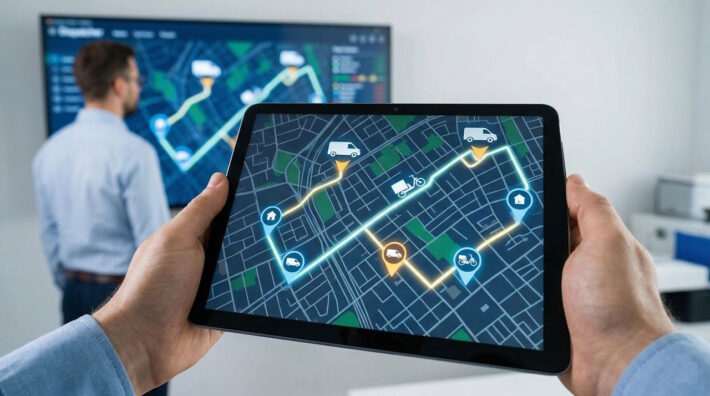
- Real-time management: a single dashboard displays the status of all your ongoing routes, potential delays, upcoming deliveries. You anticipate problems instead of suffering them.
This data structuring becomes the foundation of your traceability. But a TMS alone is not enough. Embedded tracking technologies transform this data into concrete operational visibility.
The 4 traceability technologies that change the game
You manage your deliveries with phone calls and paper receipts? Every day, your teams waste time locating packages, answering worried customers, and managing disputes over illegible delivery proofs. This manual operation is costly: between 40 and 60 support calls per day for a 20-vehicle fleet, nearly 4 hours of wasted operator time.
Four technologies transform this operational reality into automated management. No empty tech talk: each brings measurable gains from the first weeks.
Real-time GPS geolocation: complete visibility on your routes
GPS geolocation is no longer limited to a point on a map. A modern system reports each vehicle’s position every 30 seconds, automatically calculates ETAs (estimated time of arrival) and alerts in case of route deviation. Field result: your customers check their tracking online instead of calling. A transport company reduced its support calls by 40% from the first month thanks to this real-time visibility.
The gain goes beyond customer service:
- Instant identification of available vehicles for an urgent delivery
- Route reassignment based on actual traffic
- Time-stamped proof of delivery times
- Reduced inventory immobilization for retailers in ship-from-store
- Ability to promise reliable delivery time slots
Digital PODs: end of disputes and accelerated invoicing
Paper Proof of Delivery generates 75% of customer disputes in urban transport. Illegible signature, lost receipt, blurry smartphone photo: each dispute mobilizes 45 minutes of administrative processing. Digital PODs eliminate this problem at the source.
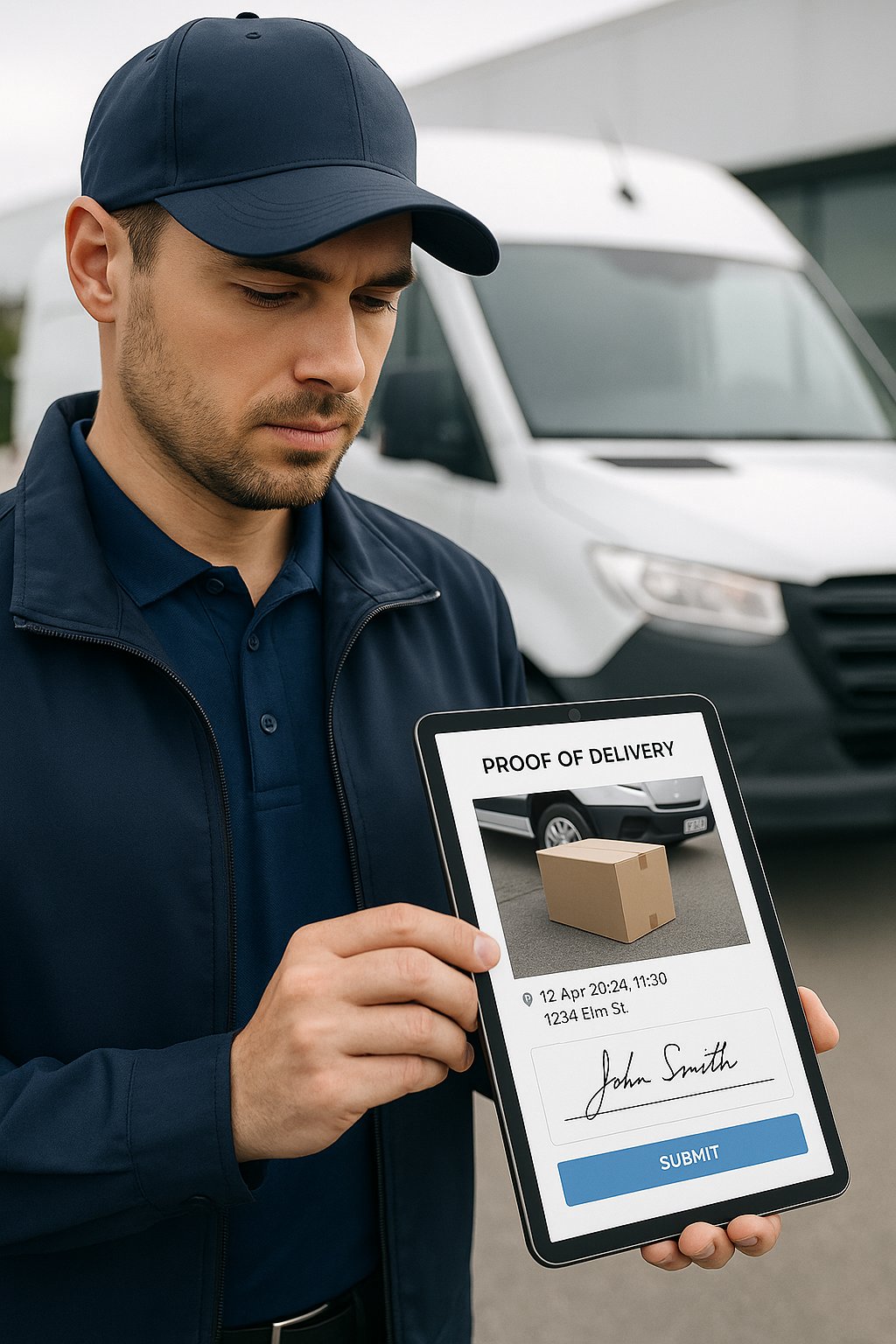
The driver captures the signature on tablet, takes a geolocated photo of the package, and validates delivery in 20 seconds. The information instantly goes back to your TMS and automatically triggers invoice sending. Eagles Courses saves 1 to 2 hours per day thanks to this automation, and reduces its average invoicing time from 7 days to 24 hours.
“Automated traceability directly improves your cash flow: AI verification of digital PODs reduces the time between delivery and invoice sending by 85%.”
Automated traceability directly improves your cash flow: AI verification of digital PODs reduces the time between delivery and invoice sending by 85%, positively impacting your working capital.
IoT and sensors: transport condition traceability
You deliver fresh, pharmaceutical or fragile products? IoT sensors continuously monitor temperature, shocks and crate openings. Each anomaly triggers an immediate alert and generates an indisputable time-stamped report in case of dispute.
This feature transforms your liability: you objectively prove that the cold chain was respected, or conversely that the package was already damaged at loading. For a specialized carrier, this reduces unjustified compensations and strengthens trust with demanding shippers.
AI and predictive optimization: delay anticipation and dynamic reassignment
Artificial intelligence analyzes your historical data (traffic, weather, actual delivery times) to anticipate delays before they occur. Your TMS automatically recalculates routes, proposes delivery reassignment, and notifies the end customer with a new time slot.
A last-mile delivery company reduced its kilometers traveled by 15% thanks to this predictive optimization. Less fuel, less vehicle wear, and drivers who finish their routes on time: ROI is measured from the first quarter.
White-label traceability: how to transform your data into customer loyalty?
Your customers receive a generic SMS “Your package arrives in 30 minutes” signed by a provider they don’t know. Result: they call your customer service to verify. You handle 40 calls per day for tracking questions. This time creates no value.
White-label traceability reverses this problem. Concretely: your delivery notifications, your real-time tracking page and your confirmation emails bear your logo, your colors, your tone. The customer only sees your brand from start to finish of delivery. You control the experience, you strengthen your professional image.
Measurable reduction in support calls and NPS increase
A transport company equipped with white-label tracking reduces its customer service calls by 40%. The customer consults the personalized tracking page instead of calling. Your team saves 1 to 2 hours per day, like Eagles Courses who digitized its transport management.
NPS (Net Promoter Score) increases mechanically. Your customers perceive a smooth, professional experience, comparable to industry giants. They recommend your service. In 2026, e-commerce sites that extend post-purchase engagement through better tracking see their conversion rate climb by 5.4%, promoting recurring purchases.
Field use cases: cycle logistics, ship-from-store and e-commerce
Urban cycle logistics: Diligo went from 1 to 21 cargo bikes in 2 years. Their secret? Real-time tracking that reassures end customers. “Everest was very simple to deploy. We immediately gained traceability, and our customers now benefit from real-time tracking to reassure them!” Result: accelerated growth, strengthened professional image.
Omnichannel retailer with ship-from-store: you deliver from your stores. Without white label, the customer receives generic tracking that breaks the premium experience. With a personalized interface, you extend your brand identity to the customer’s door.
E-merchant managing its own fleet: you invest in vehicles, couriers, internal logistics. White label transforms this investment into a commercial differentiator. Your competitors outsource and lose control of the experience. You master it end-to-end.
How to manage your transport operations with actionable KPIs?
How much time per week do you spend compiling delivery data scattered between Excel, emails and phone calls? Without centralized indicators, you’re flying blind. You react to problems instead of anticipating them. A unified dashboard transforms this reactive management into proactive management, with KPIs that allow decisions in a few clicks.
The 4 KPIs that really measure your operational performance
Not all indicators are equal. Four metrics structure transport operations management:
- Time slot compliance rate: how many deliveries arrive in the promised time window? A rate below 90% generates support calls and degrades your image.
- Cost per delivery: fuel, labor, maintenance divided by number of packages delivered. This ratio reveals your actual margins.
- Number of disputes: delays, damaged packages, addresses not found. Each dispute costs between 15 and 30 minutes of administrative management.
- Carbon footprint per route: kg of CO₂ emitted per vehicle and per kilometer. You deliver by cargo bike? This KPI becomes your main commercial argument.
This data, when updated in real time, allows you to react immediately. A courier stuck in traffic? You reassign their deliveries to an available colleague. A systematically more expensive route? You re-optimize it from the following week.
Centralized dashboard: all your transport operations on one interface
Eagles Courses saves 1 to 2 hours per day since they abandoned their Excel spreadsheets for a unified dashboard. Their team accesses at a glance the status of each route, the week’s on-time delivery rate, and the average cost per delivery. No need to cross three files to produce a client report: everything is automated.
A modern transport management software centralizes your transport data and generates detailed reports without manual intervention. You visualize in real time the position of your vehicles, any delays, and each driver’s performance. This complete visibility allows you to continuously optimize routes, reduce kilometer costs, and improve the efficiency of your own fleet.
Business intelligence: identify the most profitable routes
Traceability doesn’t just track your deliveries. It feeds your business intelligence. By analyzing your transport data over several weeks, you identify the most profitable routes, the least congested time slots, and the geographical areas where your costs explode. This operational intelligence allows you to negotiate with your customers on factual bases, refuse unprofitable missions, and optimize your transport process to maximize your margins.
Decarbonized logistics: how traceability proves your environmental impact?
Your bike deliveries reduce CO₂, but you can’t prove it. Your customers value environmental commitment, but what concrete proof do you give them? A green logo on your site? In 2026, decarbonized logistics is measured, documented, valued. A robust traceability system transforms your environmental impact into a quantified commercial argument.
Automatic carbon reporting: each route becomes a commercial asset
A TMS equipped with traceability automatically calculates CO₂ emissions per route, per vehicle, per customer. You deliver by cargo bike? Each delivery generates an impact report: 0 grams of CO₂, X kilometers traveled, Y kilos of goods transported. You manage a mixed fleet (bikes, electric vehicles, thermal vans)? The system aggregates data and shows you precisely where you gain in ecological performance. Diligo, which went from 1 to 21 cargo bikes in two years, uses this traceability to reassure its customers about the real impact of their deliveries.
2026 regulatory compliance: anticipate environmental reporting obligations
Carbon reporting obligations are tightening. Transport companies must now document their ecological footprint with precision. A transport management system automates this compliance: data extraction, regulatory report generation, secure archiving. You save time, avoid errors, prove your compliance in a few clicks. Shippers, also subject to these obligations, favor carriers capable of providing reliable data. Your traceability becomes a selection criterion.
Competitive differentiation: transform ecology into a measurable advantage
Your competitor delivers by diesel, you deliver by bike. But if you can’t quantify the difference, you lose the argument. Automatic carbon reporting gives you commercial ammunition: “We avoided X tons of CO₂ for your deliveries this year, equivalent to Y Paris-Marseille trips.” You transform your environmental commitment into tangible proof. Retailers engaged in ecological transition seek partners capable of documenting their impact. You offer them this guarantee.
Taking action
Transport traceability is no longer a technical option: it’s a survival lever against competitive pressure and eroded margins. Carriers who document their deliveries, automate their delivery proofs and manage their operations with real-time KPIs reduce their disputes by 75%, their support calls by 40 to 60%, and save 1 to 2 hours per day on their management. In 2026, this performance becomes the norm for those who want to stay in the race.
Key Takeaways
- Traceability transforms your delivery data into measurable performance leverage
- Digital PODs, GPS geolocation and IoT generate gains from the first weeks
- A unified dashboard centralizes your KPIs and saves 1 to 2 hours per day
- Automatic carbon reporting becomes a commercial selection criterion
The next step? Assess your current technological maturity, identify quick wins (digital PODs, real-time geolocation), and deploy a scalable system that grows with your business. Everest supports carriers, retailers and e-merchants in this operational transformation, with measurable results from the first weeks.
FAQ
What is the difference between traceability and transport tracking?
Transport tracking locates your vehicles in real time. Traceability documents the entire life cycle of a delivery: pickup, intermediate steps, proof of delivery, transport conditions. It creates a complete audit trail that protects against disputes.
How much does a traceability system cost for an SME carrier?
Modern cloud transport solutions start at €50-150 per month for a small fleet. ROI is measured from the first quarter thanks to reduced disputes and support time. Everest offers pricing adapted to delivery volume, without infrastructure costs.
How to convince my drivers to adopt digital PODs?
Show them the time saved: 20 seconds to validate a delivery versus 2-3 minutes with a paper receipt. Involve them in choosing the management tool (tablet, smartphone). Train them in the field. Drivers quickly become ambassadors when they see fewer disputes and fewer customer calls.
Does white-label traceability require technical development?
No. Modern platforms offer customizable interfaces in a few clicks: logo, colors, custom domain. No development required. You activate white label and your customers immediately receive notifications in your image.
How does traceability help reduce my carbon footprint?
It automatically calculates CO₂ emissions per route, identifies the most energy-intensive routes, and generates impact reports for your customers. You optimize your routes, reduce your empty kilometers, and prove your environmental commitment with quantified data.