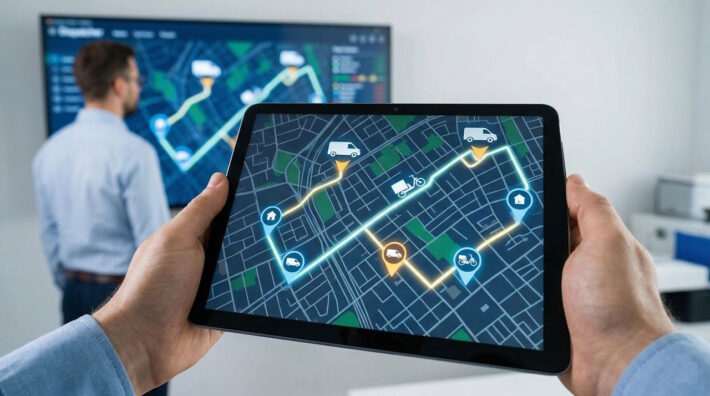
TMS Transport: The Software Transforming Your Delivery Operations in 2026
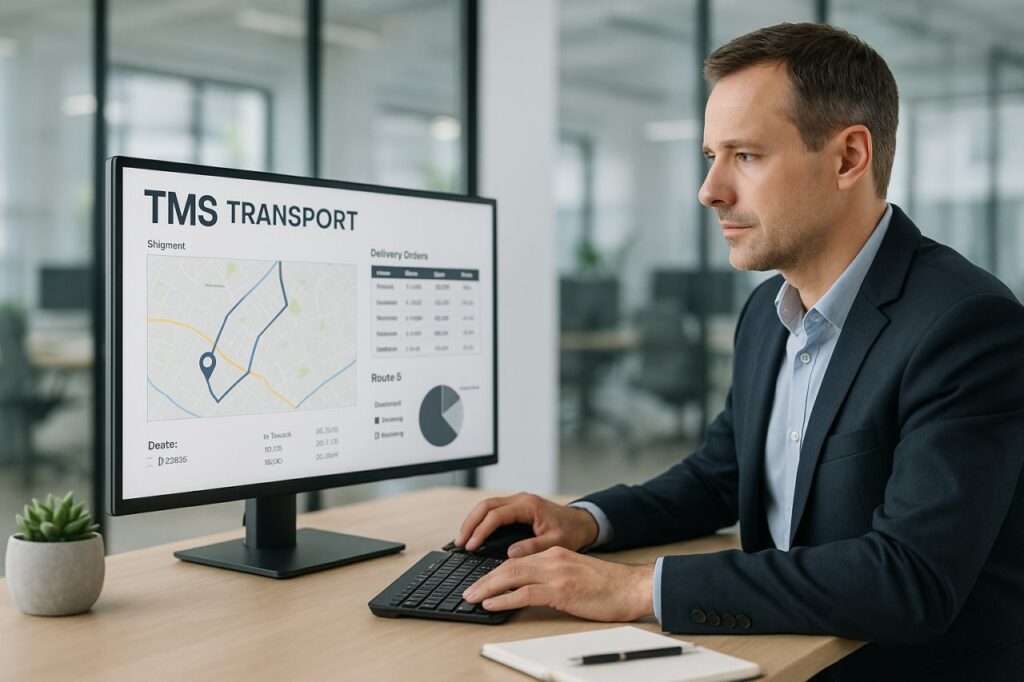
Your margins are shrinking. Your customers demand more responsiveness. Your teams spend hours on administrative tasks that create no value. This operational pressure affects all transport stakeholders: road carriers, urban couriers, retailers managing their own fleet. The solution? A TMS transport that centralizes, automates and optimizes all your transport operations. Not a technological gadget, but a management tool that generates measurable gains from the first week.
Key Takeaways
- A TMS transport centralizes dispatch, route optimization, real-time tracking and billing in a single interface
- Equipped carriers reduce dispatch errors by 40% and save 15 to 20% on mileage
- The choice between shipper TMS and carrier TMS depends on your role: do you ship or do you deliver?
- A modern TMS deploys in a few days via API and integrates with your ERP, WMS and existing tools
- Automatic carbon reporting transforms your environmental impact into a differentiating commercial argument
What is a TMS transport and why you need it now?
Software that centralizes and automates your transport operations
A TMS (Transport Management System) is transport management software that centralizes all your logistics operations in a single interface. Specifically, it automates dispatch, optimizes routes, tracks deliveries in real time and generates billing. Do you still spend two hours a day dispatching on Excel? This time creates no value. A TMS eliminates these time-consuming manual tasks from the first week.
The global TMS market was valued at $18.99 billion USD in 2025 and is expected to reach $22.35 billion USD in 2026 (Fortune Business Insights). This rapid growth reflects an operational reality: carriers who don’t automate are losing ground to exploding costs and shrinking margins.
Why continuing without TMS is expensive in 2026
Managing your deliveries manually generates three measurable problems:
- Dispatch errors: a driver sent to the wrong place means 30 unnecessary km and an unhappy customer
- Lack of visibility: without real-time tracking, your customers call your customer service to find out where their parcel is
- Inability to anticipate: you discover your profitability problems at the end of the month, too late to react
The 2026 context amplifies these difficulties. Low emission zones (LEZ) fragment your urban routes. Transport costs increased by 5.5% in 2024, and regulatory pressure is intensifying. A SaaS TMS then becomes a survival tool: it optimizes fragmented routes, avoids LEZ zones and manages profitability per route.
Immediate gain: freed time and reduced errors
A TMS reduces errors from the first days of use. Parnass Transport chose a TMS enriched by PTV Logistics’ route calculation API to optimize its routes and profitability (FAQ Logistique). Result: measurable operational performance gain, particularly for SMEs that need to do more with less.
"The most visible benefit? You get time back for value-added tasks: developing your business, negotiating with your customers, training your teams."
Your drivers receive their missions automatically. Your customers track their deliveries in real time. Your administrative team generates invoices with one click. You finally manage your business instead of enduring it.
TMS transport features that really make a difference
Automated dispatch: no more assignment errors
Manual dispatch generates costly errors: poorly assigned driver, underutilized vehicle, forgotten mission. A TMS automatically analyzes incoming missions and assigns them to the right driver according to precise criteria: availability, location, vehicle capacity, required skills. Result: you reduce assignment errors by 40% and you save 90 minutes per day on planning (source: field feedback from carriers equipped with TMS). Carriers using Everest see an immediate gain in traceability from deployment, with an interface that centralizes all assignments in real time.
Route optimization: measurable fuel savings
Manually calculating the shortest routes takes time and remains approximate. A TMS software automatically calculates optimal routes by integrating real constraints: time windows, vehicle capacity, real-time traffic, delivery priorities. You reduce mileage by 15 to 20%, which translates into direct fuel savings.
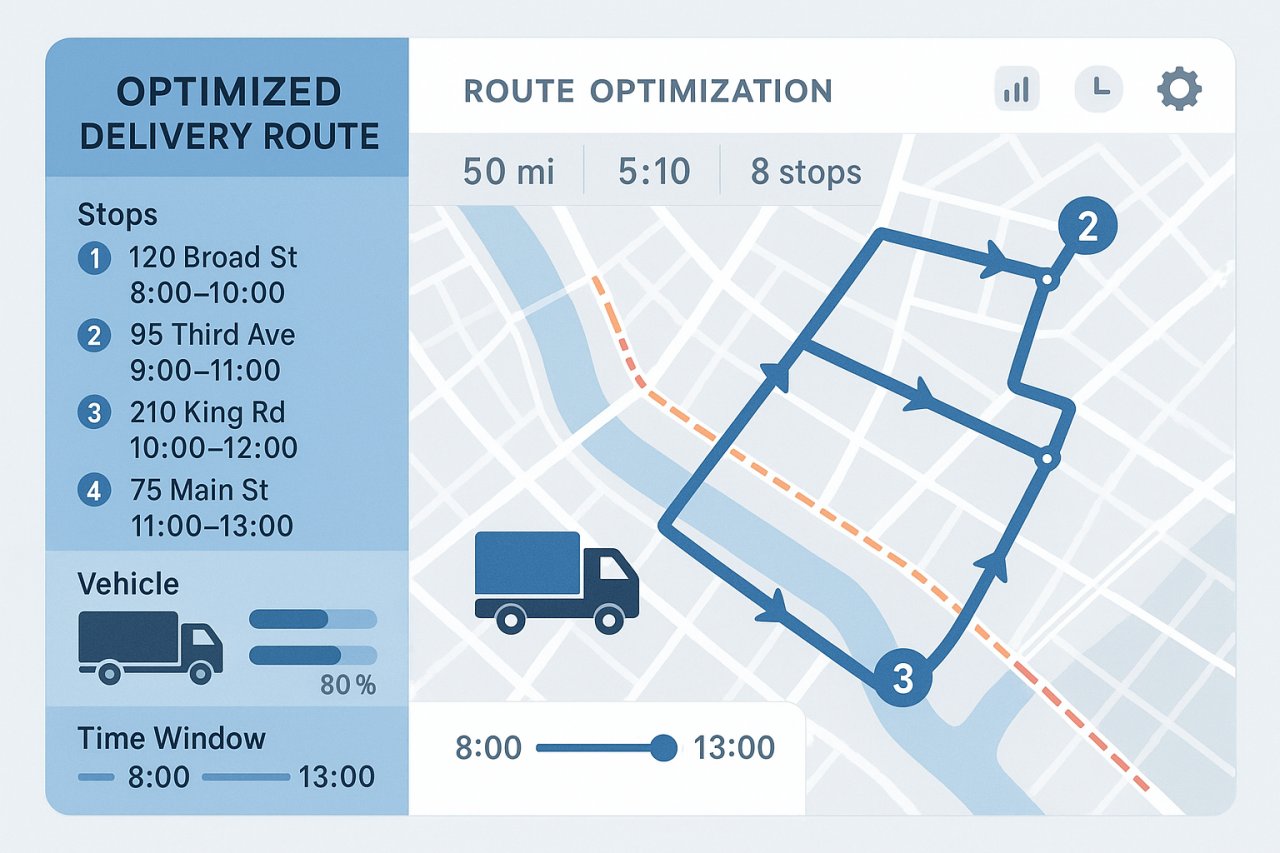
With an average cost per kilometer that increased by 15% in 2025, every kilometer saved improves your margin. The global TMS market is expected to reach $30.18 billion USD in 2030, driven by this optimization that has become essential in the face of rising costs (Grand View Research via Cargoson).
Real-time tracking: your customers stop calling
Without real-time visibility, your customers call to find out where their parcel is. Your customer service is saturated. A TMS offers unified real-time tracking: driver position, delivery status, automatic notifications to recipients. You reduce customer calls by 60% and strengthen your professional image. White-label tracking transforms each delivery into a premium experience, without your customers knowing you’re using software.
Automatic billing: exit manual re-entry
Manually generating transport orders and invoices takes hours each week. A TMS automates billing: it generates documents as soon as delivery is complete, applies agreed rates, calculates additional fees. You save administrative time and eliminate billing errors that delay your collections. Centralizing all transport operations in a single interface also simplifies the management of your own fleet and your external service providers.
Shipper TMS vs Carrier TMS: which one for your business?
Shipper TMS: to manage your multi-carrier transport flows
Are you a retailer, e-merchant or managing a chain of stores that ships from multiple warehouses or points of sale? You need a shipper TMS. This type of software centralizes the management of shipments, whether you use your own fleet or orchestrate multiple external carriers.
Concrete use case: an omnichannel retailer practicing ship-from-store. You ship from 40 stores, you work with 5 different carriers depending on zones, and you must guarantee a homogeneous delivery experience. A shipper TMS allows you to:
- Automatically select the best carrier according to weight, destination and deadline
- Track all your shipments in a single interface
- Reduce your transport surcharges by 8 to 12% through allocation based on objective criteria (TMS Benchmarks 2024–2025)
Shippers who have consolidated visibility on their flows have increased their ability to anticipate cost variances by more than 25% in 2025. This data illustrates the importance of a robust shipper TMS to manage your multi-carrier transport budget, especially in a fragmented last-mile context.
Carrier TMS: to optimize your delivery operations
Are you a road carrier, urban courier or cycle-logistics player? Do you operate a fleet of 8 to 80 vehicles and manage your own routes? You need a carrier TMS. This software centralizes all your transport processes: order taking, operations, billing, driver management.
Concrete use case: a local carrier with 15 vehicles delivering in urban areas. You still spend 2 hours a day manually dispatching your missions, your drivers call to find out where to go next, and you invoice manually at the end of the month. A carrier TMS like Ready (Sinari group) centralizes these operations in SaaS mode and generates measurable gains: cost management, productivity gain, increased customer satisfaction.
Your challenge is not to choose between multiple service providers, but to optimize your own resources: calculate the most profitable routes, reduce empty kilometers, automate billing. A carrier TMS becomes your daily operational management tool.
How to choose between the two?
| Criterion | Shipper TMS | Carrier TMS |
|---|---|---|
| Role | You ship your products | You deliver for customers |
| Fleet | Orchestration of external service providers | Management of your own vehicles |
| Volume | Thousands of shipments/month, varied carriers | Dozens of daily routes with your drivers |
If you’re a retailer who also manages your own fleet for certain deliveries, you may need both functionalities. Then prioritize a logistics platform capable of managing both your shipper flows (carrier allocation) and your carrier operations (route optimization). You centralize everything in a single interface, without multiplying tools.
How a TMS integrates with your other tools (ERP, WMS, API)?
ERP integration: automatic synchronization of transport flows
Your ERP generates transport orders as soon as an order is validated. A connected TMS automatically retrieves these orders, plans routes, then sends billing data and actual costs back to the ERP. No more need to copy-paste between two interfaces. You gain accounting consistency and visibility on your transport margins. Companies adopting a TMS connected via API have seen their productivity increase by 27% and their operational costs decrease by 23% (Gartner study cited in 2025).
WMS integration: warehouse-transport coordination in real time
Your WMS knows which parcels are ready to leave. Your TMS knows which vehicles are available and which route to optimize. Integration between the two tools triggers loading at the right time, optimizes vehicle filling and synchronizes departure times with order preparation. Result: less waiting time, fewer empty trips, better fleet utilization.
Logistics API: connection with all your business tools
An API (application programming interface) allows your TMS to communicate with any software: e-commerce site, CRM, customer communication tool, white-label tracking platform. Parnass Transport integrated its internal TMS with PTV Logistics’ route calculation API to improve the efficiency of its operational performance while maintaining control of its tool. API-first solutions and no-code connectors (Zapier type) accelerate deployment: you connect your tools in minutes, not weeks.
Key advantages of API integration:
Connection with e-commerce, CRM and tracking tools
Deployment in minutes via no-code connectors
Automatic data synchronization
Elimination of manual re-entry
Rapid deployment without operational disruption
Everest integrates in a few days. Customers report an immediate gain in traceability and real-time tracking for their own customers from startup. No heavy migration, no endless training. You centralize all your transport data in a single interface, eliminate manual re-entry and manage your transport operations from a single screen.
TMS and decarbonized logistics: how to manage your environmental impact?
The last mile weighs heavily in your carbon footprint
Last-mile logistics represents approximately 25% of CO₂ emissions related to transport in major French cities (FNTP & Best CPI). Do you deliver in urban areas? Each poorly optimized route increases your carbon footprint. And your customers know it: 80% of French shippers now require low-carbon transport solutions in their selection criteria (BearingPoint, 2026).
Without a management tool, you can neither measure nor prove your environmental efforts. A TMS transforms this constraint into a measurable competitive advantage.
Optimizing routes means reducing emissions
A TMS calculates the shortest routes and intelligently groups deliveries. Fewer kilometers traveled, less fuel consumed, less CO₂ emitted. LPR – La Palette Rouge reduced its emissions by 15.42% in 2024 through flow optimization via TMS, avoiding 2,261 tons of CO₂ in one year (FAQ Logistique).
This optimization doesn’t only concern thermal vehicles. Bicycle fleets, scooters or electric vehicles also benefit from intelligent planning that maximizes their range and operational efficiency.
Automatic carbon reporting: prove your commitment
Your customers ask for your carbon footprint? A modern TMS automatically calculates CO₂ emissions per shipment, per carrier and per period. You have detailed reports to respond to tenders, communicate about your CSR commitments and comply with environmental regulations.
The most advanced shippers now evaluate routes according to three combined criteria: costs, deadlines and emissions. Your TMS becomes the strategic heart for managing these three dimensions from a single interface, transforming your ecological impact into a differentiating commercial argument.
How to choose the right TMS software for your business in 2026?
Essential features: what must be in any worthy TMS
A TMS software must cover four non-negotiable pillars:
- Automated dispatch: intelligent mission assignment according to availability, location and capacity
- Route optimization: shortest route calculation with dynamic recalculation in case of unexpected events
- Real-time tracking: complete visibility on each delivery with white-label customer tracking
- Automatic billing: generation of transport orders and invoices without manual re-entry
If one of these four pillars is missing, you will always have a time-consuming task to manage manually. An incomplete TMS only solves part of the problem.
Ease of deployment: how long before being operational?
The 2026 context leaves no room for long implementation tunnels. 603 transport companies entered economic insolvency proceedings in Q2 2024, up +45% in one year (Union TLF via Truckeditions). Operating costs increased by 5.4% excluding diesel. Each week without an operational TMS costs you in errors, wasted time and nibbled margins.
A good SaaS TMS deploys in a few days. Everest, for example, allows carriers to dispatch their first optimized routes from the first week. No specific development, no server to install, no IT department to mobilize for three months. You import your data, configure your delivery zones, you launch.
Interoperability: your TMS must talk to your other tools
An isolated TMS is useless. It must connect to your ERP to synchronize transport orders and billing, to your WMS to coordinate warehouse and routes, to your e-commerce site to retrieve orders in real time. This connection goes through logistics APIs: technical interfaces that allow two software programs to exchange data automatically.
Ask the seller: which APIs are available? Which native connectors exist? How long to integrate your existing ecosystem? A modern TMS offers complete API documentation and pre-configured connectors for the main market ERPs. If the seller talks about “custom development” and “integration quote”, be wary: you’ll pay dearly and wait a long time.
Scalability: does the TMS grow with your business?
You manage 8 couriers today, maybe 30 in two years. You deliver 50 parcels a day, maybe 200 tomorrow. Your TMS must absorb this growth without changing tools or exploding your budget. Scalable transport management software is a single interface that manages 8 couriers or 80 stores with the same fluidity.
Everest illustrates this principle: same platform for a local carrier with a fleet of cargo bikes and for an omnichannel retailer orchestrating 15 departure points. Same dispatch logic, same real-time tracking, same white-label customer experience. You pay according to your volume, not your ambition.
Support and assistance: who answers when it blocks?
A TMS is a critical business management tool. If dispatch crashes on a Monday morning at 8am, you need an immediate response, not a ticket waiting 48 hours in a queue. Check three points before signing:
- Initial training: how many hours? video or on-site?
- Hotline: hours? language? average responsiveness?
- Updates: frequency? included in subscription? automatic new features?
A good TMS publisher trains you in a few hours, responds in less than two hours in case of blockage, and deploys new features at no extra cost. You should feel you have a business partner, not just a software license provider.
Final advice: prioritize white label for your brand image
Last criterion, often overlooked: customer experience. When your end customer receives a tracking SMS or checks their delivery tracking, do they see your brand or a third party’s? A white-label TMS offers you a premium delivery experience under your own identity: your colors, your logo, your domain. This consistency strengthens your professional image and builds customer loyalty.
Faced with the consolidation of the transport-logistics sector and the fragmentation of urban deliveries, SME carriers and retailers who invest in a suitable TMS gain efficiency, responsiveness and service quality. You now have the criteria to choose yours.
Summary: three actions to switch to TMS now
You’ve understood: a TMS transport is no longer a luxury reserved for large groups. It’s an operational survival tool in the face of exploding costs, shrinking margins and customers demanding more responsiveness. Carriers and retailers who automate their operations save 90 minutes per day, reduce their errors by 40% and save 15 to 20% on mileage. Those who wait lose ground every week.
Three concrete actions to get started:
Audit your current transport processes (dispatch time, daily customer calls)
Identify your need (shipper or carrier TMS?)
Test a SaaS solution deployable in a few days
Everest supports dozens of carriers and retailers in this transformation. You get time back, you reduce your costs, you finally manage your business instead of enduring it.
The market won’t slow down. Environmental regulations are tightening. Your competitors are equipping themselves. Each week without TMS costs you in efficiency and competitiveness. The question is no longer “why a TMS?”, but “when do I start?”.
FAQ
How much does a TMS transport cost in 2026?
A SaaS TMS costs between €100 and €500 per month depending on the number of vehicles and delivery volume. On-premise solutions start at €20,000 with annual maintenance costs. Favor SaaS: rapid deployment, automatic updates, predictable cost.
How long to deploy a TMS?
A modern SaaS TMS deploys in 3 to 7 days. You import your data, configure your delivery zones, train your teams. On-premise solutions require 3 to 6 months. The 2026 context demands speed: each week without TMS costs you in errors and wasted time.
Does a TMS replace my ERP?
No. A TMS connects to your ERP via API to synchronize transport orders and billing. The ERP manages your accounting and orders. The TMS manages your transport operations: dispatch, route optimization, real-time tracking. Both tools are complementary.
Can you use a TMS with a small fleet?
Yes. SaaS TMS adapt to all sizes: 5 couriers or 50 vehicles. You pay according to your volume. Everest supports local carriers with 8 cargo bikes and retailers with 40 departure points. Same dispatch logic, same real-time tracking, same customer experience.
How to measure the ROI of a TMS?
Three key indicators: time saved on dispatch (90 minutes per day on average), reduction in mileage (15 to 20%), decrease in customer calls (60%). A TMS at €300/month pays for itself in one month if you save 2 hours per day at €25/h. Not counting fuel savings and improved professional image.