Route Optimization: What AI Really Changes for Carriers in 2026
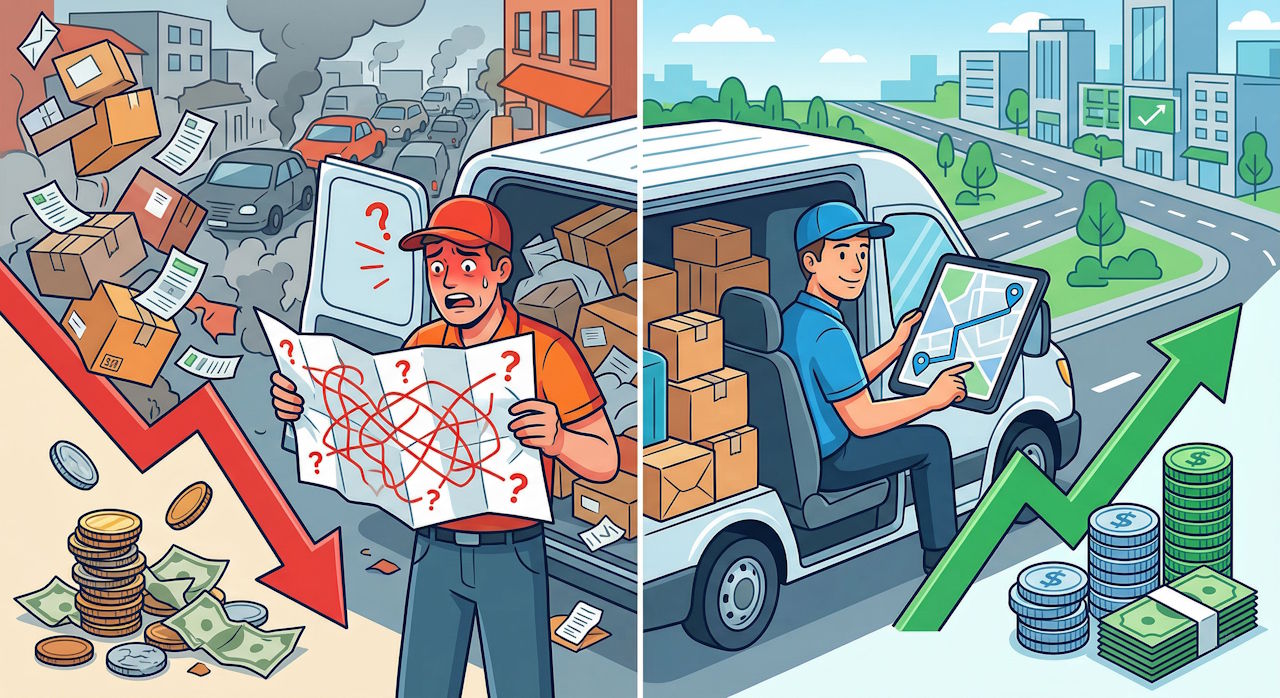
Planning routes manually is like navigating without a GPS using a road map from the 90s. You get there — sometimes. But rarely by the shortest route, and never at the lowest cost.
In 2026, route optimization has shifted from a comfort tool to a economic survival lever. The proof? France Logistique just published in March 2026 — days before SITL — a full guide dedicated to AI in the transport industry, highlighting route optimization as one of the most mature and impactful use cases in the sector. Margin pressure, sky-high customer expectations, low-emission zone constraints, persistent driver shortages… carriers can no longer afford approximate routing.
A deep dive into a transformation that is redefining day-to-day operations on the ground.
The Real Cost of an Unoptimized Route
We often underestimate what one lost hour on a route actually means. Not just fuel. Unproductive driver time, missed delivery windows, customers calling in, a dispatcher managing emergencies instead of operations.
Multiply that by ten drivers, five days a week, and the bill adds up fast. Last-mile delivery can account for up to 50% of the total cost of a shipment — an economic absurdity driven by stop multiplication, low delivery density, and urban congestion.
On the flip side, companies that systematically optimize their routes report transport cost reductions of 10 to 20%, with additional gains in delivery speed. Not theoretical savings: measurable savings from the very first weeks.
What AI Has Really Changed in 2026
For a long time, “optimizing routes” meant: open a spreadsheet, move boxes around, hope the result holds up. Artificial intelligence has upended all of that — and in 2026, it is no longer in the experimentation phase. It is live, in production, across dozens of companies of all sizes.
Algorithms That Think in Multi-Criteria
A good optimization engine doesn’t just look for the shortest path. It simultaneously juggles:
- The weight and volume of parcels per vehicle
- Delivery time windows set by customers
- The specific skills of each driver
- The vehicle type — light commercial vehicle, cargo bike, truck
- Zone constraints — low-emission zones, restricted access, pedestrian areas
A human can keep two or three criteria in mind. The algorithm integrates dozens simultaneously, and recalculates in real time whenever an unexpected event occurs mid-route.
The End of the Fixed Schedule
The real game changer is the dynamic nature of it. The best tools no longer just produce a plan in the morning — they adjust it throughout the day. Delay on a delivery? The rest of the route recalculates automatically. Urgent new mission to integrate? The algorithm finds the best insertion point without disrupting the rest of the day.
This is what we call real-time optimization — and it is now accessible to small and mid-sized transport companies, not just large groups.
Agentic AI: The Next Frontier
In 2026, a new generation of tools is emerging: autonomous AI agents, capable of chaining complex actions without human intervention. Analyzing the situation, defining an objective, selecting parameters, adjusting based on results. In logistics planning, this translates into systems that can anticipate the next day’s needs, pre-build optimized routes, and submit them to the dispatcher for validation — all the night before, while the teams sleep.
Multimodal Logistics: A Optimization Criterion in Its Own Right
2026 marks a real turning point here. More and more transport operators are simultaneously managing multiple vehicle types: trucks, vans, cargo bikes, and even scooters for urgent missions.
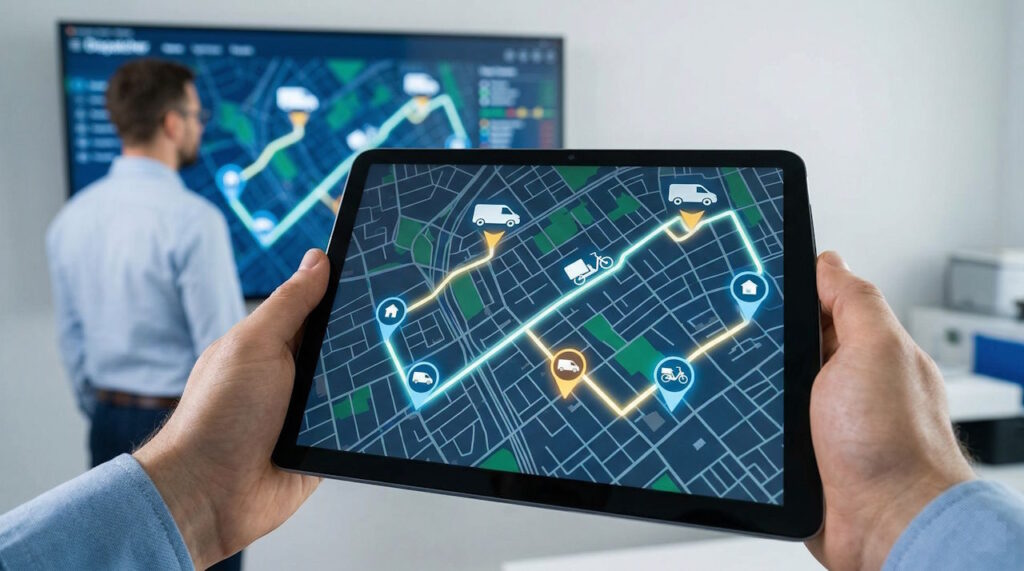
A good optimization engine no longer thinks in terms of a “single vehicle” — it intelligently assigns each mission to the most suitable mode, based on weight, zone, time window, and environmental constraints. For cargo bike logistics operators in particular, this level of granularity makes all the difference between a profitable and a loss-making route.
Recurring vs. One-Off Routes: Two Logics, One Tool
Many carriers live with two overlapping realities: a base of recurring routes (loyal customers, weekly deliveries) and a flow of one-off missions to integrate throughout the day.
The challenge: not letting one-off jobs disrupt recurring routes.
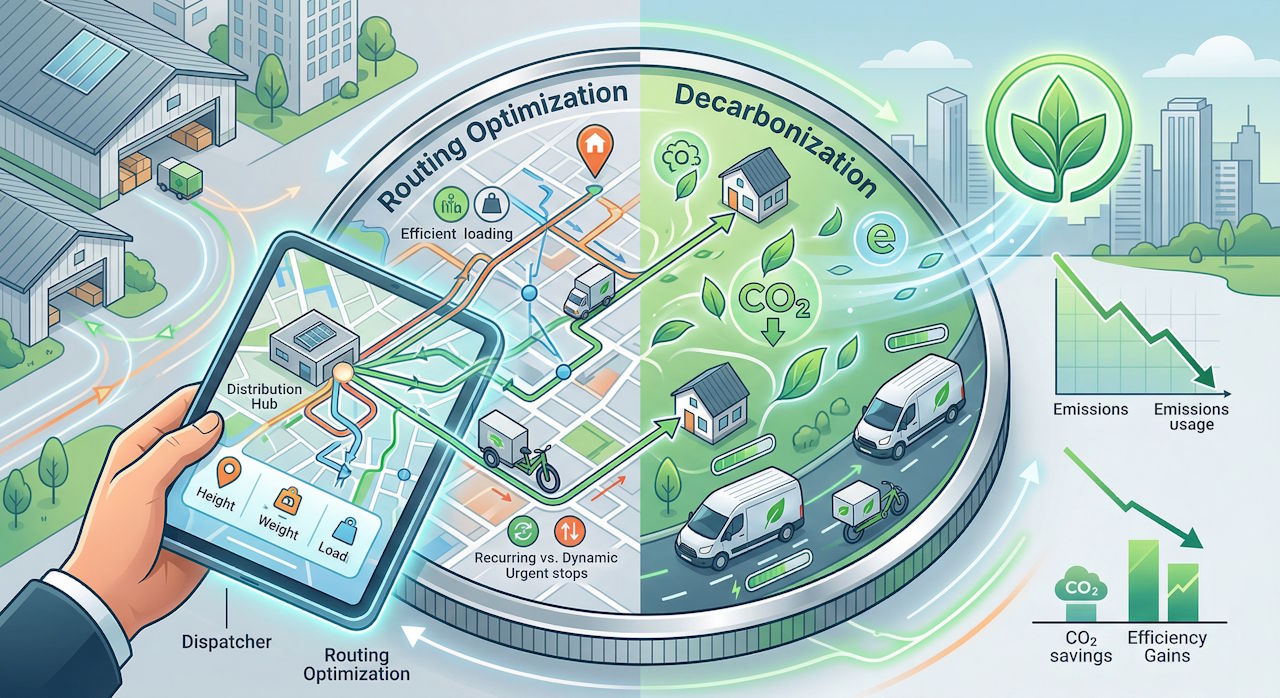
Modern tools make it possible to manage both in parallel — with different optimization profiles for each case, and the ability to insert an urgent mission without rebuilding everything from scratch.
“When you operate heavily in route mode, it’s incredibly valuable to have a tool that lets you split a list of orders among your couriers in just a few clicks without spending an hour on it. You really notice the difference compared to the days when everything was done with pen and paper.”
Route Optimization and Decarbonization: Two Sides of the Same Coin
It’s no coincidence that CSR issues and route optimization are increasingly part of the same conversation.
Fewer kilometers = fewer emissions. It’s as simple as that. But for operators who now have to report to their clients on their carbon footprint, “driving fewer kilometers” is no longer enough — you need to measure it, document it, and turn it into value.
Platforms that combine an optimization engine with CO2 emissions tracking make exactly that possible: turning every optimized route into actionable CSR data — shareable with clients, integrated into reports, and monetizable commercially. In 2026, this has become a genuine commercial differentiator — especially for retailers that have contractual CSR targets with their service providers.
The Mistake to Avoid: Optimizing Routes Without Connecting the Rest
A standalone optimization engine is good. Integrated into a complete chain, it’s far more powerful.
Because route optimization only reaches its full potential when connected to:
- The driver’s mobile app, which receives the itinerary in real time and pushes status updates
- Customer tracking, which sends a notification as soon as the route begins
- Dynamic ETAs, which alert when a delay is likely
- Invoicing, which draws on actual route data — not estimates
This is exactly the logic of a complete TMS: every module feeds the others. Optimization is no longer an isolated step — it’s the starting point of a seamless information chain, from the warehouse to the proof of delivery signature.
“Everest lets us optimize our routes in no time, and thanks to SMS alerts and tracking systems, we’re able to match the performance of the major transport players at the same price.”
What It Concretely Changes for Your Teams
Beyond the numbers, route optimization has a direct impact on the daily lives of three types of people.
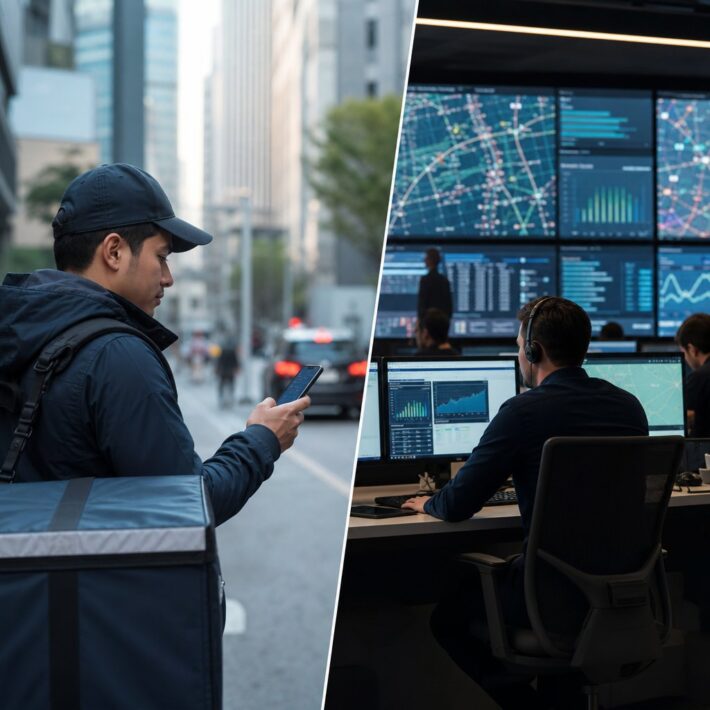
The dispatcher spends less time manually building plans and more time monitoring execution. Less stress, fewer lost calls from drivers, more real operational oversight.
The driver receives a clear itinerary on their app, with the right information at the right time. Less time spent finding the way, more deliveries completed in a day.
The customer receives timely notifications with a precise tracking link. They no longer call to ask “where’s my delivery” — and in 2026, that has become the baseline standard: the Metapack study published in early 2026 confirms that delivery is now a purchase decision criterion upfront, not just a post-order step.
Key Takeaways
In 2026, route optimization is no longer reserved for large corporations with dedicated IT teams. Today’s solutions are accessible, fast to deploy, and generate measurable ROI within the first weeks.
But the real challenge isn’t just “driving fewer kilometers.” It’s connecting optimization to your entire operational chain — so that every well-built route automatically translates into a better customer experience, actionable CSR data, and faster invoicing.
In 2026, the carriers moving forward are those who have stopped treating optimization as a standalone tool — and have integrated it at the heart of their delivery management software.