
Delivery software for laboratories: the guide to choosing a truly flexible tool
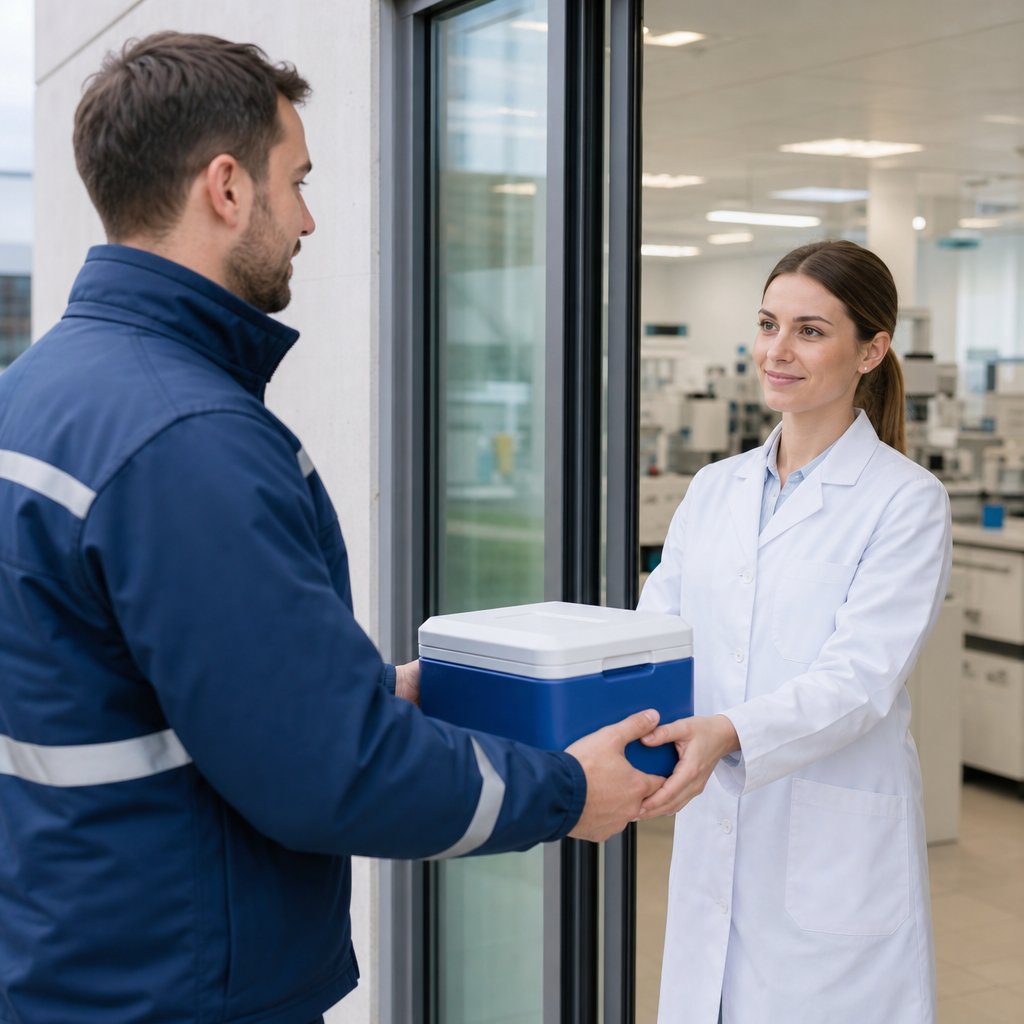
Transporting biological samples has nothing in common with a standard delivery run. Between tightly scheduled recurring routes, life-threatening emergencies at 3 a.m., cold chain requirements, and regulatory traceability imposed by the NF S96-900 standard, medical analysis laboratories demand exceptional operational rigor. Choosing the right delivery software for laboratories then becomes strategic. Here are the criteria that really make the difference.
Why transporting biological samples is a special case
A blood tube is not a parcel. Behind every sample, there is a patient waiting for a diagnosis, a doctor who must decide on a treatment, sometimes a life-threatening emergency. The carrier becomes a critical link in the care chain.
The constraints are multiple:
- Recurring routes: daily pickups from medical practices, nursing homes, clinics, with precise schedules
- Unpredictable urgent runs: a sample to be delivered in less than an hour to the technical platform
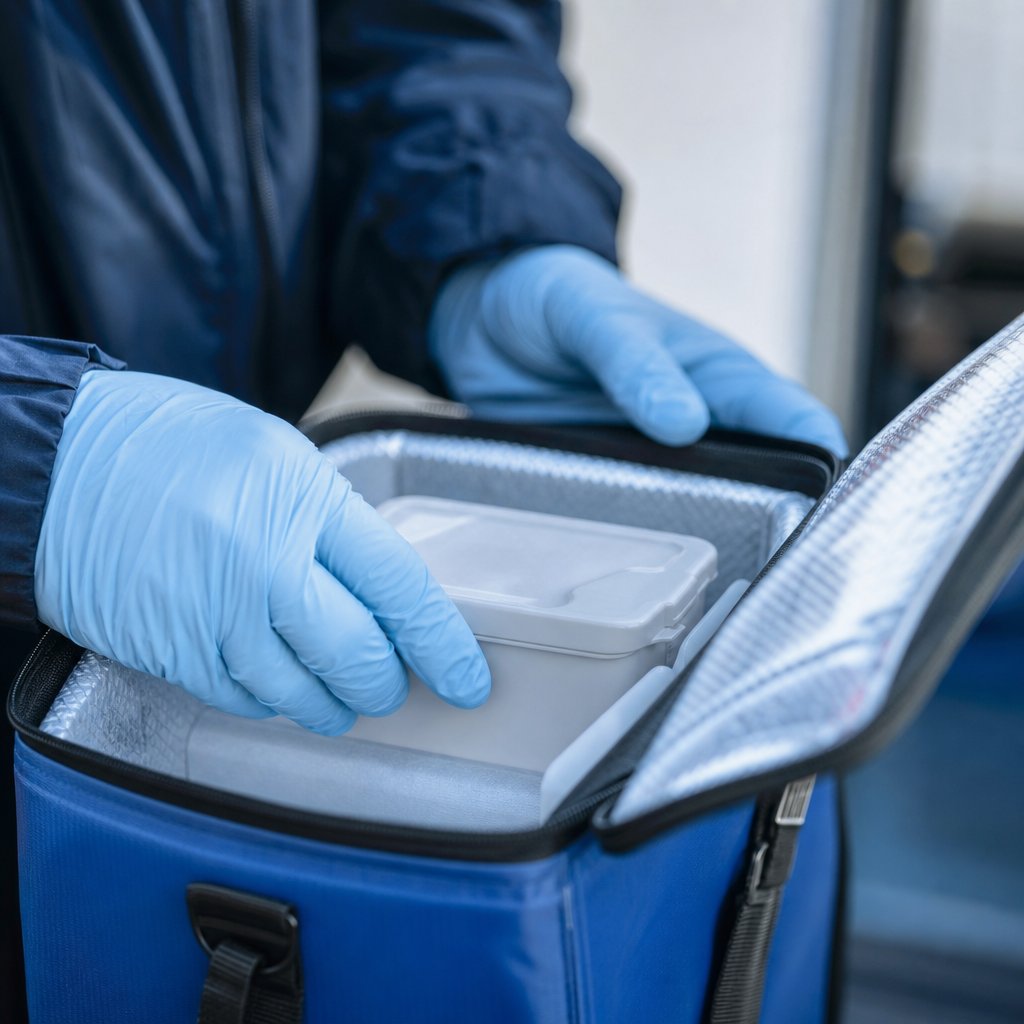
- Cold chain: maintaining the temperature between 2 and 8°C, sometimes frozen
- Regulatory traceability: every sample transfer must be timestamped, signed, archived
- Formalized transfer of responsibility between sampler, carrier and laboratory
A generalist software quickly reaches its limits. You need a specialized TMS capable of orchestrating this complexity without rigidity.
Traceability: a regulatory imperative, not an option
The NF S96-900 standard and good practices for transporting biological samples require complete and tamper-proof traceability. Every package must be trackable from pickup to delivery at the laboratory, with proof at each step.
What a good software must guarantee
- Systematic scanning of barcodes at each transition (pickup, transfer, delivery)
- Automatic GPS timestamping of every action
- Electronic signature of the sampler and the receiving lab technician
- Photos of the container or temperature log if necessary
- Secure and queryable archiving over several years
In the event of a dispute or audit, retrieving the complete history of a sample in seconds is no longer a convenience: it’s an obligation.
Flexibility: the real marker of a suitable TMS
No two laboratories operate the same way. Fixed routes in the morning, variable routes in the afternoon, on-demand runs at night, multi-point pickups, single drop-off at the technical platform: the operational reality is constantly shifting.
A rigid software imposes its model on the carrier. A flexible software adapts to the laboratory’s needs.
The adaptability capabilities to demand
- Multiple route models: recurring, dynamic, hybrid
- Customizable dispatch rules: assignment based on skills (cold chain training), geographic area, vehicle type
- Custom mission statuses: sample collected, in refrigerated transport, delivered to platform, temperature anomaly
- Configurable workflows depending on the type of run (urgent, scheduled, results return)
- Custom fields: patient file number, type of analysis, specific constraints
Samy Layouni, head of Minute Pharma (pharmaceutical transport), shares:
Our business requires absolute rigor. We need a tool that adapts to our processes, not the other way around. Each client has its own rules, and our TMS must respect them down to the pixel.
Real-time tracking: see to anticipate
In sample transport, operational blindness is expensive. An undetected delay means a compromised analysis, a patient who has to come back, an unhappy client.
Real-time tracking must offer:
- An interactive map of all drivers and their ongoing missions
- Dynamic ETAs continuously recalculated based on traffic
- Proactive alerts in case of delay, temperature deviation, or anomaly
- A patient/laboratory view: where is my sample, what time will it be analyzed
- Automatic SMS or email notifications to samplers and the receiving laboratory
For the dispatcher, this means the ability to react before the problem becomes critical. For the laboratory, it’s the guarantee of being able to organize its technical platform based on the actual arrival of samples.
Real-time reporting: steer without waiting for month-end
Laboratories are industrial structures. They think in terms of flows, SLAs, service rates. A consolidated report at the end of the month always arrives too late.
Essential KPIs to track continuously
- Time-slot compliance rate per route, per driver, per client
- Average sample → laboratory delivery time
- Rate of emergencies handled on time
- Incidents: delays, cold chain breaks, non-compliant samples
- Volume per sampling site and monthly evolution
- Carbon footprint of routes (increasingly requested in tenders)
A good TMS offers these indicators in an interactive dashboard, directly usable, exportable, and ideally connected to the laboratory’s BI tool via API.

Handling emergencies without breaking the route
This is the most complex operational challenge in the business: integrating an urgent run into already optimized routes, without derailing everything.
A call comes in at 2:17 p.m.: a sample to be picked up in 20 minutes at a practice, to be delivered in less than an hour to the technical platform. Which driver? What reorganization? What impact on other clients?
What the software must be able to do
- Instantly identify the best-positioned driver (proximity, current load, skills)
- Simulate the insertion of the run into an existing route
- Automatically recalculate the ETAs of other points on the route
- Notify impacted clients in case of slight delays
- Trace the decision to analyze emergency management performance afterwards
Issam Chaker, founder of Speedcare (transport of organs and critical samples), sums it up:
When an emergency call comes in, I don’t have ten minutes to think. I have to know in three seconds who takes it, how, and what it changes for the rest. Anything else is a loss of chance.
How Everest addresses these challenges
The Everest TMS was designed to absorb the complexity of demanding businesses such as medical sample transport. Several features directly address the sector’s challenges:
- Customizable statuses and workflows: every critical step (pickup, refrigerated transport, delivery to laboratory) can be modeled with its own rules, mandatory scans and signatures.
- Podchecker.ai: automated verification of proof of delivery (signature, photo, container compliance) with 99% accuracy, to strengthen traceability and reduce disputes by an average of 16%.
- AI dispatch and emergency insertion: the dispatch agent identifies in real time the best available driver, simulates the impact on routes and proposes the optimal solution.
- Multi-criteria route optimization: factoring in skills (cold chain training), vehicle type, time slots and patient constraints.
- Real-time dashboard and Walter: AI assistant capable of answering voice questions such as “how many emergencies handled today?” or “which driver is running late?”.
- Open API and native n8n automation: direct connection with LIS (laboratory information systems) to synchronize orders, results and billing without re-entry.
Key takeaways
- Biological sample transport combines unique requirements: regulatory traceability, cold chain, emergencies, recurring routes.
- Software flexibility is the number one criterion: custom statuses, tailor-made workflows, adaptable dispatch rules.
- Real-time tracking and reporting determine the laboratory’s ability to steer its flow and meet its SLAs.
- Smart emergency management, without degrading existing routes, is the difference between a good and an excellent carrier.
- API integration with the laboratory’s LIS has become an essential standard.
Choosing the right tool means offering your laboratory clients the guarantee of a service that matches their requirements — and ultimately, every patient a reliable analysis, on time.